
From traditional to modern dress: 12 Japanese accessories and dress you need
Japan is home to some of the best fashion in the world, and it is no new phenomena.
For centuries, the country has boasted an incredibly rich and beautiful range of traditional clothing; ranging from colorful garments to cute accessories.
If you’re planning a trip to Japan soon, make sure not to miss out on your chance to get these pieces before you leave!
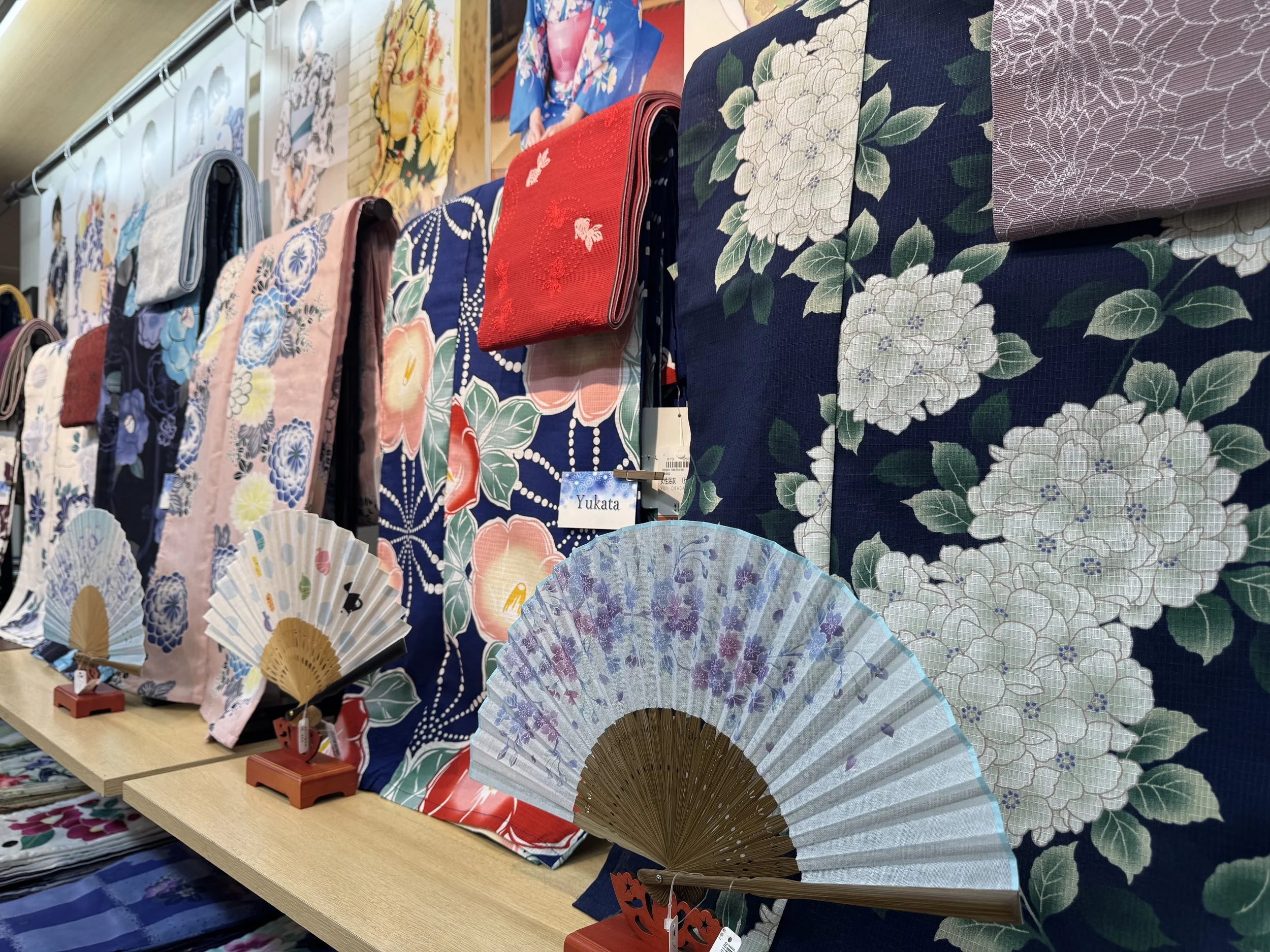
So many unique yukata designs to choose from
Kimono
Dating back to ancient Japanese heritage, the kimono is a famous cultural garment worn during ceremonies and special occasions.
Kimono come in varying styles, with different levels of formality based on the event.
Like many traditional garments, different regions in Japan produce and dye kimono using differing processes, colours, patterns, and embroidery.
They have become an incredibly popular souvenir for travellers, and are a perfect way to connect with the region’s cultural history and dress whilst providing a beautiful garment.
Yukata
For the hotter summer months, kimono are swapped for yukata, made of cotton and with a shorter design.
They are easier to move in and worn more casually than kimono, making them a perfect fit for loungewear.
Unlike traditional kimono, yukata are often made with lighter and brighter colored fabrics to suit the seasons.
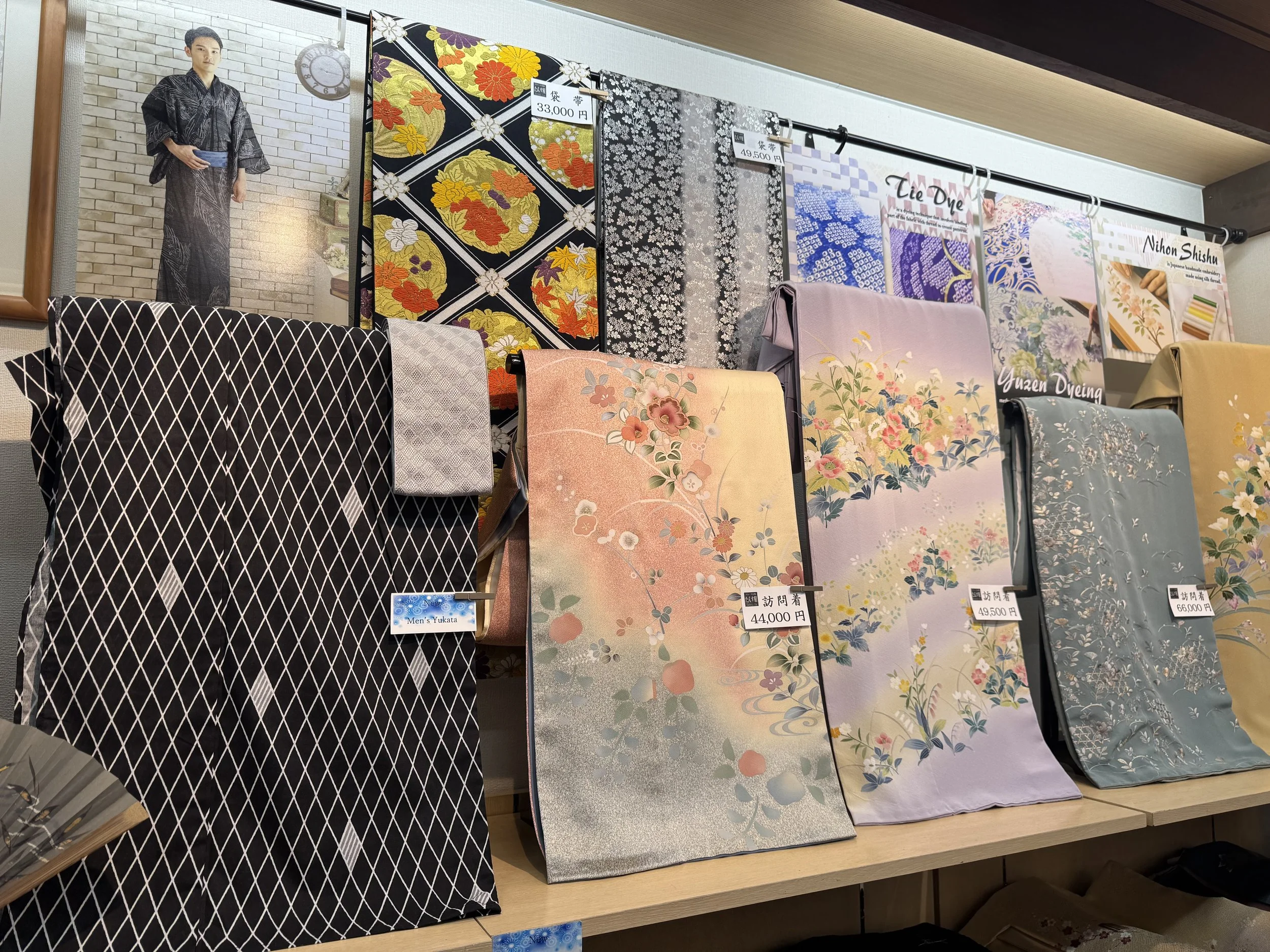
Beautiful, traditional yukata garments
Obi
Obi are used as part of kimono and yukata dress as a sash or belt to secure the garments whilst adding decoration.
Obi vary in formality, with certain designs and patterns being reserved for specific occasions.
Many modern travellers purchase obi as accessories, wall decoration, or table runners as a way to add color and culture to their homes.
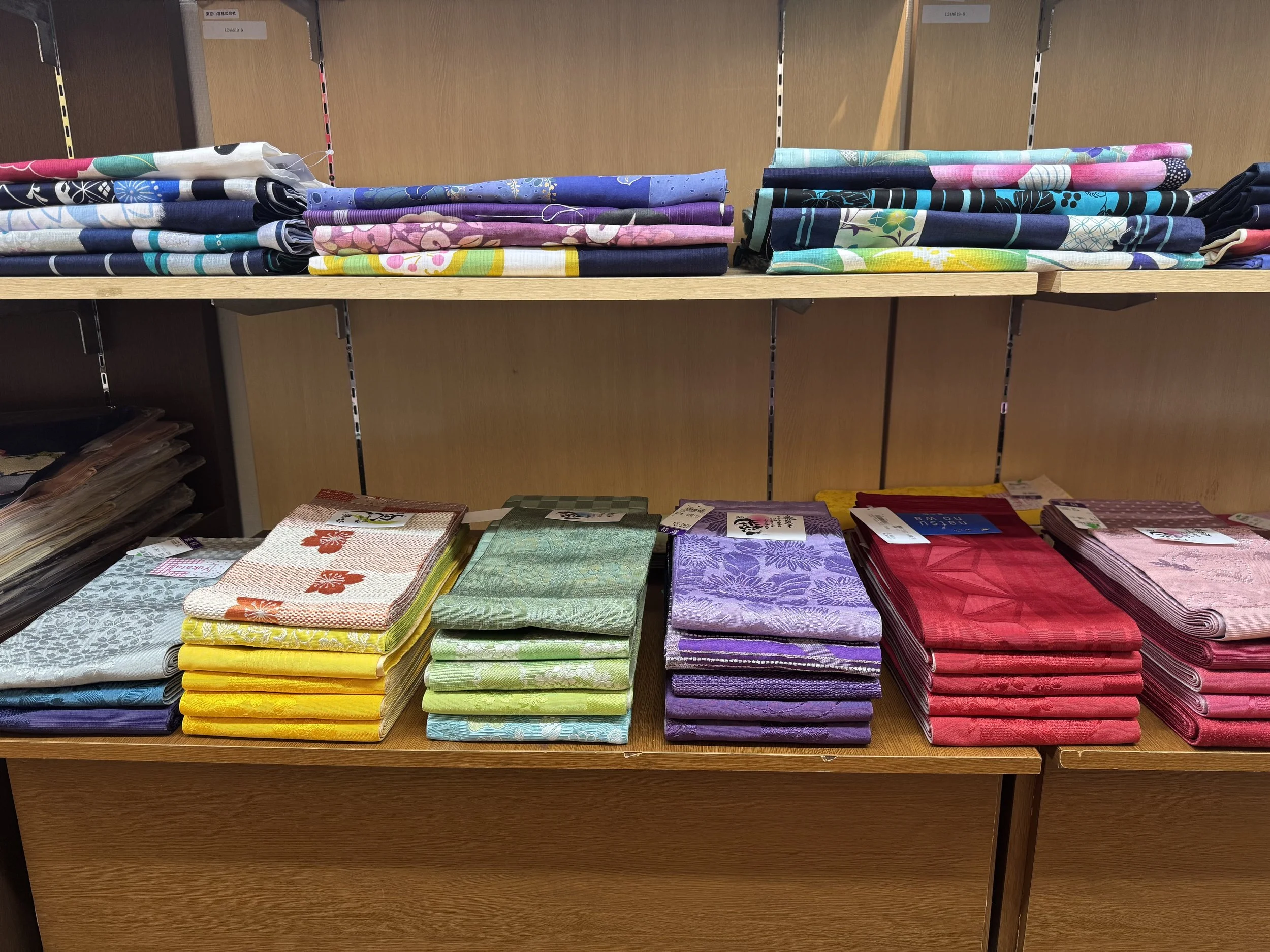
Many stores offer a large selection of colors and patterns of obi
Kanzashi and Kushi
Japan has a rich history of fashionable and intricate hair accessories, helping to add detail to each outfit.
Kanzashi are hair accessories in the form of hairpins that come most often adorned with hanging flowers or in varying shapes.
Kushi are similar, but instead are hair combs, being used to hold larger sections of hair back and worn in addition to kanzashi.
They are traditionally worn by brides and geisha, they are a gorgeous way to liven up simple hairstyles.
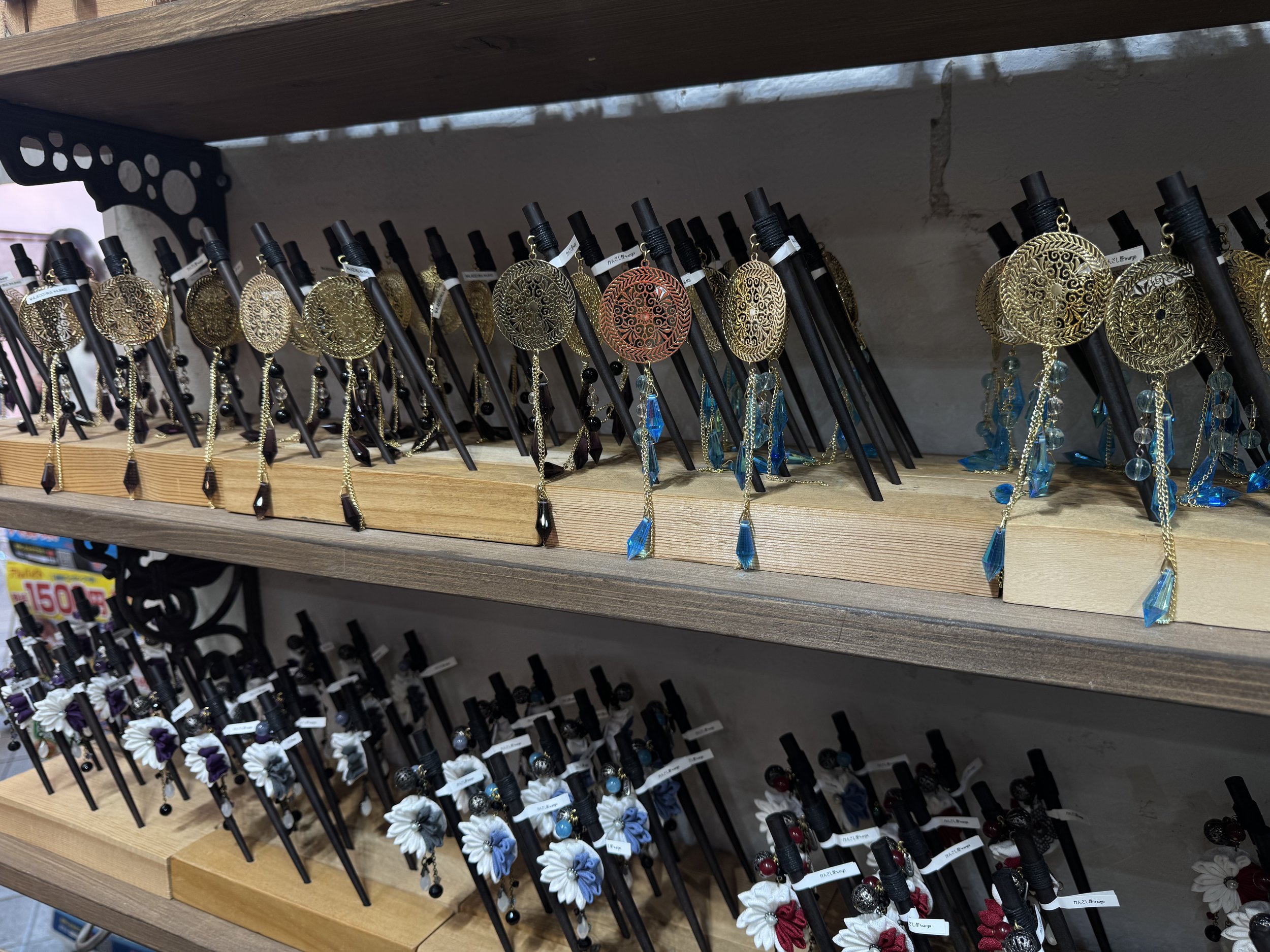
Detailed hairpins coming with different attachments for each new outfit!
Nenju
Nenju are Buddhist prayer beads used traditionally used during prayers as protective charms to ward off evil and bad fortune.
They are often made of wooden or natural stones, and can be worn in varying sizes made to suit both men and women.
Many can be found at Buddhist temples or shrines, and act not only as a beautiful accessory, but also a souvenir for spiritual connections made and as protective amulets.
Netsuke
Originally used to attach pouches or cases to obi sashes, netsuke are small toggle-like accessories.
They are intricately woven and often come with small charms or pendant attached to the ends.
Today, they remain useful as toggles to attach to belts, as well as keychains for bags and phones.
Tabi socks
Tabi socks have become increasingly popular for their fun styles and unique, comfortable fit.
These socks split the big toe from the rest, making them practical for traditional footwear such as geta and zori.
Whilst made for thonged-shoes, they are perfect for normal footwear use as well.
Now, many stores sell them with fun colors and patterns that suit every personality and every outfit!
Jinbei
During the warmer months, yukata are swapped for jinbei, a lighter and looser clothing for the home more suited for the summertime by men and children.
These garments are simpler to wear and easier to move in, creating a comfortable fit and popular amongst young children.
They are a great robe or pyjama option for travellers looking for unique souvenirs.
Shinju (pearls)
Japan is a highly renowned producer of Akoya pearls, which offer a translucent lustre and almost perfectly round shape.
They are farmed in the clean saltwater of Japan and harvested from local Akoya oysters, and are famous amongst jewelry lovers internationally.
A luxurious souvenir and perfect gift, they are available are necklaces, earrings, and bracelets.
Kumihimo
Kumihimo are a traditional Japanese craft made of strands of thread which are braided into a cord.
Different braiding methods can be used to create different styles and patterns, as well as varying colors in any combination you’d like!
Cultural experiences in Japan include workshops where travellers can make their own kumihimo and take them home.
Many use them as accessories on bags, as belts, or even necklaces to add character and charm to each outfit.
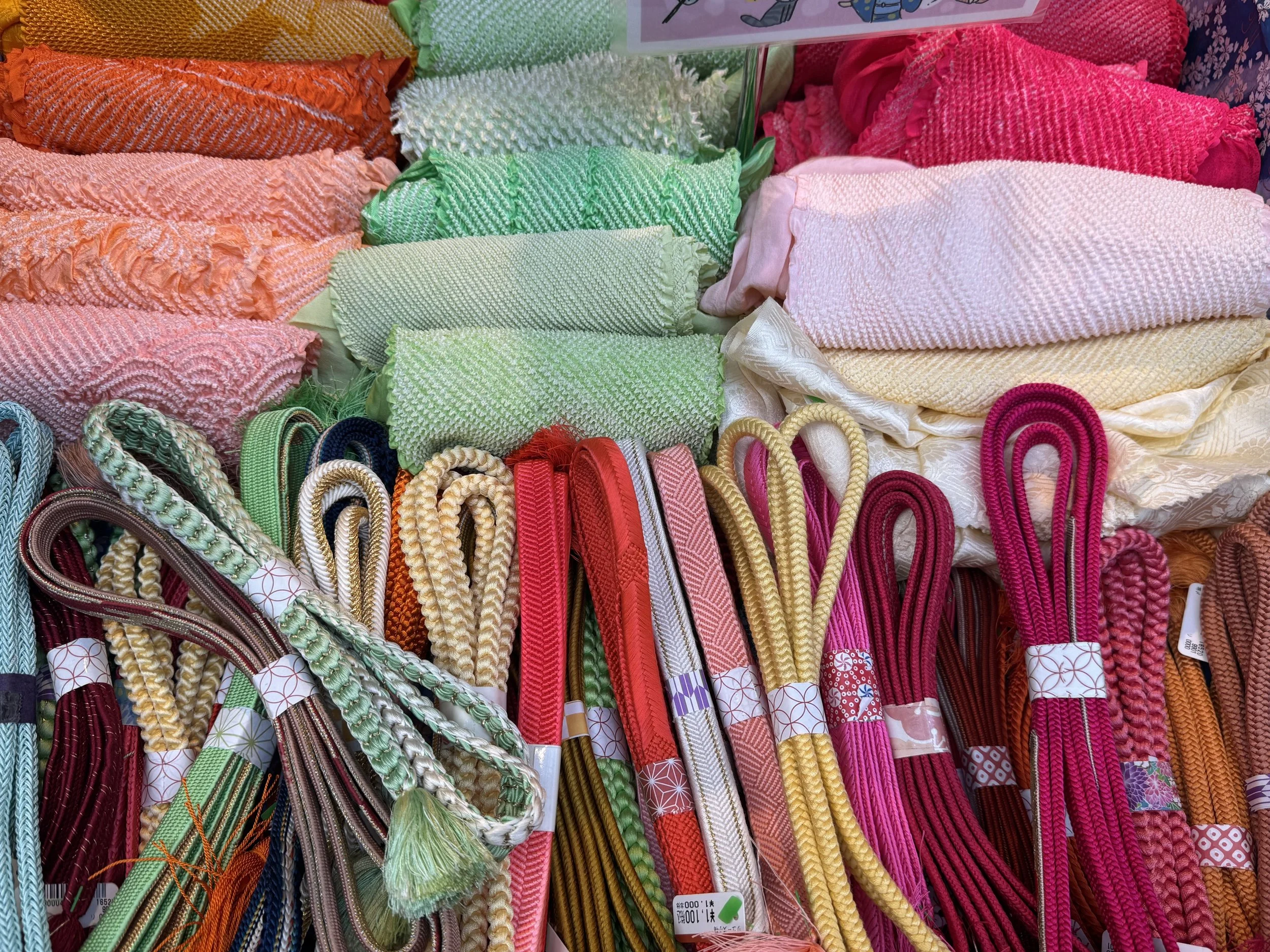
Kumijimo come in a range of colors and styles that can be matched with garments and accessories
Sensu
One of the most famous and common souvenirs bought from Japan, sensu are fold-out hand fans that come with many different art pieces on the face.
Sensu are a great souvenir as not only can they act as outfit accessories, but also as decoration or practical, portable fans during warmer periods.
Usually made from bamboo and silk or paper, they were used throughout Japanese heritage as props for performers and to match with kimonos.
Different regions have varying styles of sensu, often also having landmarks or symbols specific to that area printed on them.
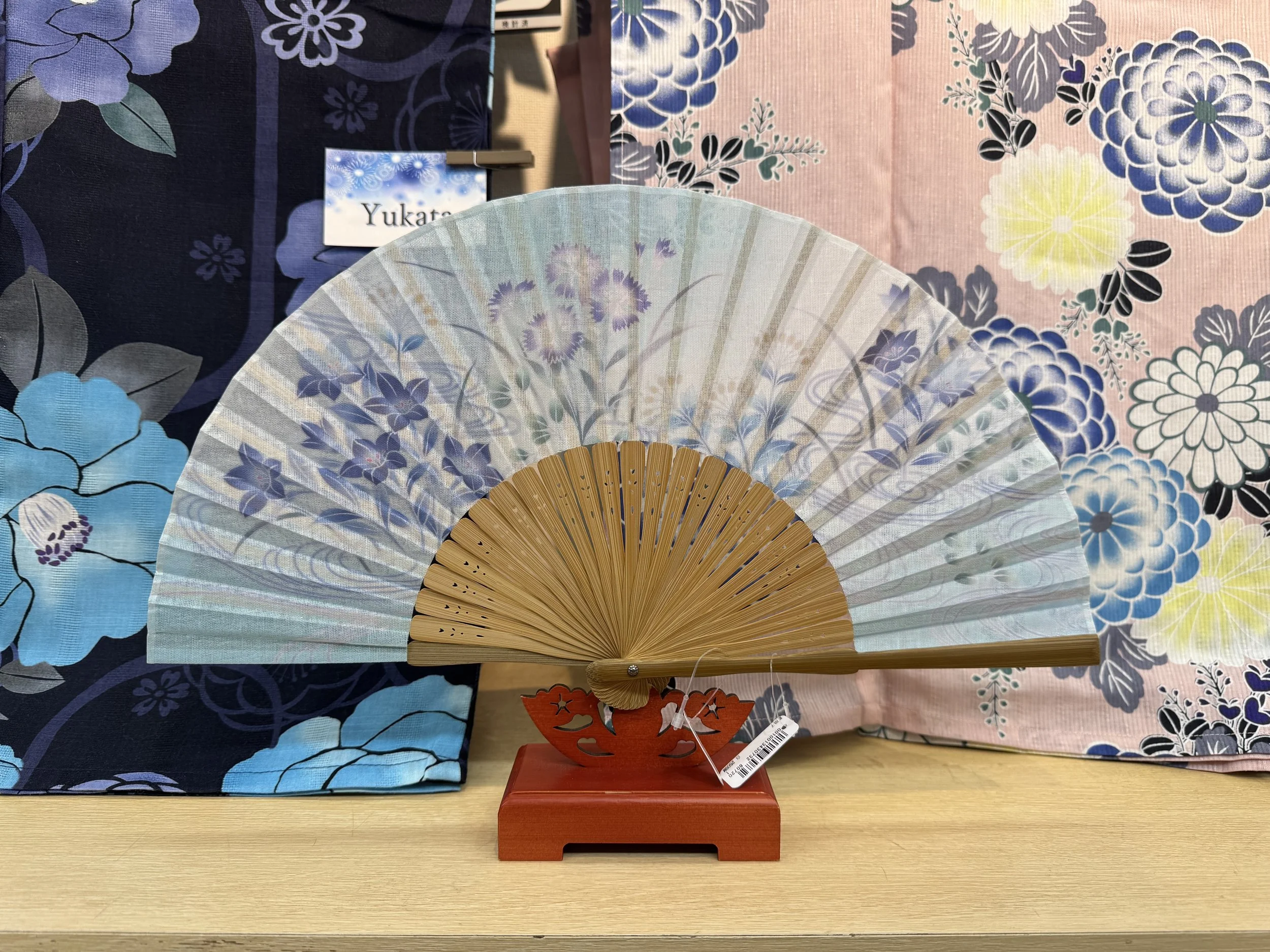
An intricate sensu design for the springtime
Bangasa
Used in day-to-day life in Japanese culture, bangasa are lightweight washi paper and bamboo umbrellas.
Many come painted with national iconography or kanji characters, and can be used as decoration as well.
Ready for more?
Book with TokudAw to get recommendations on the best stores, destinations, and restaurants and to gain access to our in-house private transport services to deliver you safely and comfortably to each location.