
Japan: An itinerary for the crafter and textile lover
If you’re the type of person who enjoys a visit to the local fabric store or taking a workshop from a local artisan or craftsperson while on vacation or absorbing the local art scene, consider this itinerary as a starter for what you can explore in Japan. The itinerary will take you through different regions, each known for it’s own craft and textile technique. With everything from weaving, dying, to embroidery, and even stencil cutting, you could easily spend a lifetime apprenticing under master artisans absorbing all there is to know and still not cover it all. Explore this itinerary in segments for a smaller trip or all at once.
Segment 1: Tokyo & Greater Kanto Hub
Day 1: Shinjuku River Dyers & Nippori Wholesale District
09:00 – 11:30 | Shinjuku Dyeing Quarter (Nakai & Waseda): Start at Futaba-en along the Kanda River. Participate in a private stencil-dyeing workshop making custom Edo Sarasa silk, exploring the historical river-dyeing heritage of old Tokyo.
11:30 – 13:30 | Kagurazaka Lunch & Historic Walk: Dine in Kagurazaka’s preserved geisha district; explore boutique kimono accessory shops (kanzashi hairpins, custom obi cords).
13:30 – 17:00 | Nippori Fabric Town (Nippori Sen’i-gai): Explore over 100 wholesale fabric suppliers along a 1km strip, including Tomato (5 floors of deadstock cottons/linens) and specialized silk importers. Note: not open on Sundays.
17:00 – 19:00 | Return Drop-off & Evening Fine Dining in Tokyo
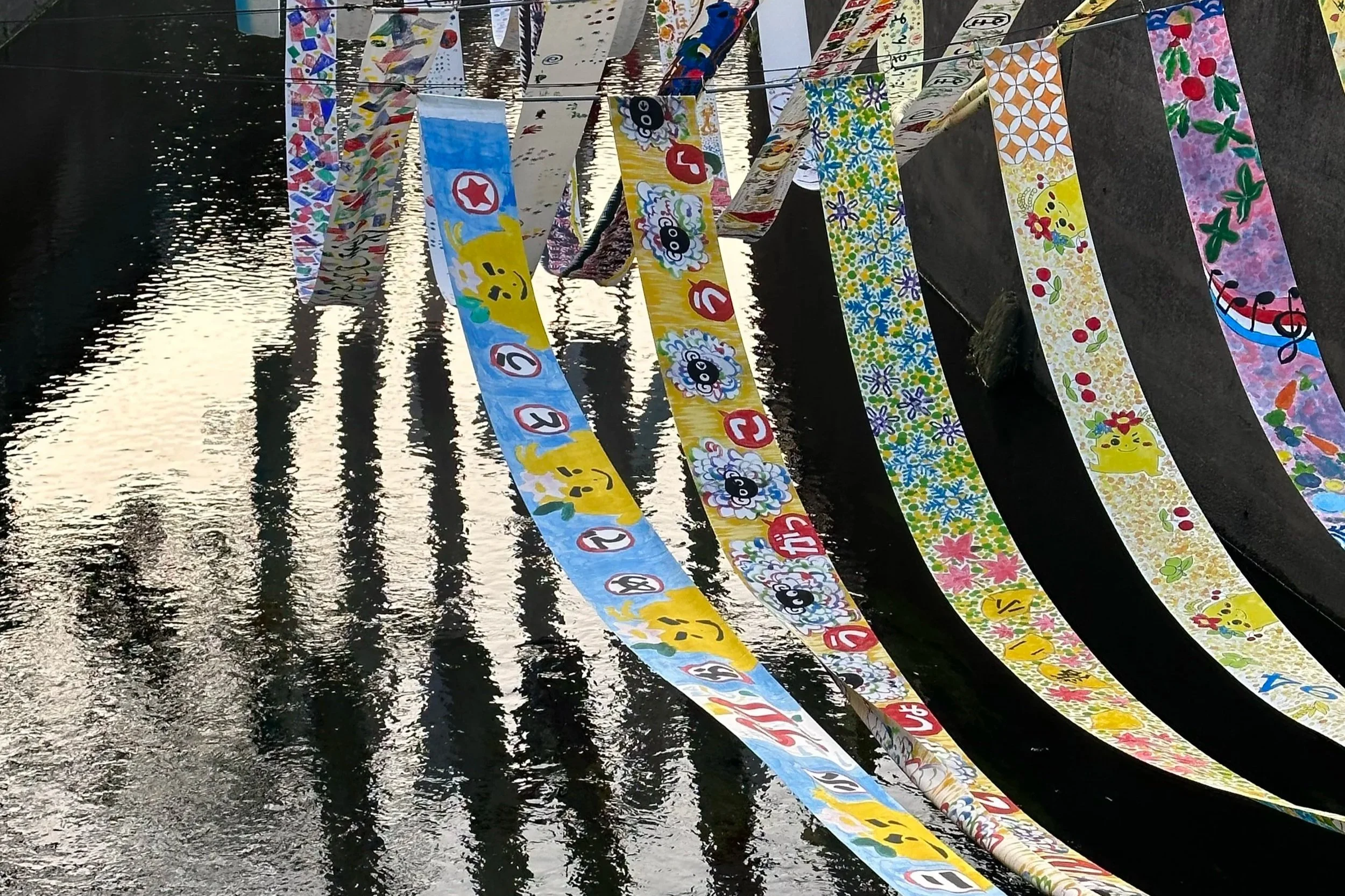
Fabric hangs above a river in Shinjuku as part of a yearly festival held in February known as Some-no-komichi, which honors the area’s textile heritage.
Day 2: Tama Indigo Vats & Historic Open-Air Architecture
08:30 – 10:00 | Private Drive to Ome: Head west toward the Tama River basin.
10:00 – 12:30 | Ome Indigo Workshop (Kosoen): Hands-on resist-dyeing (Shibori Aizome) in 100% natural, fermented botanical indigo vats (sukumo).
12:30 – 14:00 | Soba Lunch in Historic Ome Town
14:00 – 16:30 | Japan Open-Air Folk House Museum (Minka-en), Kawasaki: Tour 25 preserved 18th-century thatched-roof farmhouses featuring indoor hearths (irori), handlooms, and silk-reeling setups.
16:30 – 18:30 | Return Drive to Tokyo
Day 3: Tochigi Bandai Toys & Chichibu Iridescent Silk
08:30 – 10:00 | Private Drive to Mibu, Tochigi
10:00 – 12:30 | Bandai Toy Museum (Omocha no Machi): Explore 30,000+ pop-culture relics, a 1/1 scale Gundam bust, and retro Japanese toy history.
12:30 – 14:00 | Utsunomiya Regional Gyoza Lunch
14:00 – 16:30 | Chichibu Meisen Textile Museum: Drive into Saitama’s mountains to explore Chichibu Meisen—bold, graphic early 20th-century silk created via pre-woven warp thread printing (Hogushi-ori).
16:30 – 18:30 | Return Drive to Tokyo
Day 4: Yokohama Ghibli Coast & Hakone Evangelion (Tokyo-3)
08:30 – 10:00 | Drive to Yokohama & Kawasaki
10:00 – 12:00 | Fujiko F. Fujio Museum (Doraemon Museum): Original artwork, gadget exhibits, and short films.
12:00 – 14:00 | Yokohama Harbor & Yamate District: Walk Minato-no-Mieru-Oka Park (the real-life setting for Ghibli's From Up on Poppy Hill) and enjoy lunch overlooking the bay.
14:00 – 16:30 | Drive to Hakone & Eva-Ya Store: Arrive in real-life "Tokyo-3" (Evangelion); explore exclusive regional anime boutiques.
16:30 – 18:30 | Check-in at Hakone Luxury Onsen Ryokan
Or instead, spend the day back in Tokyo visiting the Japan Folk Crafts Museum, known for it’s textile and pottery exhibitions, take a Kumihimo workshop (Japanese 3D braiding), visit the Kioi Art Gallery Edo Ise-Katagami museum home to thousands of hand cut stencils.
Or take a day trip to Gyoda in Saitama prefecture, home to tabi (or Japanese toe socks) production and experience a workshop custom making your own tabi!
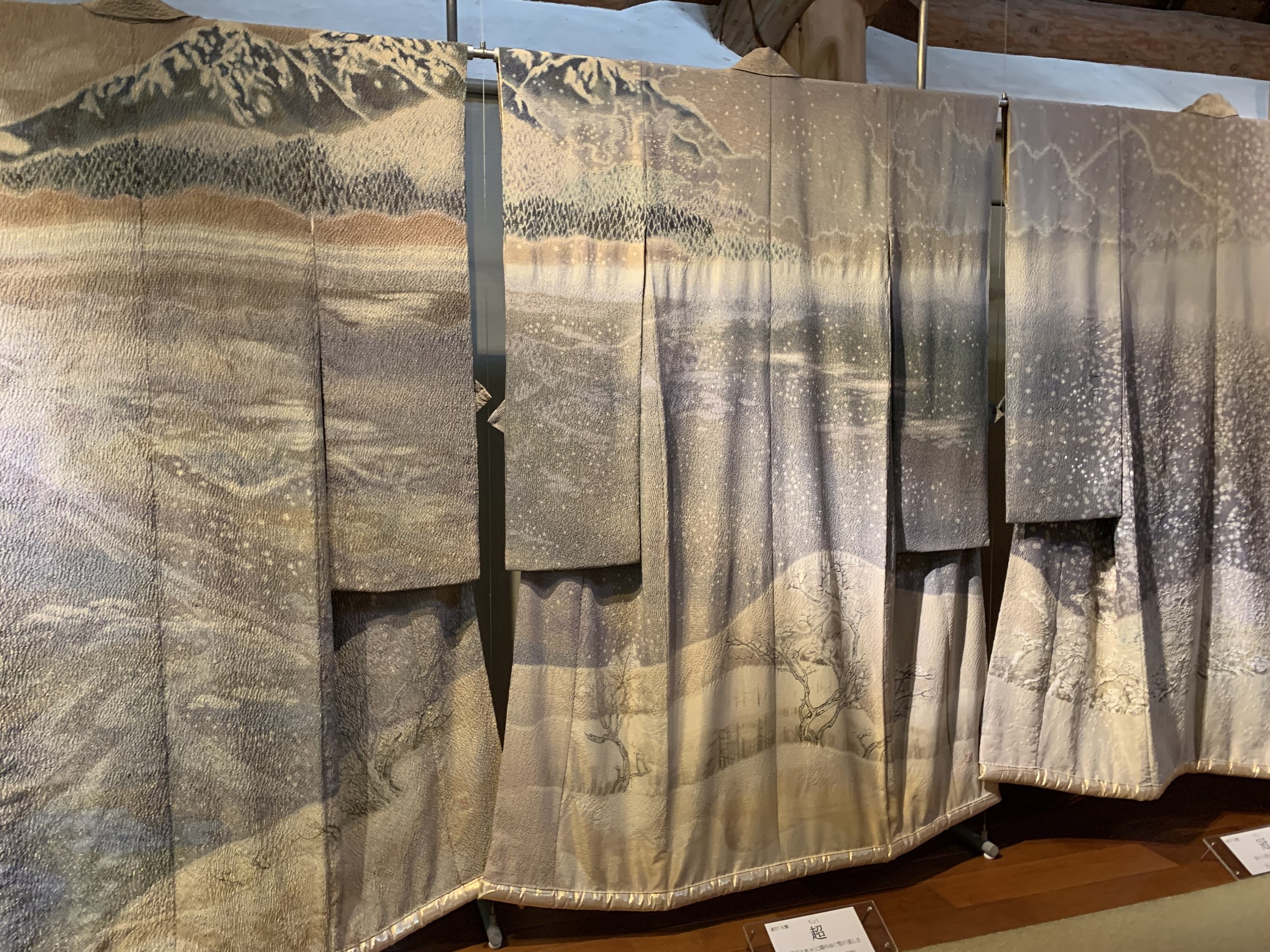
Portion of the Ichiku Kubota Art Museum exhibition room in Yamanashi prefecture, Japan.
Day 5: Mt. Fuji Textile Masters & Kimono Artistry
08:30 – 10:30 | Drive around Lake Kawaguchiko
10:30 – 13:00 | Itchiku Kubota Art Museum: View master Kubota’s revived 15th-century Tsujigahana tie-dye technique and his epic "Symphony of Light" multi-kimono landscape series displayed in a museum nestled in a Japanese garden. The collection is a master piece, and something he never quite finished.
13:00 – 14:30 | Lakeside Houtou Noodle Lunch
14:30 – 16:30 | Fujiyoshida Silk Weaving District: Tour historical shuttle-loom mills in the weavers' alley at the base of Mt. Fuji, famed for jacquard linings and umbrella silks.
16:30 – 18:30 | Drive to Takasaki / Gunma Hub
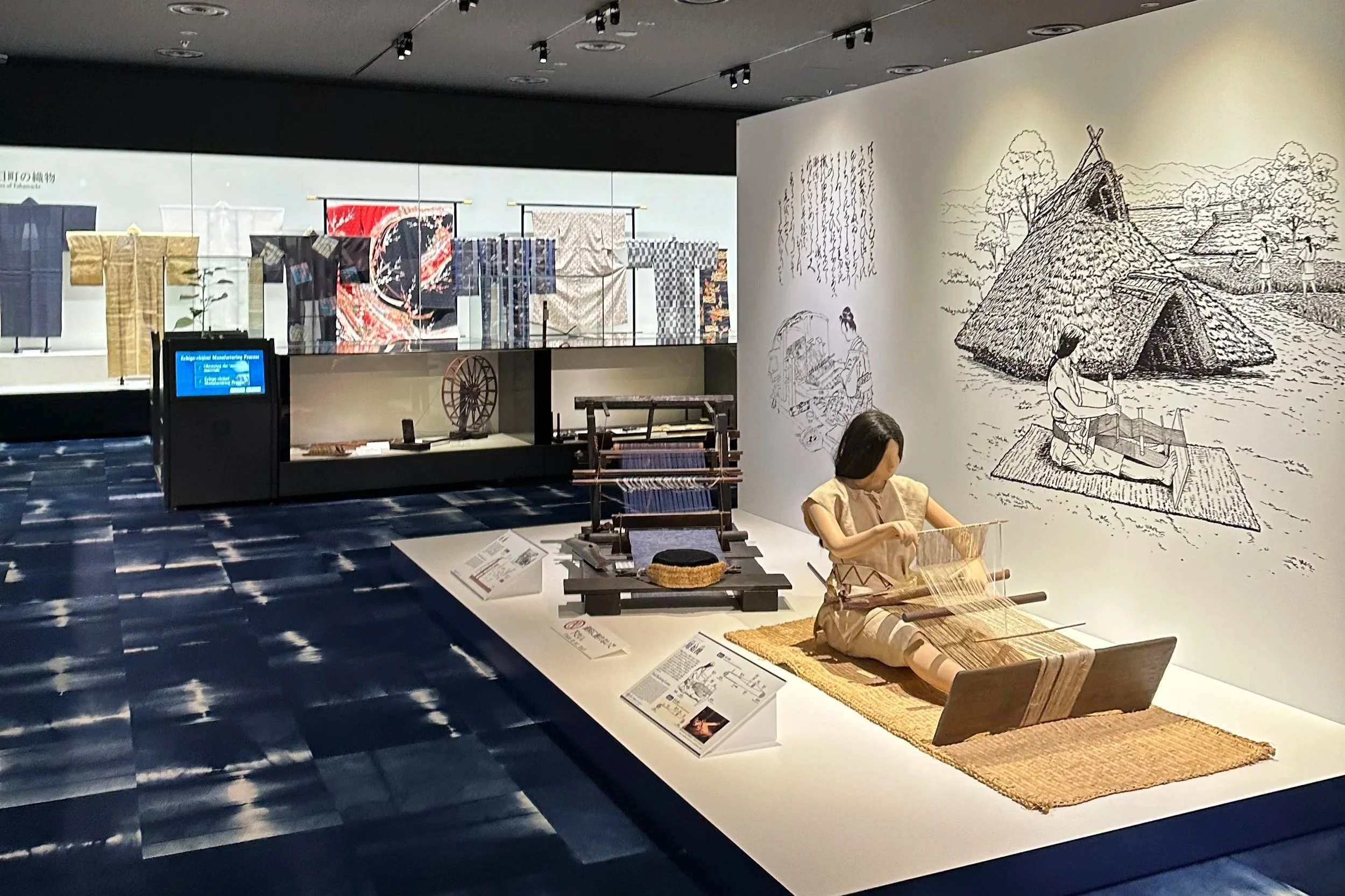
Tokamachi City Museum textile exhibition room in Niigata, japan
Segment 2: Gunma, Nagano & Snow Country Niigata
Day 6: Gunma UNESCO Silk Route & Shinkansen to Snow Country
08:30 – 11:00 | Tomioka Silk Mill: Guided tour of Japan’s first modern silk-reeling factory (1872 UNESCO site), featuring preserved 140-meter French silk-spinning halls.
11:00 – 12:30 | Regional Silk-Udon Lunch in Tomioka
12:30 – 15:00 | Kiryu Textile Museum (Kiryu-shin): Tour 1,200 years of heavy silk brocade weaving, jacquard looms, and live demonstrations.
15:00 – 18:30 | Transfer Ryokan Check-in
Day 7: Tokamachi Snow-Bleached Fiber & Cross-Stitch Ikat
09:00 – 11:30 | Tokamachi City Museum: Explore 1,500 years of snow country textiles, focusing on UNESCO Intangible Cultural Heritage Echigo-Jofu (ramie fiber spun by hand and bleached over spring snowfields).
11:30 – 13:00 | Uonuma Koshihikari Rice Gastronomy Lunch
13:00 – 16:00 | Tokamachi Cross-Ten Textile Hall: Watch traditional Ojiya-Chimi cross-stitch weaving, hand-stenciled kimono painting (Yuzen), and modern silk production.
16:00 – 19:00 | Hoshitoge Rice Terraces & Return to Ryokan
Day 8: Nagano Alpine Craft & Journey to Nagoya
08:30 – 11:30 | Ueda Tsumugi Silk Weaving: Stop in Ueda (Nagano) to visit historic workshops producing durable, hand-woven Ueda Tsumugi silk cloth.
11:30 – 13:30 | Alpine Soba Lunch in Nagano
13:30 – 18:30 | Scenic Drive through the Kiso Valley to Nagoya
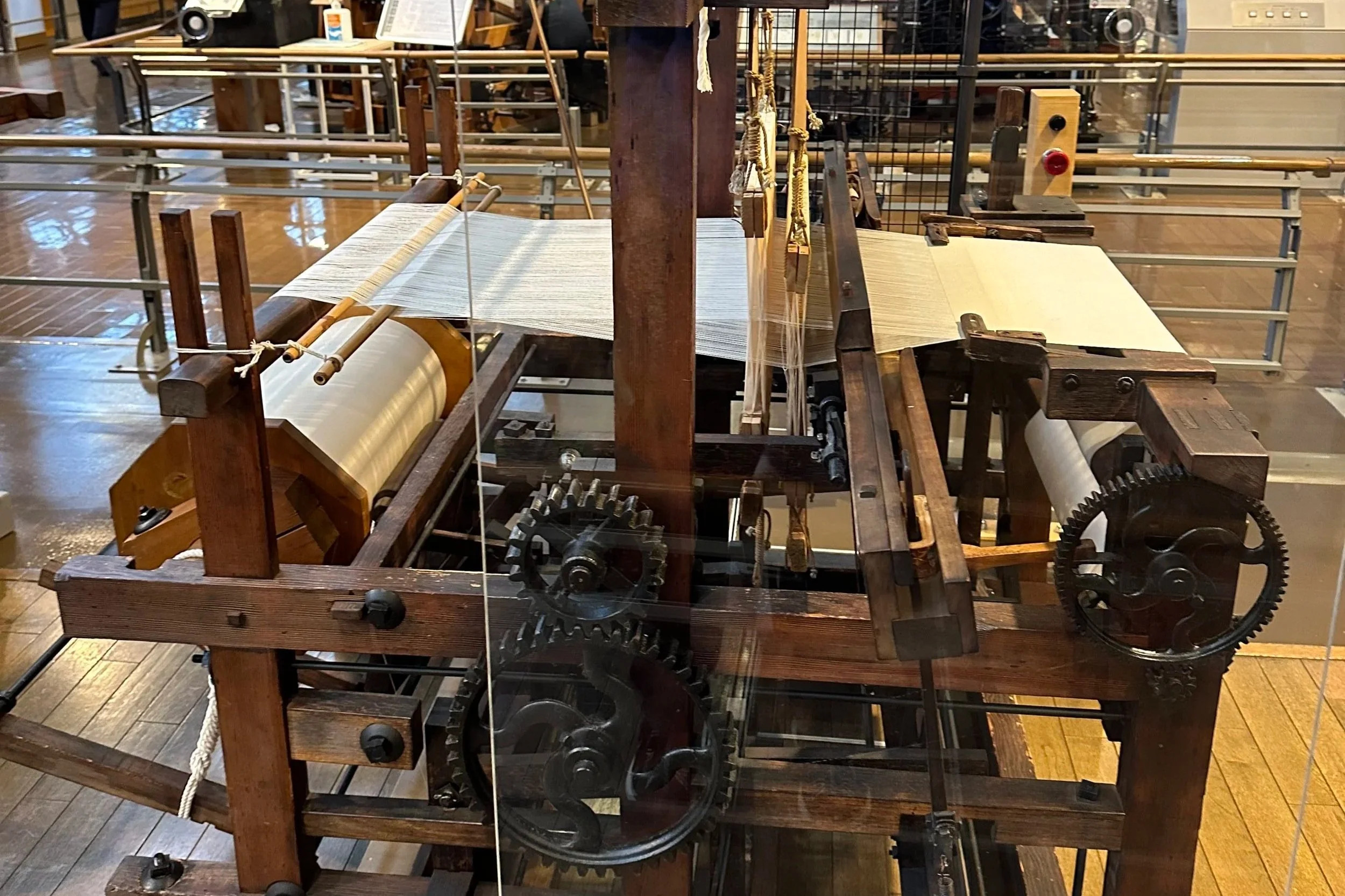
Loom on display at the Toyota museum in Nagoya, Japan.
Segment 3: Central Japan (Nagoya & Kyoto)
Day 9: Nagoya Shibori Highway & Toyota Loom Heritage
09:00 – 12:00 | Arimatsu-Narumi Shibori Highway: Walk through a preserved 400-year-old Tokaido post town; visit the Shibori Museum to watch master artisans create intricate 3D tie-dye textures.
12:00 – 13:30 | Nagoya Hitsumabushi (Grilled Unagi) Lunch
13:30 – 16:30 | Toyota Commemorative Museum of Industry and Technology: Tour Sakichi Toyoda's revolutionary circular looms and live cotton-spinning machinery. See many historical and modern looms still in working condition and discover the unique textile roots of the modern-day automotive manufacturer, Toyota.
16:30 – 19:00 | Hotel Check-in
Day 10: Imperial Kyoto Silk & Yuzen Stencil Masterclass
09:00 – 12:00 | Nishijin Textile Quarter & Orinasu Museum: Explore Kyoto’s legendary weaving grid. Tour private machiya workshops to see jacquard punch-card looms producing gold-thread obi sashes.
12:00 – 14:00 | Kyoto Kaiseki Lunch
14:00 – 16:30 | Kyo-Yuzen Dyeing Workshop (Kodai Yuzen-en): Learn stencil silk painting and view historical brush-dyeing displays, and learn the signature style of textile art for Kyoto artisans.
16:30 – 19:00 | Evening Walk through Gion & Higashiyama
Day 11: Private Tea Terraces & Sacred Architecture
08:30 – 11:30 | Uji Tea Estate & Private Tea Terrace: Exclusive tasting and stroll through organic green tea fields in Uji.
11:30 – 13:30 | Uji Matcha Fine Dining Lunch
13:30 – 16:30 | Temple Architecture & Kodai-ji: Explore historic wooden temple architecture, Zen gardens, and traditional lacquerware studios.
16:30 – 18:30 | Return to Kyoto Hotel
Optional additional day visit to the ocean side town of Kyotango, home to the majority of silk production in Japan. Or a side visit to the stencil cutting area of Ise in Mie prefecture.
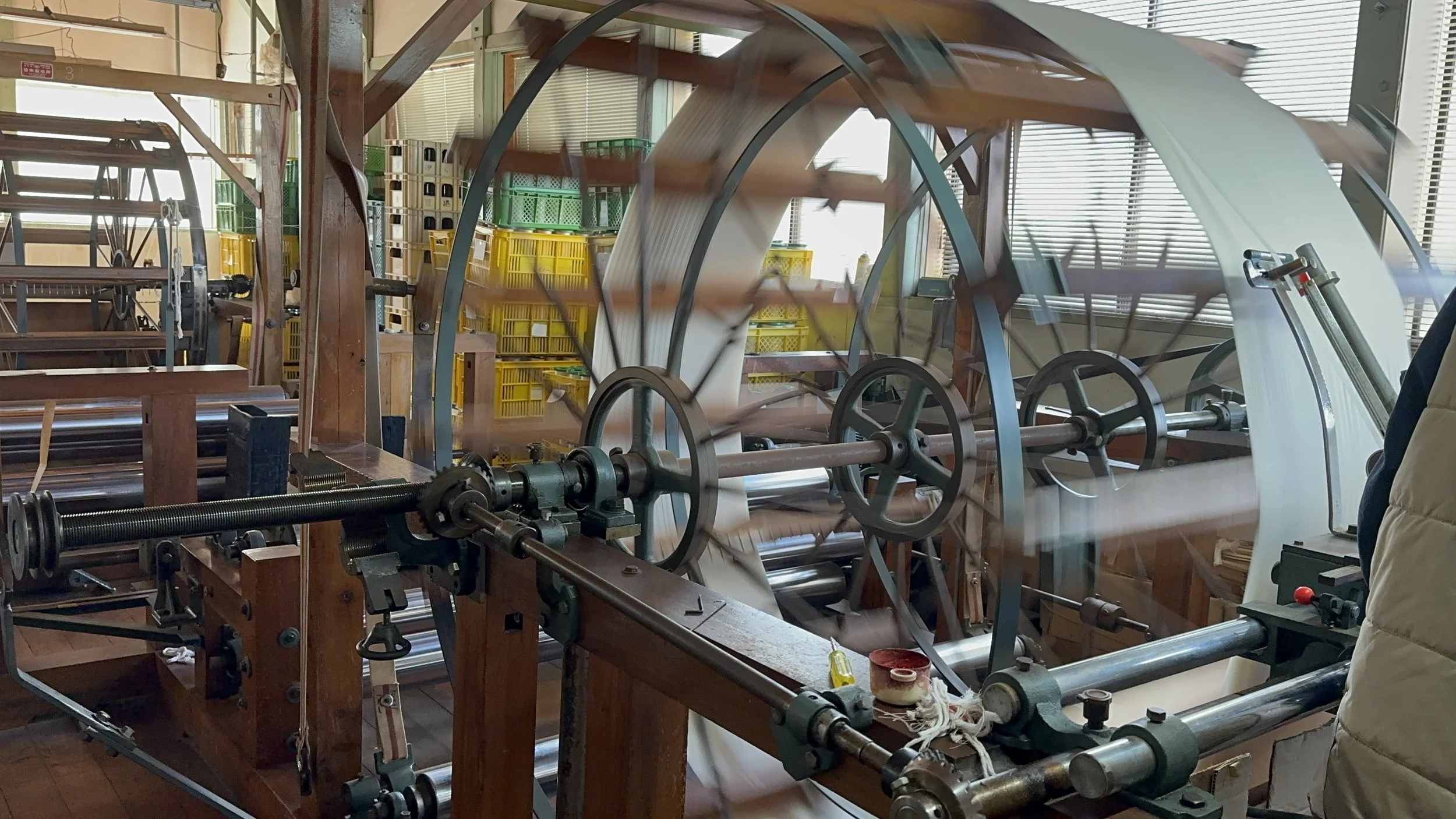
Working silk production factory in Kyotango in Kyoto Prefecture in Western Japan.
Segment 4: Awaji Island, Okayama Denim & Tottori Manga
Day 12: Awaji "Anime Island" & Seto Inland Sea Drive
08:30 – 10:00 | Drive across Akashi Kaikyo Bridge to Awaji Island
10:00 – 12:30 | Hello Kitty Smile & Media Art Center: Immersive character art and seaside dining.
12:30 – 16:00 | Nijigen no Mori Anime Park: Outdoor attractions featuring Naruto Shinobi-Zato, the life-sized Godzilla zipline, and Dragon Quest Island.
16:00 – 18:30 | Drive to Kurashiki, hotel check-in
Day 13: Kojima Denim Street & Kurashiki Canvas
09:00 – 12:00 | Kojima Denim Street: Visit the birthplace of Japanese selvedge denim. Tour Momotaro Denim and Japan Blue Jeans to inspect 1950s Toyoda shuttle looms producing heavy indigo denim.
12:00 – 13:30 | Kojima Port Lunch
13:30 – 16:30 | Kurashiki Bikan Historical Quarter: Stroll along 17th-century canals; visit Takeyari Canvas (producing heavy cotton duck canvas since 1888).
16:30 – 19:00 | Drive North to Tottori / Coastal Ryokan
Day 14: Tottori Dunes (Sandslash) & Conan Town
09:00 – 11:30 | Tottori Sand Dunes: Explore Japan’s coastal sand dunes (home to Tottori’s official Pokémon ambassador, Sandslash).
11:30 – 13:00 | Tottori Crab / Seafood Lunch
13:00 – 16:00 | Gosho Aoyama Manga Factory & Conan Street (Hokuei): Dedicated to Detective Conan. Cross Conan Bridge, view character statues, and visit Beika Shopping Street.
16:00 – 19:00 | Transfer across the Inland Sea toward Hiroshima/Matsuyama
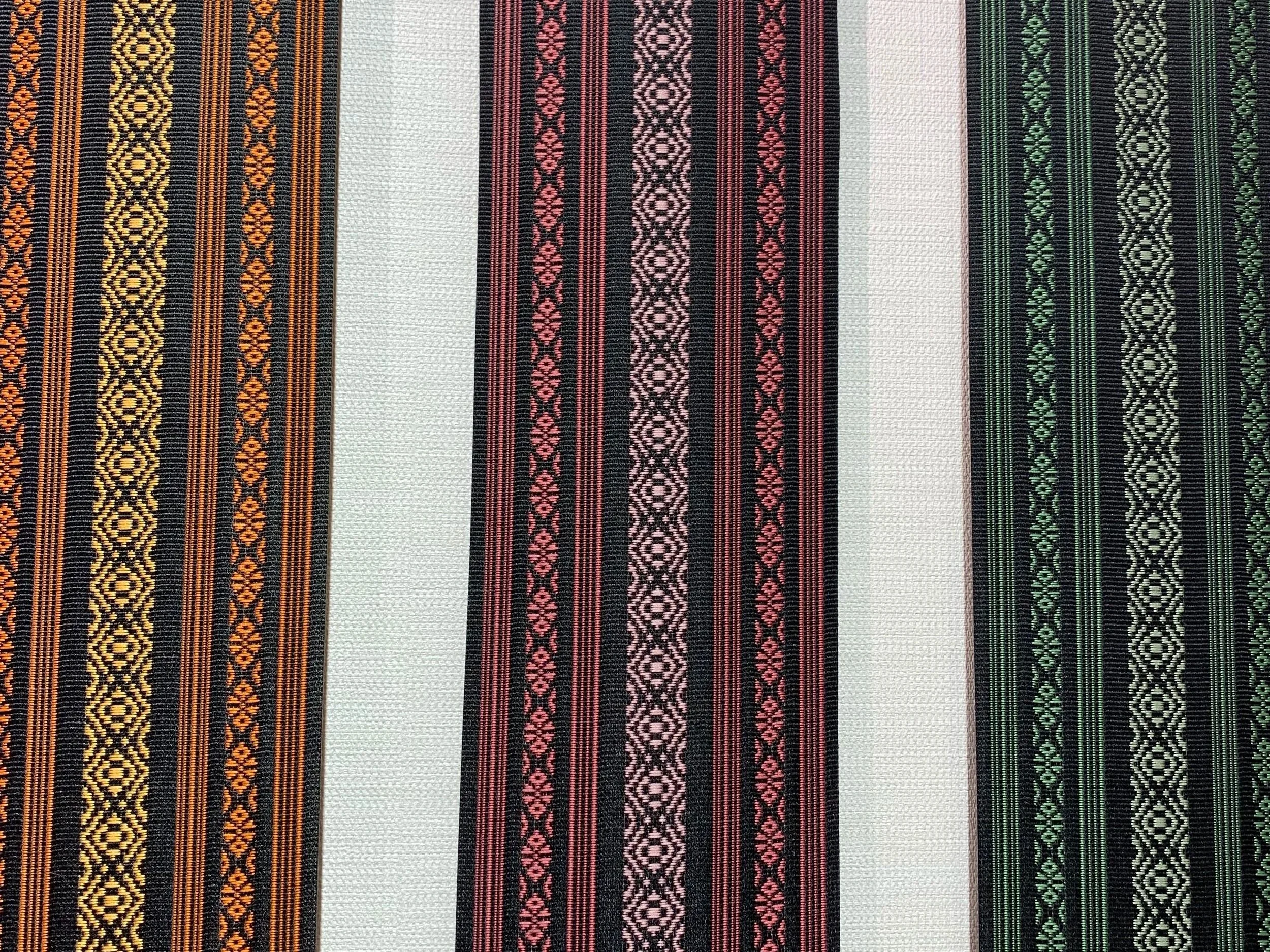
Samples of Hakata Ori, the textile from Fukuoka Prefecture in Southern Japan.
Segment 5: Shikoku, Kyushu & Southern Extensions
Day 15: Tomonoura Port (Ponyo) & Dogo Onsen (Spirited Away)
08:30 – 11:00 | Tomonoura Port Town: Visit the historic Seto Inland Sea port town that inspired Sosuke’s village in Miyazaki's Ponyo.
11:00 – 13:30 | Coastal Drive across Shimanami Kaido Bridge to Shikoku
13:30 – 16:30 | Dogo Onsen Honkan (Matsuyama): Tour the 1,000-year-old wooden bathhouse that served as the architectural inspiration for Yubaba’s Bathhouse in Spirited Away.
16:30 – 18:30 | Check-in at Dogo Onsen Luxury Ryokan
Day 16: Shinkansen to Kyushu & Hakata Silk Weaving
08:30 – 11:30 | Sanyo Shinkansen ("One Piece" Route) to Hakata (Fukuoka)
11:30 – 13:00 | Fukuoka Hakata Ramen / Gourmet Lunch
13:00 – 16:00 | Hakata-ori Weaving Center: Study heavy, ribbed Hakata-ori silk—a dense weave historically mandated for samurai sashes (obi) due to its firm grip on sword sheaths.
16:00 – 18:30 | Check-in at Fukuoka Hotel
Day 17: Kurume Indigo Kasuri & Arita Porcelain Studios
09:00 – 12:00 | Kurume Kasuri Weaving Village: Visit workshops specializing in indigo-dyed cotton resist-weaving (Kurume Kasuri), observing thread-binding and dye-vat immersions.
12:00 – 13:30 | Kyushu Regional Beef Lunch
13:30 – 16:30 | Arita Porcelain Kilns: Tour historic ceramic kilns and artisan workshops in Saga Prefecture.
16:30 – 19:00 | Return to Fukuoka
Day 18: Grand Departure or Okinawa / Aomori Extension
09:00 – 12:00 | Final Boutique Sourcing & Craft Packing in Fukuoka
12:00 – 19:00 | Transfer: Fly from Fukuoka Airport back to Tokyo (HND/NRT) for your international connection, or take a domestic flight extension to Aomori (Kogin-zashi embroidery) and Hokkaido to experience the traditional embroidery and kimonos styles of the Ainu people (native people of Japan) or Okinawa (Basho-fu banana fiber & Bingata stencil dyeing).
