Treasure Sessions: What can Ikebana teach Teams about Creativity and Cooperative Perspectives
Ikebana, the traditional Japanese floral art, offers an unusual setting and material for team building activity. The art of Ikebana is a meditative and aesthetic practice that combines different senses and demands to consider and use the visible material as much as the use of empty space. Unconventional challenges give rise to unexpected use of individual expertise and instinct.
OBSERVE
INTERPRET
CREATE
CONNEC
T
REFLECT
TokudAw’s Ikebana Treasure Session creates a very rare opportunity to experience a craft from Japanese culture that is usually practiced alone as a team, exploring creativity and perspective-taking. Instead of solving a familiar problem or doing team effort without actively understanding the unique set of perspectives that exist in a team, collaborative Ikebana develops the ability to act as one while preserving the individuality of each member.
| Ikebana Treasure Session | Team Benefit |
|---|---|
| Nature and the brain | Screen-free, natural environment, and mindfulness |
| Looking differently and creativity | Working with negative space and inconvenience |
| Combining multiple perspectives | Value diversity of thought |
| The art of subtraction | Sharpen decision making and making more with less |
| The potential of imperfection | Adaptation and flexibility |
| From Individual to Collective | Team dynamics and negotiation of ideas |
Observation, experimentation, decision making, and intersection of perspectives are central to Ikebana and to optimize team work because it equips you with the tools to understand: how our environment influences how we think and how innovation and creativity depend on our ability to consider more than one possible answer.
Ikebana and the influence of Nature on the brain
There is value in moving people away from their usual environment. Studies link nature exposure to improved attention and creativity. An Ikebana session creates a short period without screens, focused on one unfamiliar, hands‑on task using visual and spatial judgment rather than normal professional language.
Creative thinking and looking differently
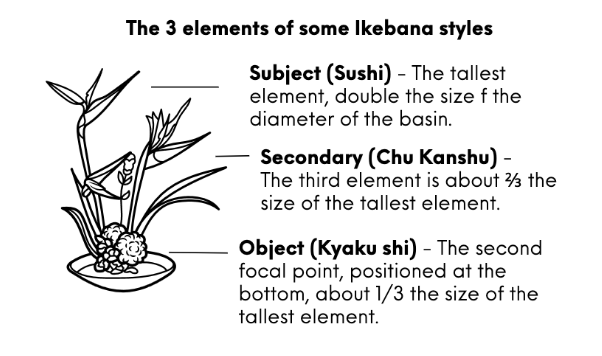
Ikebana emphasises negative space and imperfect shapes. Participants must notice what is already there even if it appears as an inconvenient element. Working with similar materials, people may engage with different possibilities and intentions.
Same resources and multiple perspectives
Everyone starts with similar materials yet arrangements emphasize something different. Movement, height, colors, and empty space. Ikebana Treasure sessions help to develop the capacity to question and welcome multiple perspectives to sit at the same table.
Ikebana and the art of subtraction
Sometimes less is more. Ikebana embraces the art of subtraction by using empty space rather than trying to fill everything automatically. In a team setting, this allows us to consider constraints and to make more with fewer options.
Imperfection and the creation of possibility
Ikebana is based on Nature’s own rhythm and you will never have the same flowers available depending on when you will experience this Treasure Session. Traditionally, Japan’s calendar distinguished 72 micro seasons, based on the change of the weather and its impact on the flora. Plants curve, change colour, and show age. The treasure session centers change as a point of reflection. Participants must accept the lack of control and respond to imperfect conditions.
FAQ
Do participants need experience with creative practices?
Not at all. The session is designed for all levels and profiles. The treasure session focuses on thinking perspectives, collaboration, and complementary skills.
How is Ikebana different from a standard team-building workshop?
Ikebana is originally an individual practice. TokudAw allows one to engage with it as a team in an activity that combines a cultural experience with explicit reflection on creativity, constraints, and the diversity of perspectives in a team.
