What Are the Best Food and Agricultural Tours near Tokyo, Japan?
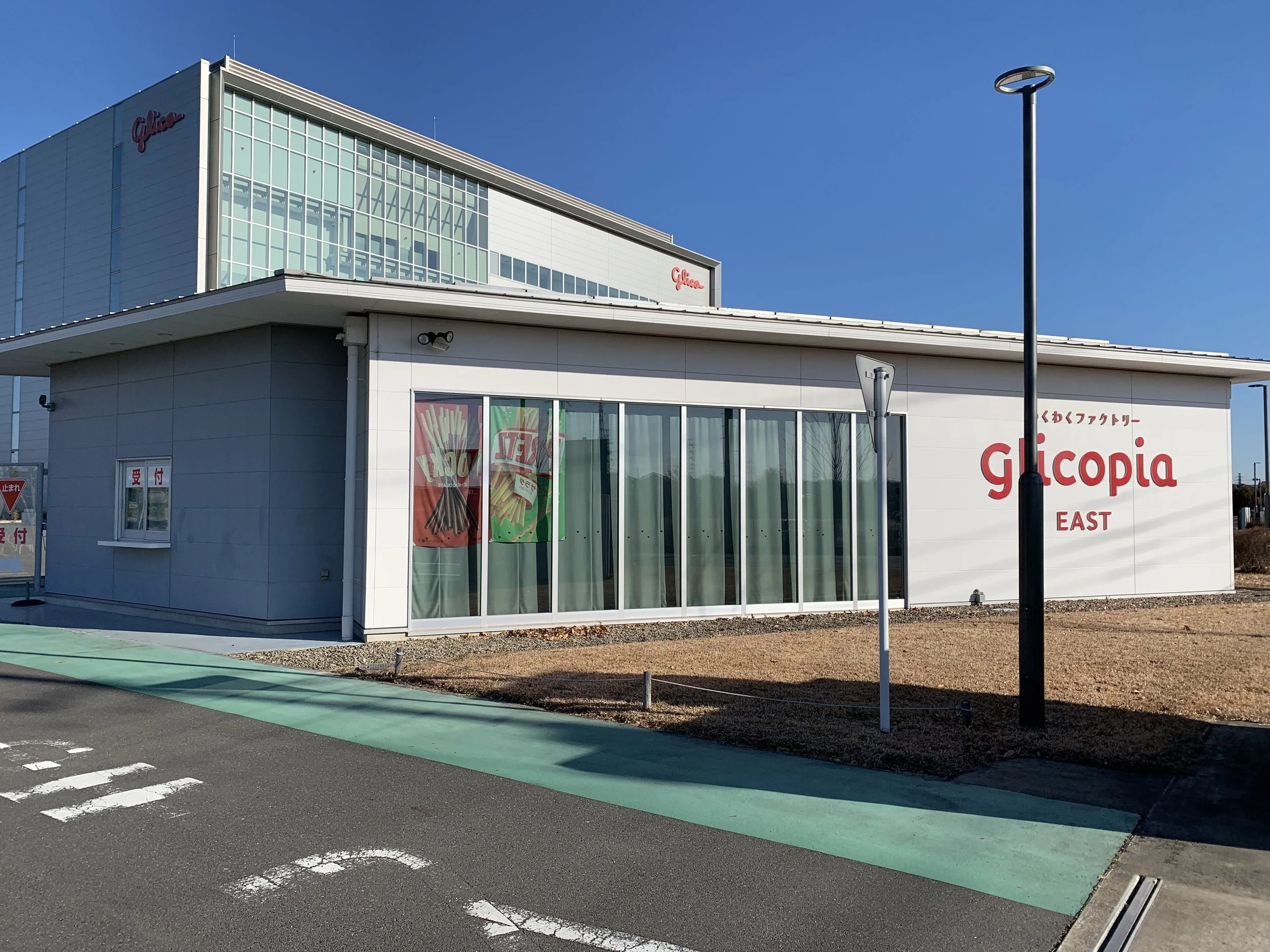
1. Glico Pia East, Saitama
Source: TokudAw Staff
Location: 9 Chome-55 Nakamaru, Kitamoto, Saitama 364-0013
Admission Fee: Free
Located in Kitamoto, Saitama, Glico Pia East features guided tours through Glico’s flagship snacks, Pocky and Pretz. The tour features glass-walled viewings of the production lines, alongside exhibitions featuring over 1,500 vintage Glico toys.
Note: The Pocky production line does not operate on weekends, with the Museum screening a video of the production process instead.
While admission is free, Glico Pia East operates on a strict reservation-only basis. There are a total of four guided tours a day, with each tour taking about 70 minutes. All reservations need to be made via Glico’s official website.
More information is available at Glico Pia East’s official website: https://www.glico.com/jp/enjoy/experience/glicopia/east/
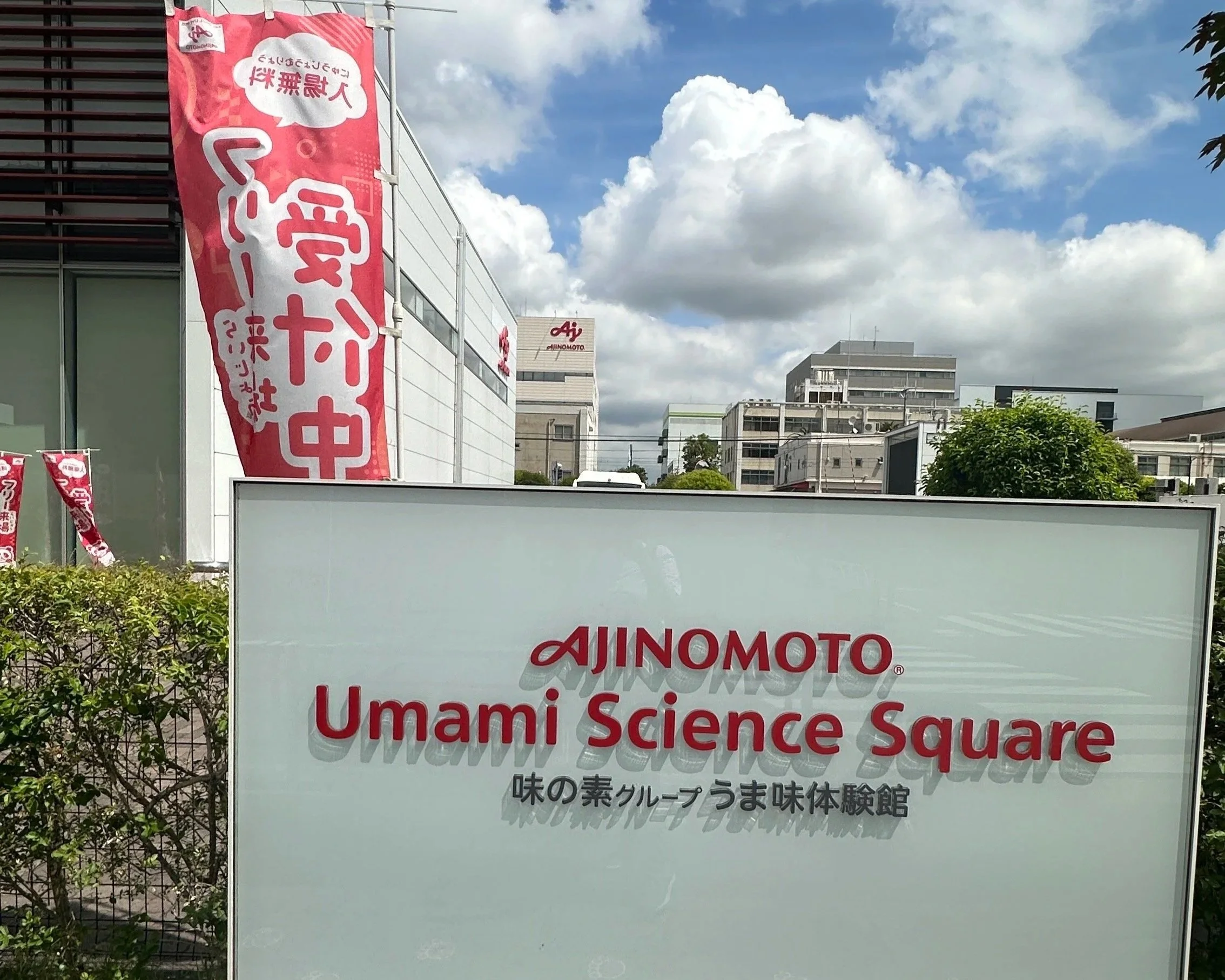
2. Ajinomoto Umami Science Square
Source: TokudAw Staff
Location: 3-4 Suzukicho, Kawasaki Ward, Kawasaki, Kanagawa 210-0801
Admission Fee: Free
Ajinomoto Umami Science Square, located at Ajinomoto’s Kawasaki Factory, offers several free, reservation-only guided tours. Some of these tours are also offered in English, though only at specific timeslots. All reservations need to be made via Ajinomoto’s official website. Reservations are not required for admission into the Exhibition Space located on the first floor, which showcases Ajinomoto’s history.
These tours include an introduction of how Ajinomoto’s founder discovered Umami, the fifth basic taste, alongside the chemistry of Ajinomoto. Depending on the tour options, visitors may even get hands-on experiences at cooking and packaging Ajinomoto’s products.
Some of the guided tour options at Ajinomoto Umami Science Square include:
Ajinomoto Work Experience Course (90 min), where visitors participate in a stimulated factory experience.
Ajinomoto Course (70 min), where visitors embark on a bus tour to observe the factory’s actual production and packaging lines.
Hondashi Course (90 min), which includes a bonito-flake-shaving experience.
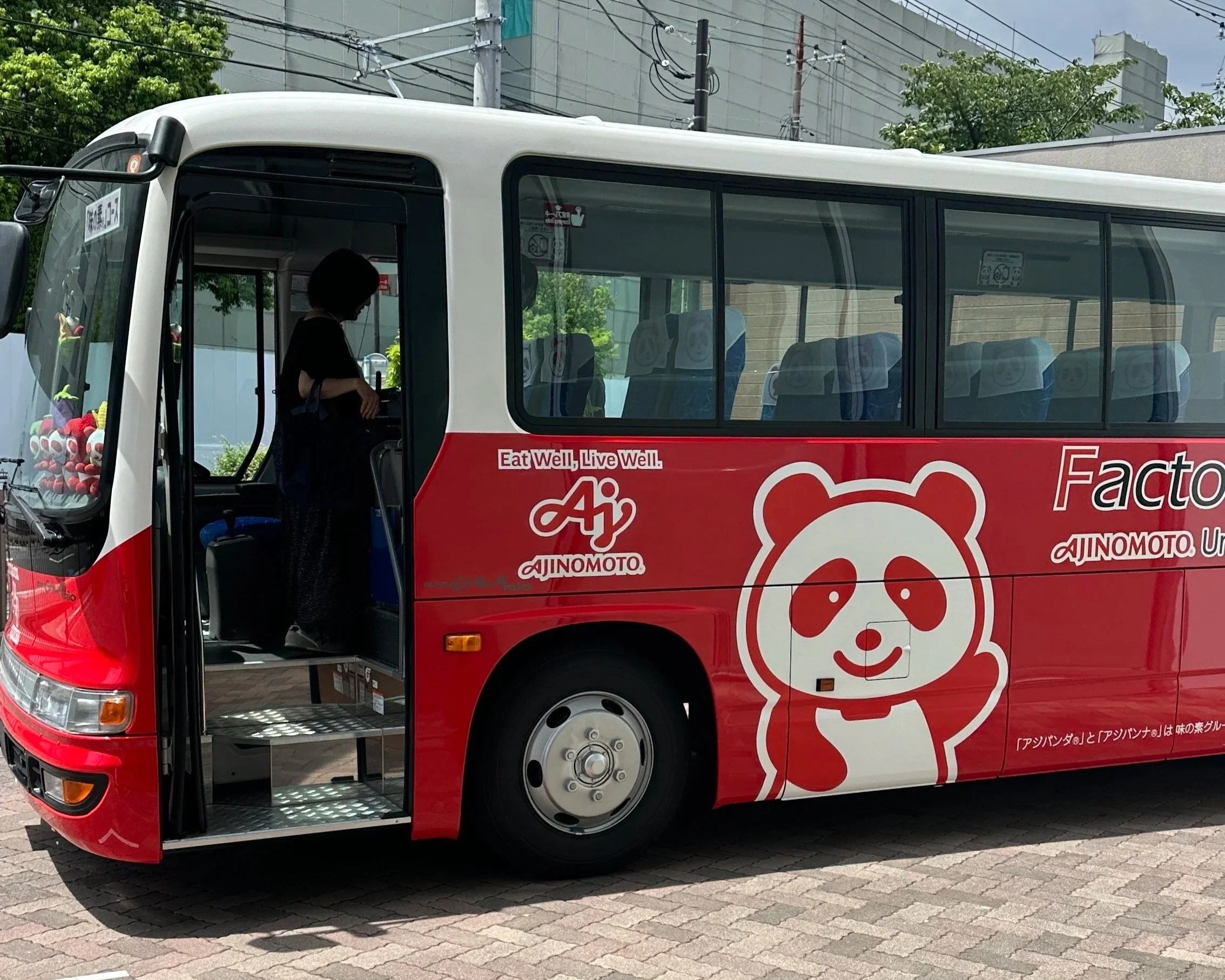
Ajinomoto’s Factory Tour Bus (Source: TokudAw Staff)
More information is available at Ajinomoto’s official website: https://www.ajinomoto.co.jp/kfb/kengaku/kawasaki/
3. Kinbue Soy Sauce Park
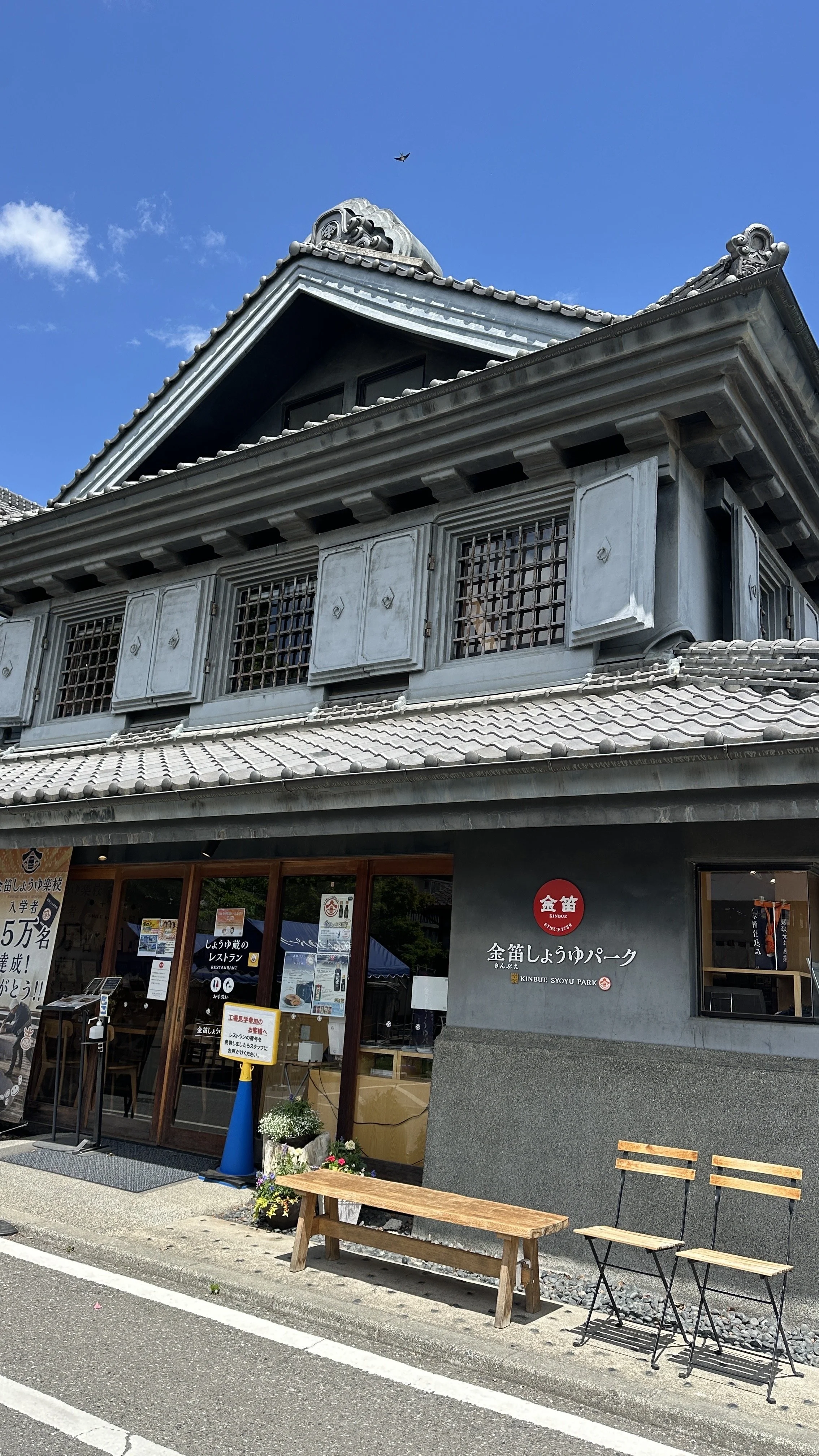
Source: TokudAw Staff
Location: 654 Kamiigusa, Kawajima, Hiki District, Saitama 350-0152
Admission Fee: Free
At Kinbue Soy Sauce Park, visitors can explore the warehouse’s brewing grounds, where they will learn more about the production processes of soy sauce. Notably, visitors will get a chance to observe soy sauce entirely aged in “kioke”, which are wooden barrels made by Japanese craftsmen. As only a few individuals are able to make these wooden barrels, “kioke” is an extremely important cultural element of Kinbue Soy Sauce Park.
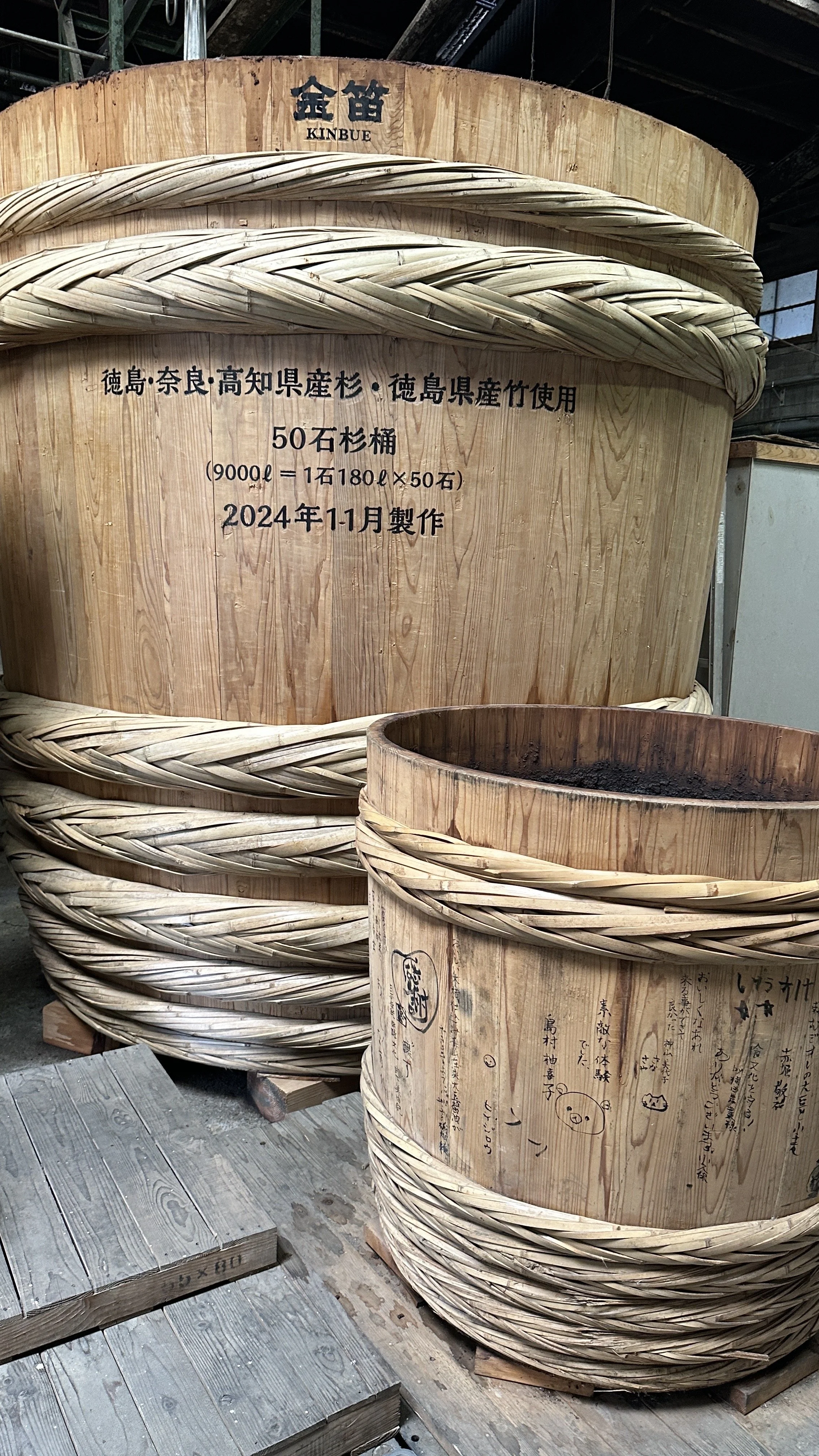
Soy sauce are aged entirely in these wooden barrels, known as “kioke”. (Source: TokudAw Staff)
Participants of the guided tour will also receive printed booklets, sometimes termed as “original textbooks” designed by the factory, ensuring the experience is unique and educational. There is also an on-site restaurant serving fresh, homemade udon, best enjoyed with the brand’s soy sauces.
The guided tours are free and last about 30 minutes. Reservations are recommended, but not required for individual visitors. English tours are also available on weekdays, though you will need to contact the factory at least two weeks in advance via their website’s contact form.
More information is available at Kinbue Soy Sauce Park’s official website: https://kinbue.jp/en/en_factory_tour
4. Kodai Hasu no Sato (Ancient Lotus Park)
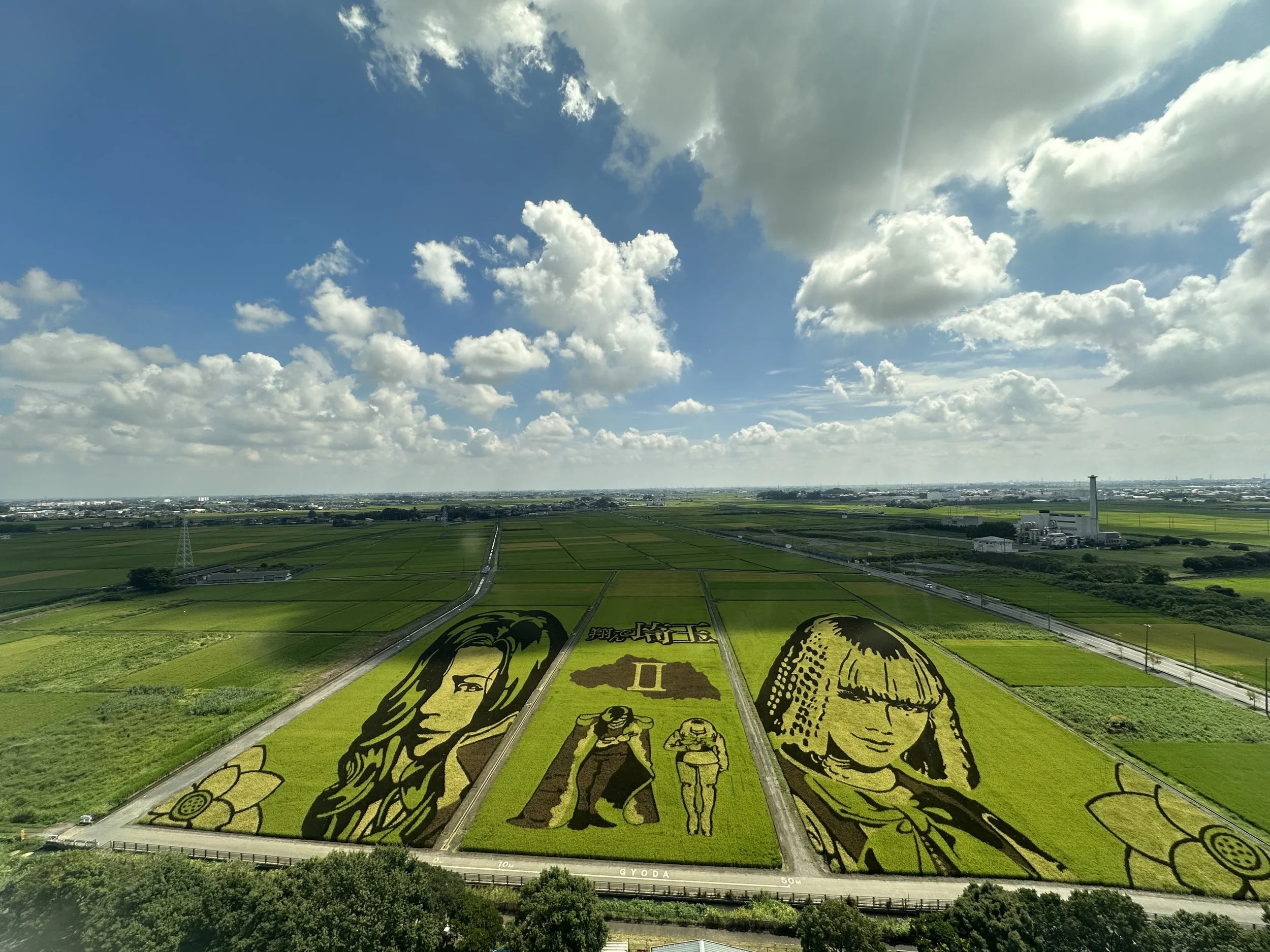
Gyoda City’s Rice Field Artwork in 2023. (Source: TokudAw Staff)
Location: 2375-1 Kobari, Gyoda City, Saitama
Admission Fee: Charges apply for the observatory tower (JPY400 for adults, JPY200 for elementary & middle school children).
Gyoda City, one of Japan’s leading rice-producing regions, attracts visitors to Kodai Hasu no Sato for two unique seasonal attractions: ancient lotus flowers and a rice paddy field artwork.
Certified as the “World’s Largest Rice Field Art” by the Guinness World Record in 2015, the rice paddy fields occupy an area of around 2.8 hectares. The artwork changes every year, with the 2026 theme being “Minecraft”.
The artworks are best viewed from the 50-meter observation tower. While admission into the park is free, charges are applicable for entry into the tower.
Source: TokudAw Staff
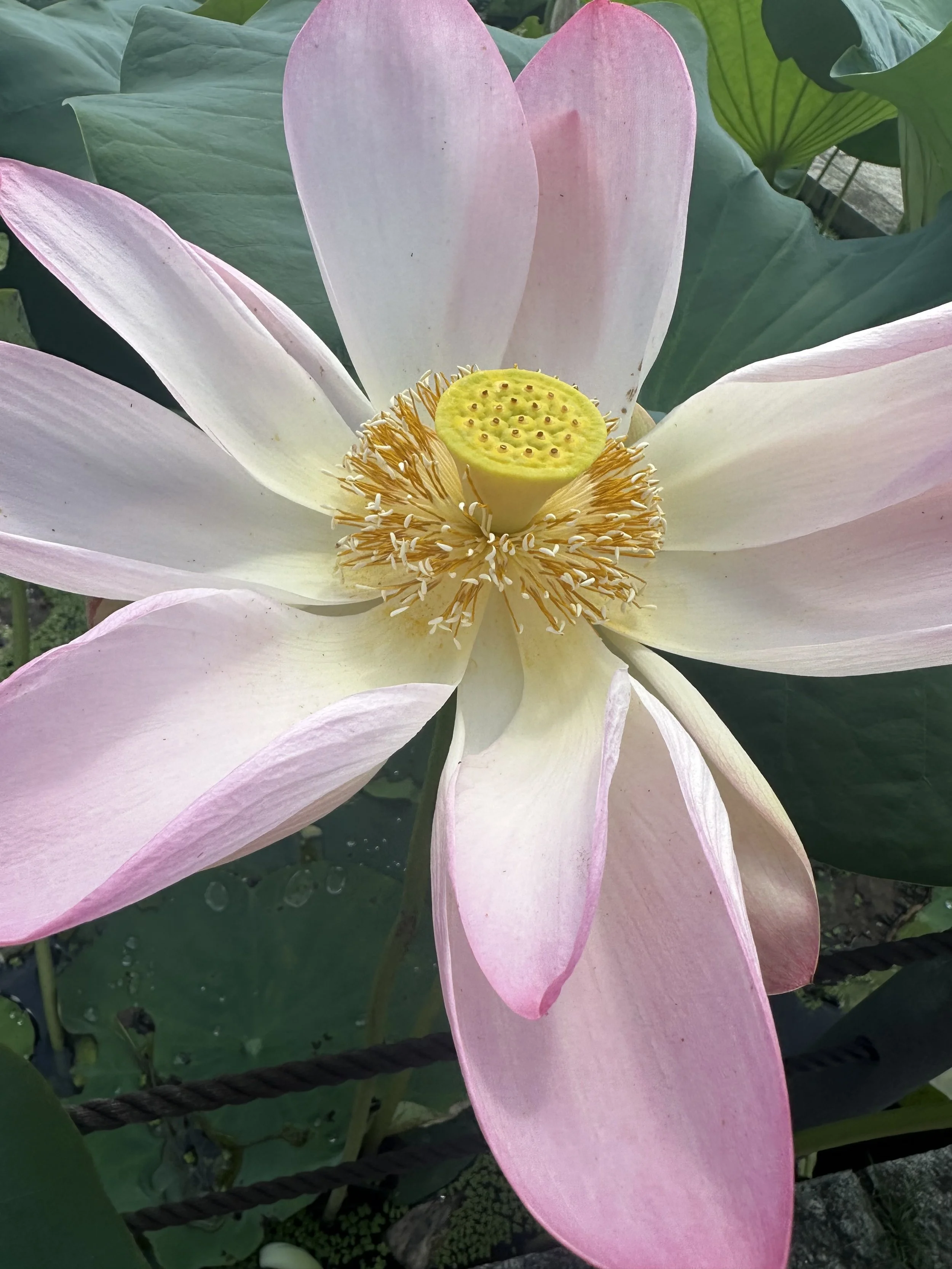
The Park also boasts a large display of lotus flowers, with over 120,000 lotus plants from 42 different lotus species within the Park’s grounds. It is believed that these flowers date back to almost 3000 years ago, with the Park developed specifically to protect and display them.
5. Meiji Chocolate Factory, Sakado
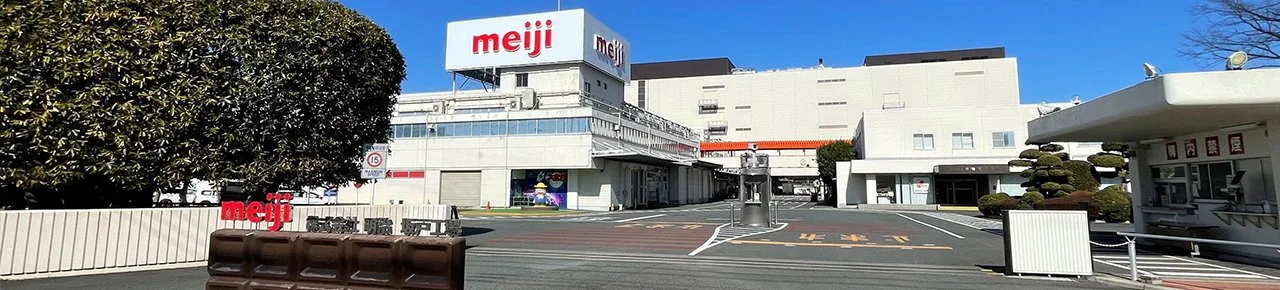
Source: Meiji’s Official Website
Location: 5 Chome-3-1 Chiyoda, Sakado, Saitama 350-0298
Admission Fee: Free
At Meiji’s Sakado Factory, guided tours focus specifically on Meiji’s chocolate products. Visitors are educated on the nutritional information of ingredients used, alongside Meiji’s efforts and commitment to sustainable practices. Visitors also get to taste-test some of Meiji’s chocolate products (e.g., Meiji Milk Chocolate, Apollo Chocolate), before heading over to observe the factory’s actual production line.
These guided tours, which run only on weekdays, are offered free-of-charge. However, advance reservations (up to 30 days before) are required. Visitors may make their reservations online, though larger groups will need to secure their reservation by phone call.
Each tour takes about 90 minutes. Notably, the tour runs entirely in Japanese; there is no English support at all. More information is available on Meiji Chocolate Factory’s official website: https://www.meiji.co.jp/learned/factory/sakado/
6. Museum of Package Culture
Source: Museum of Package Culture’s Official Website
Location: Osaki Forest Building, 2 Chome-18-1 Higashigotanda, Shinagawa City, Tokyo 141-0022
Admission Fee: Free
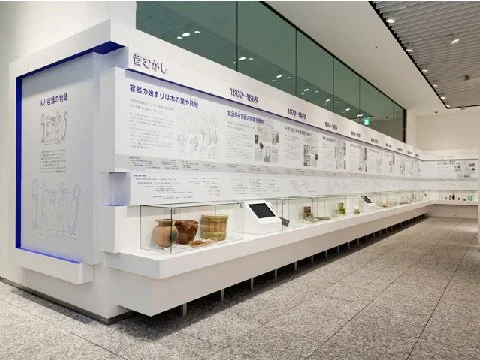
The Museum of Package Culture is located at the headquarters of Toyo Seikan Group, a major Japanese packaging manufacturer. Despite its small scale, the Museum showcases various types of packaging products, including but not limited to those of the Toyo Seikan Group.
The exhibition is arranged in a chronological order, with actual products used to demonstrate how packaging styles and technology in Japan have evolved over time. Some of the Museum’s older artifacts include glass bottles dating back to the 1800s, alongside a century-old automatic can-making machine. The Museum also provides an overview of modern packaging technologies in Japan, including environmentally-friendly packaging and recycling processes.
While most of the Museum’s signage is in Japanese, guide booklets in foreign languages (including English) are available at the front desk. Audio support is also available in English.
More information is available on the Museum’s official website: https://package-museum.jp/online_museum/english.html
7. Megmilk Snow Brand Co. Ltd. (Noda Factory)
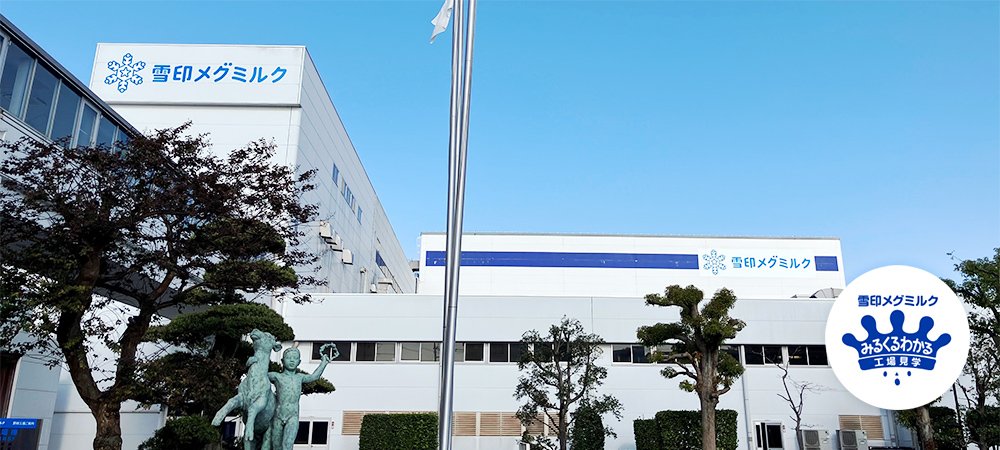
Source: Megmilk’s Official Website
Location: 256-1 Aza Hirai Kamisangao, Noda City, Chiba Prefecture 278-0031
Admission Fee: Free
One of Japan’s largest automated factories, Megmilk Snow Brand’s Noda Factory produces various products, including milk, juices, and fruit yogurt. Since the factory’s reopening in 2023, guided tours have been offered under the name “Miruku Wakaru”, centered around the idea of understanding milk.
The guided tour starts off with a taste-test of Megmilk’s milk and yogurt products, with visitors then brought to observe the manufacturing processes of these products. As the factory is largely automated, visitors get to observe how the production processes are largely powered by robots and computer operations. At the end of the tour, visitors also receive an exclusive milk-shaped eraser from the brand.
Each tour lasts about 80 minutes. While the tours are provided free-of-charge, advance reservations are required. For large groups, reservations are accepted via call. Notably, the tour is conducted entirely in Japanese, with no English-support offered.
More information is available on Megmilk’s official website: https://www.meg-snow.com/fun/factory/noda/
Summary Table
| Location | Entry Fee | Reservations Required? | |
|---|---|---|---|
| Glico Pia East | Kitamoto City, Saitama | Free | Yes, via their website. |
| Ajinomoto Umami Science Square | Kawasaki City, Kanagawa | Free | Yes, via their website. |
| Kinbue Soy Sauce Park | Kawajima Town, Saitama | Free | Not for individual visitors, but recommended. |
| Kodai Hasu no Sato | Gyoda City, Saitama | Free (for Park admission) JPY200~400 (for Observatory Tower) |
No. Tickets can be bought on-site. |
| Meiji Chocolate Factory | Sakado, Saitama | Free | Yes, via website or phone. |
| Museum of Package Culture | Shinagawa City, Tokyo | Free | No. |
| Megmilk Snow Brand’s Noda Factory | Noda City, Chiba | Free | Yes, via website or phone. |
Exploring Japan with TokudAw
Most of these spots sit outside central Tokyo, so public transport connections may be confusing to figure out, especially for first-time visitors traveling in large groups. TokudAw manages this by offering comfortable private transport, with each day’s itinerary specifically designed around your needs. This ensures that your precious time in Japan is spent exploring and learning about Japan, rather than figuring out the logistics of traveling within Japan.
TokudAw is also familiar with corporate travel, offering industry-specific interpreters with a good understanding of relevant terminologies, thus bridging the connections between your team and local industry leaders. This ensures that all discussions are not only meaningful, but remain clear and accurate.
TokudAw also has the relevant local knowledge and connections, making it possible to facilitate introductions and presentations with local Japanese companies, thus allowing business delegations to not only learn, but also network and connect locally.
Explore Japan the authentic way with TokudAw.