
Discover Olympic History in Tokyo
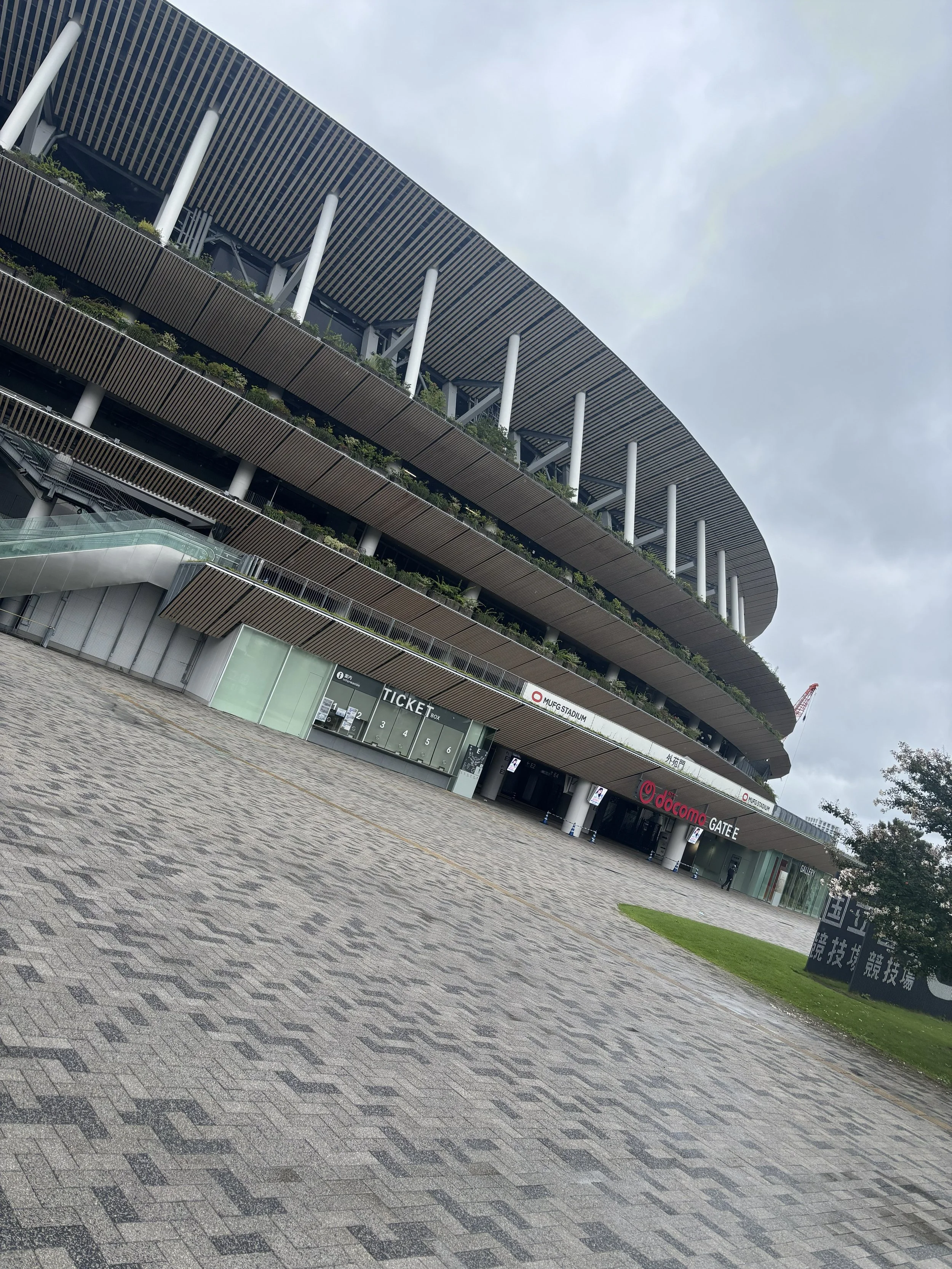
If you’re interested in sports, looking for something active to explore on a rainy day in Tokyo, or interested in what else to do near Shinjuku Goyen during sakura season, consider a visit to the National stadium in Shinjuku. The stadium was the host for the 2020 Summer Olympics and Paralympics now used by Japanese rugby and football teams, while the modern style of architecture blends both nature and utility, displaying mastery of Japanese artistry.
The architectural highlights
The national stadium was opened in 2019 and was made ready for the 2020 Summer Olympics and Paralympics to host the opening and closing ceremonies as well as track and field and football (soccer) matches of the games.
The venue’s design was heavily inspired by the traditional wooden architecture of the Hōryū-ji Temple in Nara, Japan. The temple is one of the oldest wooden buildings in the world and the natural material evokes a sense of calmness among those who visit and dwell within it. The architect hoped for the same when choosing the materials for the National Stadium. Each prefecture is represented in the materials, as the wood was sourced from each of the 47 prefectures.
Visitors to the stadium will quickly note how the stadium effectively integrates slim wooden planks evocative of thin trees and gardens on the outside, with several garden areas nestled around the stadium’s footprint. It is a masterpiece in urban planning. The stadium features multiple layers in a relatively short vertical profile, said to also be inspired by the Nara temple.
Wood makes an appearance on the inside of the stadium as well, in the locker rooms as well as in the press center and VIP areas. Each displaying the art of Japanese woodworking. TokudAw also recommends the Kigumi museum to learn more about ancient Japanese building techniques. While the stadium cost a massive US $1.4 Billion (157 Billion yen at the time) to build, the architect, Kengo Kuma also integrated sustainability into the architecture. Analyzing wind paths, the building was situated in an optimal way to reduce reliance on air conditioning and keep the stadium relatively cool. Something visitors to the stadium will surely notice.
What does the inside look like:
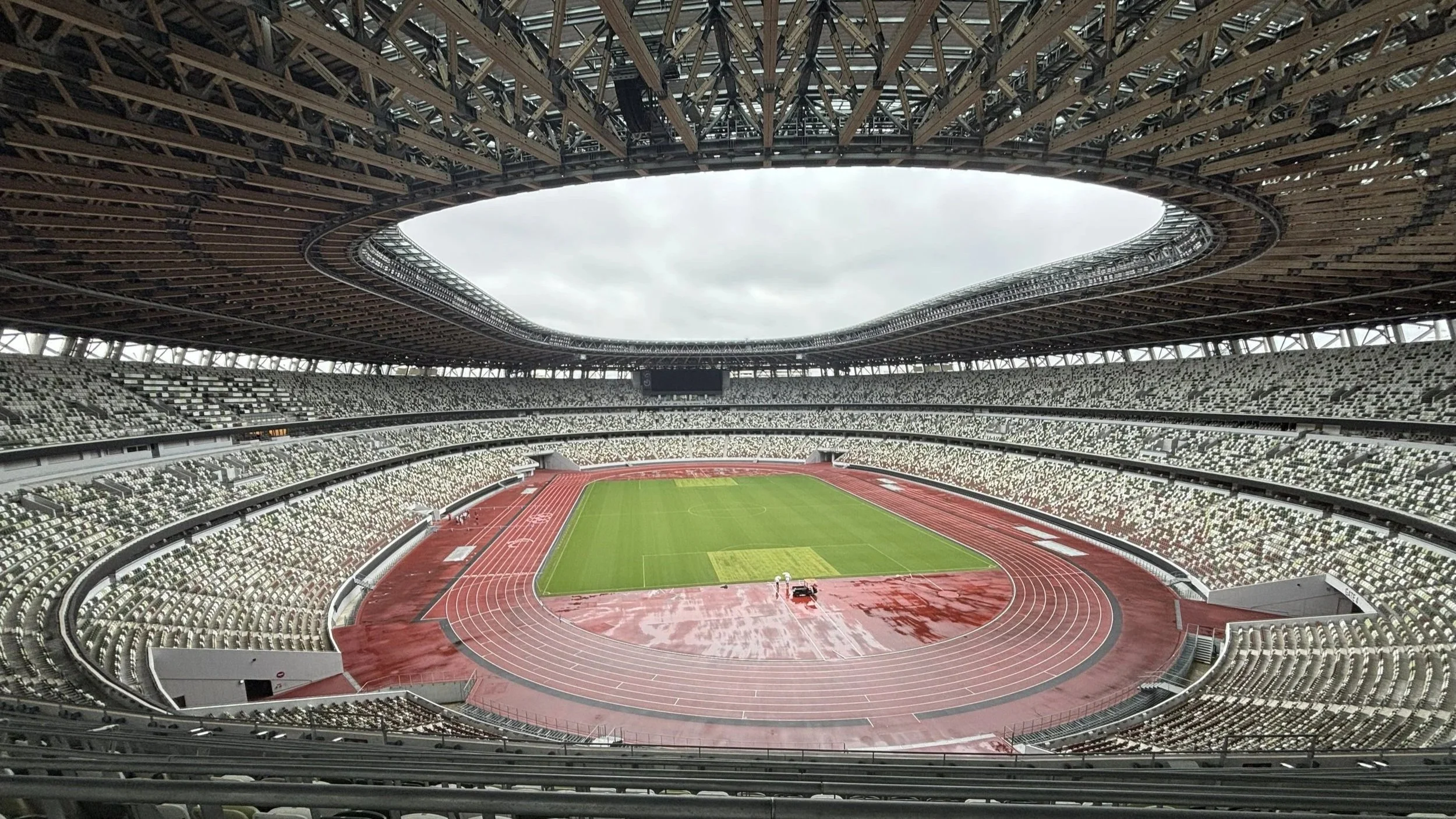
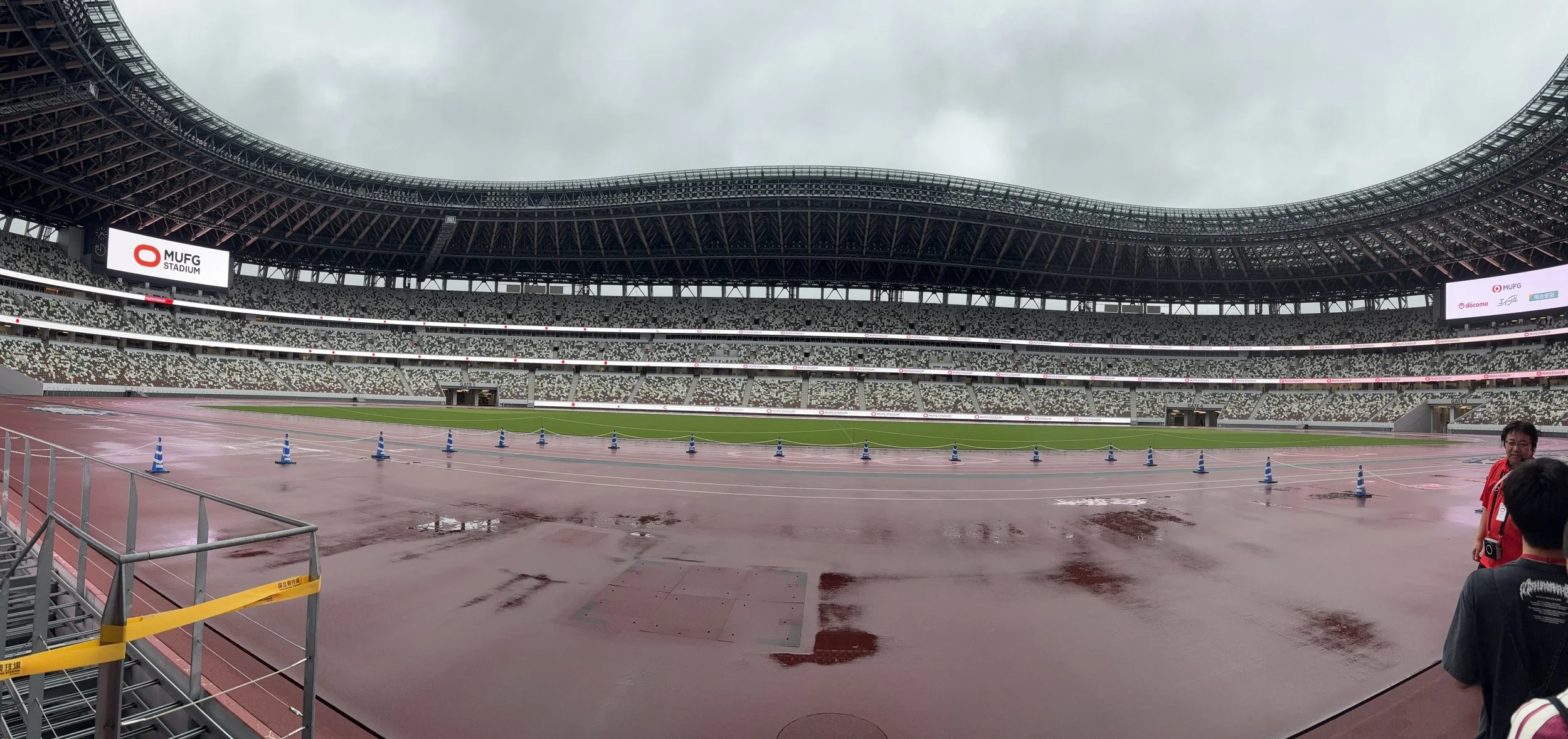
Views from the top of the stands and the observation decks allows visitors to take in not only the gap in the upper levels left for breeze and wind, but also the gap in the roof perfectly angled to allow sunlight in to grow the natural grass. Visitors may also notice the different colored seating. Rather than a single color, which most stadiums have, the seat color is among a series of 5 colors. Closer to the pitch the seats are more brown, higher up they become lighter. The colors are randomized to depict the way light filters through a forest. This effect helps create an illusion of a crowd even when there is none—perfect for boosting the crowd and player morale. And a decision that proved to be beneficial during the 2020 Olympic games and there was no crowd in the stands.
Even visiting on a rainy day, visitors can take note of how the architecture has been meticulously designed to let the games continue and keep the fans cool and protected from the rain.
What are special parts you can visits:
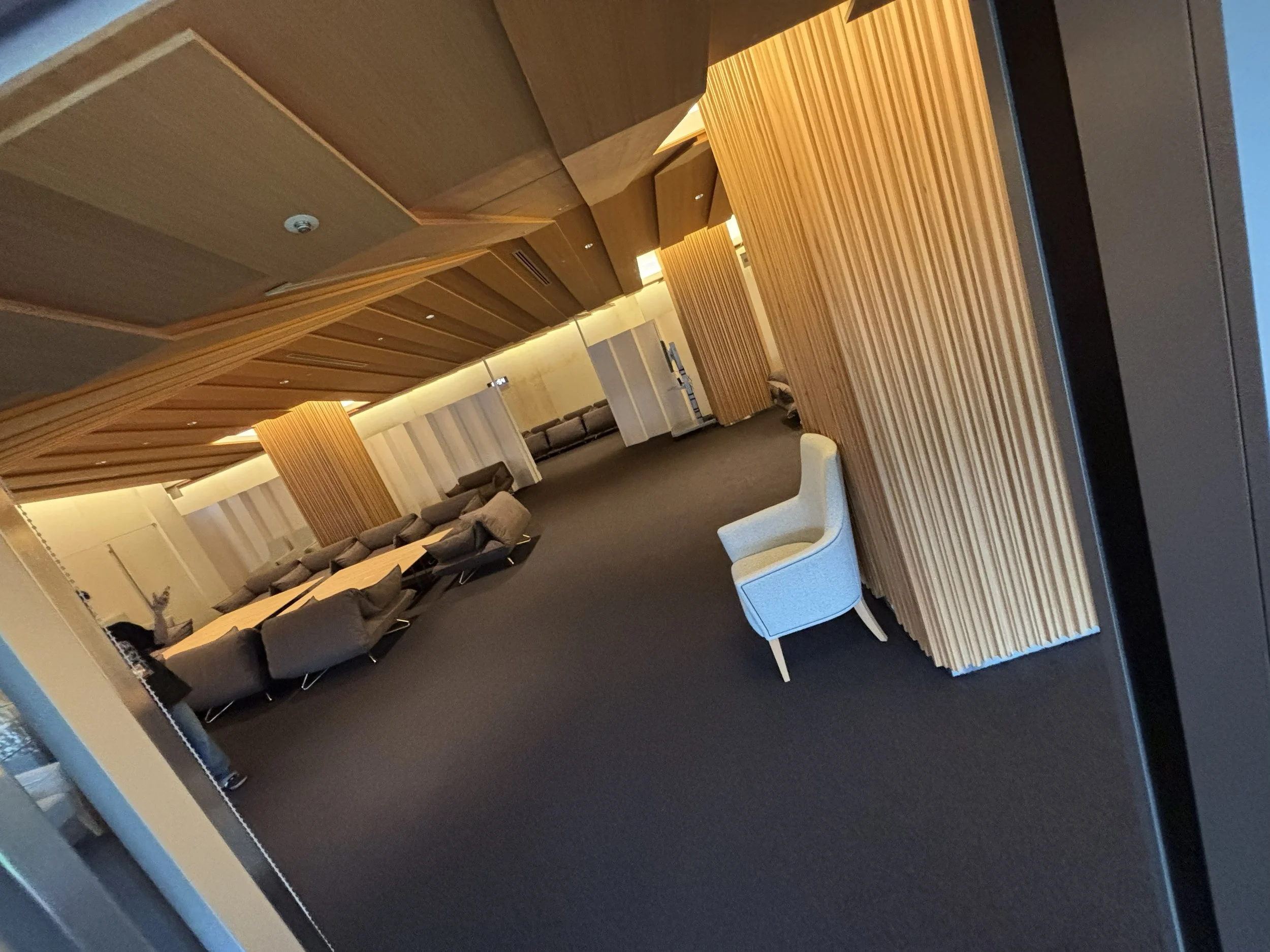
Areas that are normally prohibited from access are available for visiting in the stadium tour. These include areas such as the vip seating, lounge and dining area. During important events, these are facilities where dignitaries would have access to. Visitors will observe the use of wood and warm lighting techniques often found in traditional Japanese architecture giving the space a welcoming feel and essence of Japanese omotenashi or hospitality.
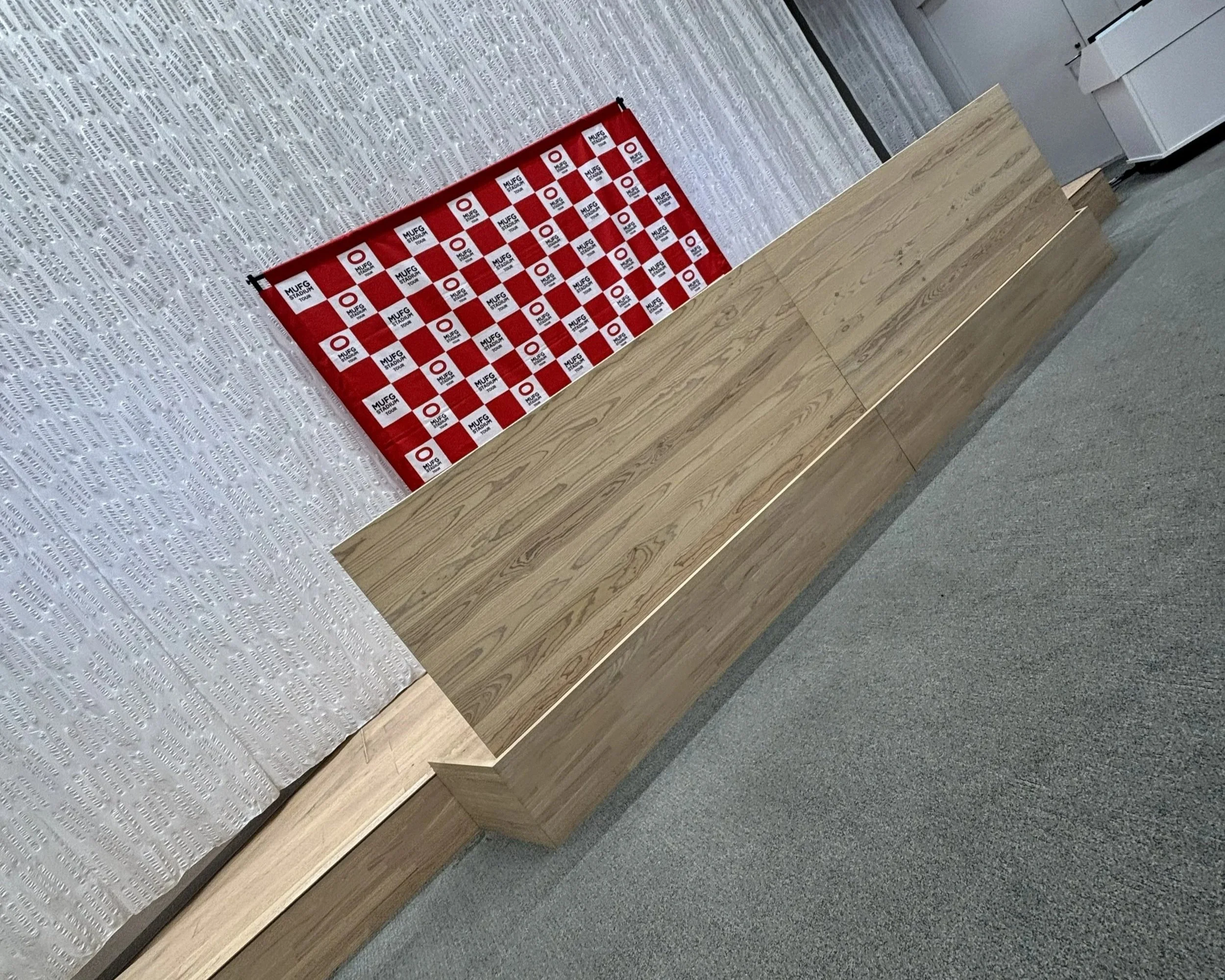
Visitors on the tour can stage a mini post-event interview when they visit the Media facilities and conference room. The wall in this space features a technique called Yamato-bari, or wood layering technique meant to evoke the essence of the forest. Special lighting in the room ensures the press’ photography and video all capture the moment seamlessly without fluorescent light interference.
Visitors will also learn about the strategic way traffic flows in the stadium, so that press, staff, officials, players and VIP all use specific entrances.
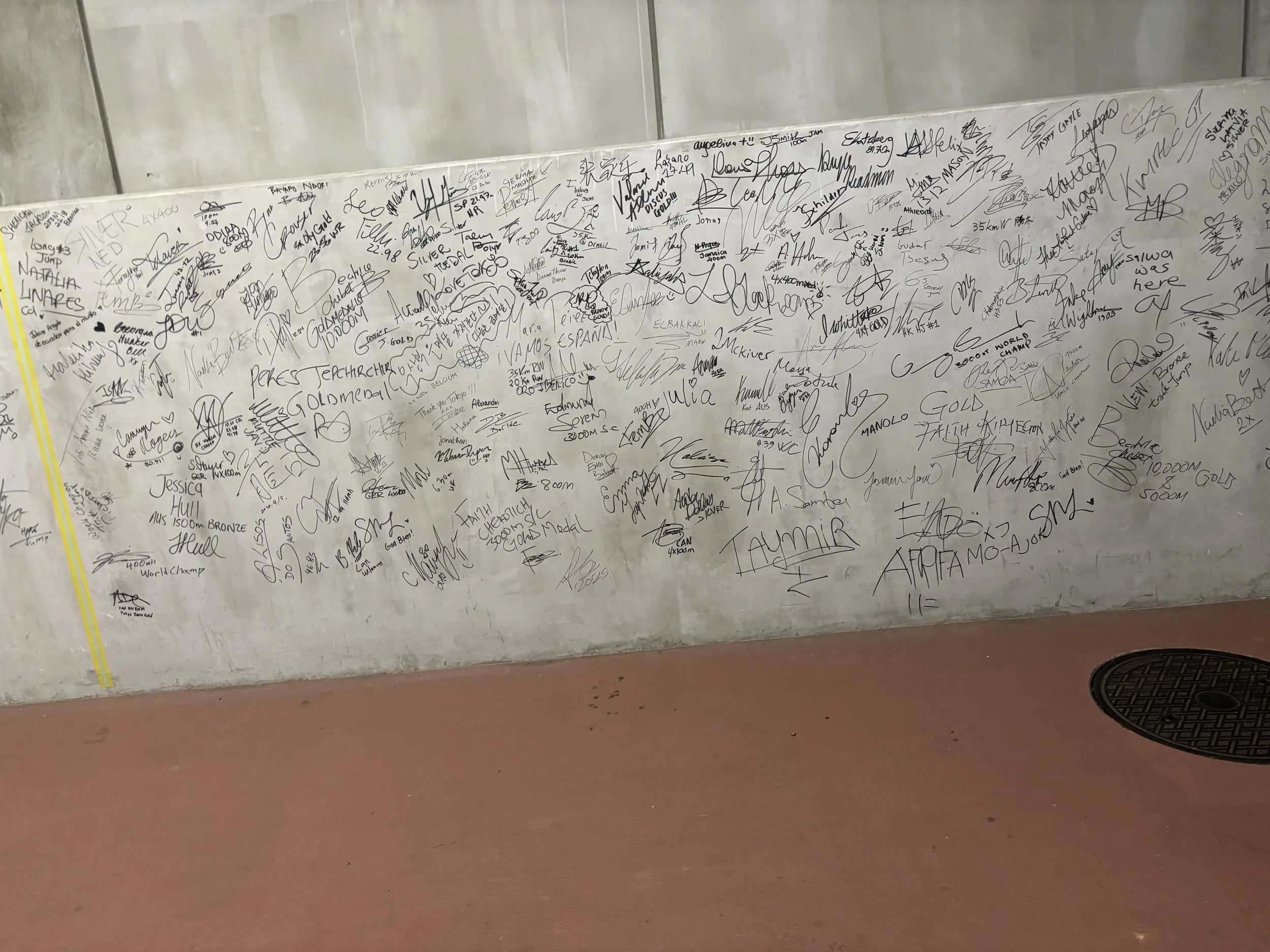
Along a traffic zone called Ring road, visitors will encounter an autograph wall, a collection of signatures from those who completed in the Tokyo 2020 Games—a reminder of the encouragement and determination of the athletes who competed.
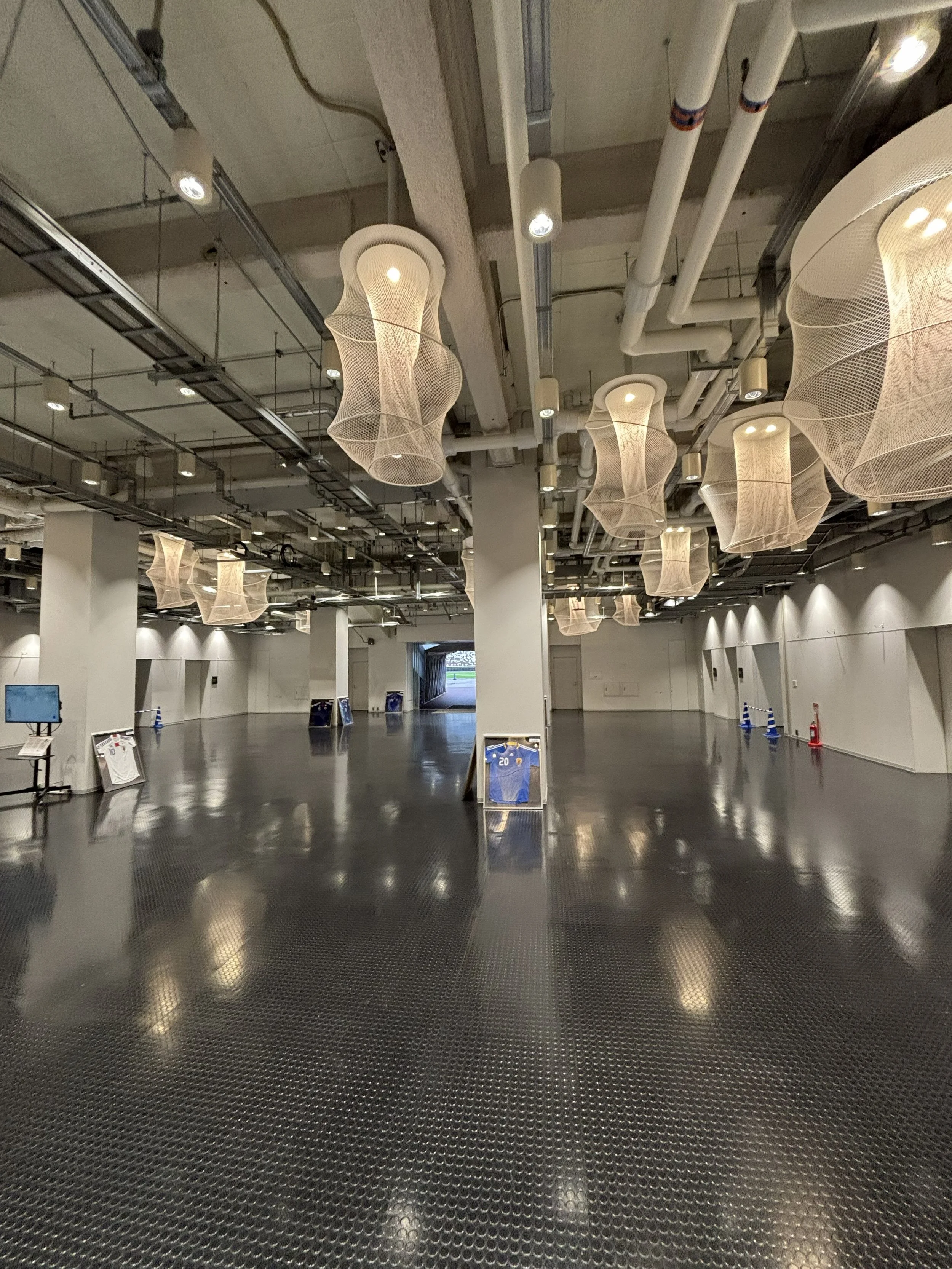
A visit to the national stadium also allows you to live the life of a player. From the walking the halls of the player’s entrance and exits, experiencing the player’s locker room, and stepping onto the pitch. Stepping into the player’s locker room, visitors will feel a sense of unity, as the locker room is an oblong instead of a square with harsh edges. The use of wood once again helps calm stress.
While on the pitch visitors may take a moment to sprint on a portion of the 9-lane track and feel the state-of-the-art Class 1 field. To obtain the Class 1 certification, the pitch couldn’t be too hard or soft, and must be consistent in it’s absorption compared to concrete with little deformations.
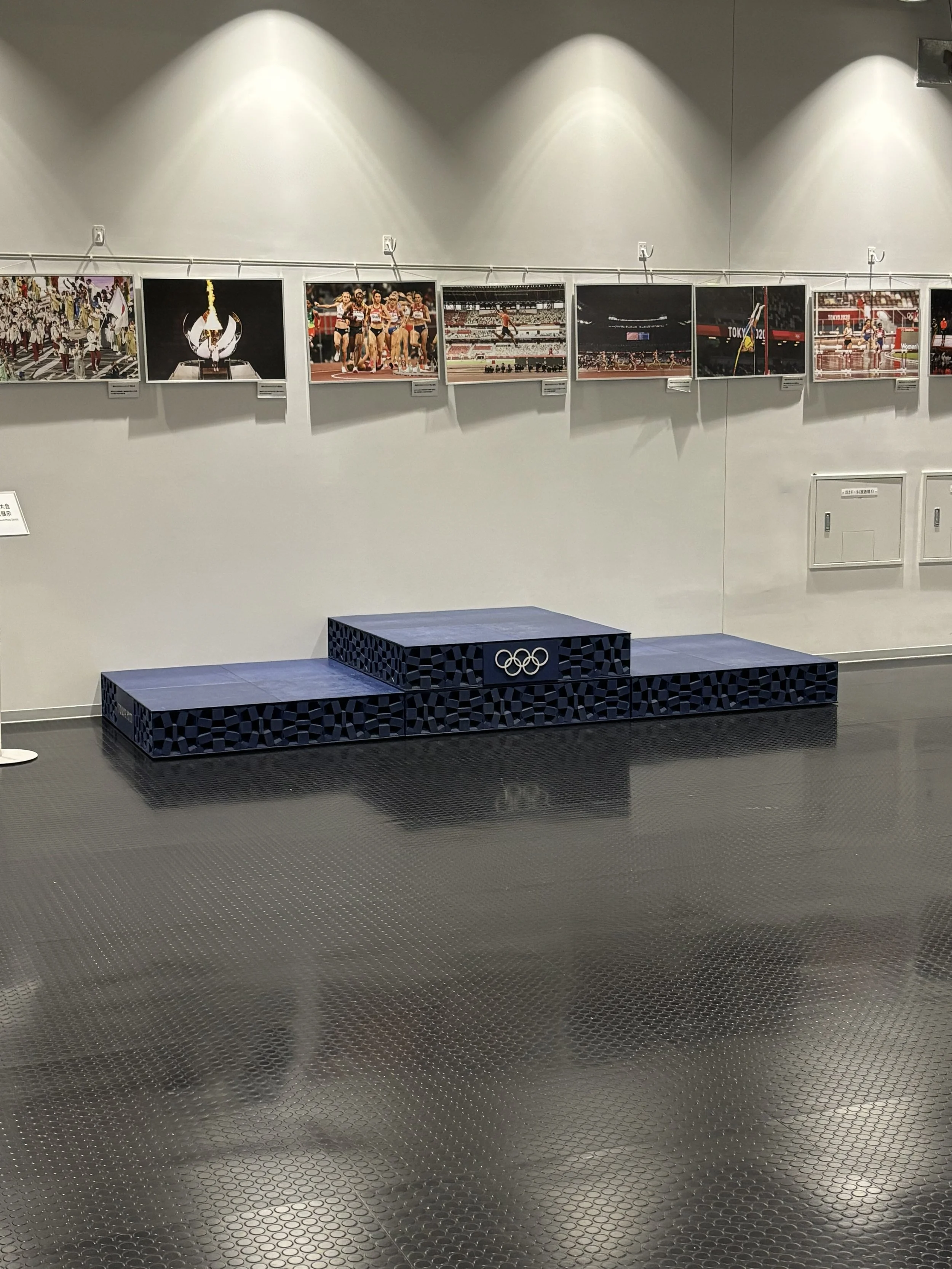
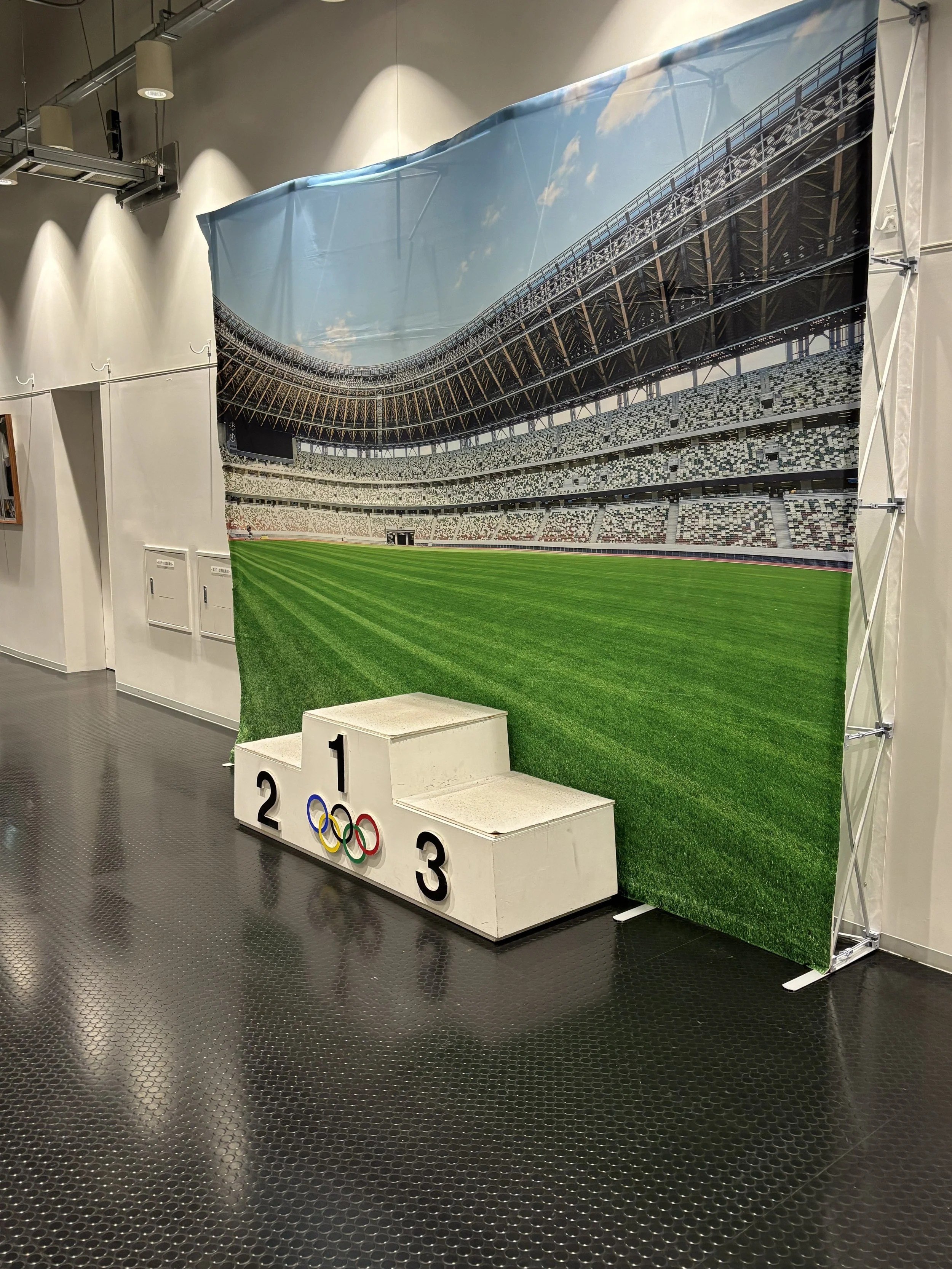
The players' exits and entrances have so much history on display. The podiums used for both the Olympics and Paralympics and the torches used for both events. Visitors should take special note of the podium’s materials, made out of recycled plastic detergent bottles donated from the community and reformatted so that they could be 3D printed and configured as a podium.
The touches also feature recycled materials from the Tohoku and Fukushima disasters and produced with the same technological process used in producing the Shinkansen trains or Japan’s bullet trains. The shape of the touches when viewed from the top are that of a cherry blossom, which represents the fleeting, precious moments of life and wishes for peace. The shinkansen technology is not the only technology on display with the torches. Japan aims to use more hydrogen technology in the future, and integrate hydrogen fuel cells into the torches. One other small detail to name is the accessibility feature built into the torches. The front contains a 3D emblem, which allows anyone to identify the “front” of the torch by feeling.
Fans of football or soccer will appreciate the player’s entrance, as it is lined with signed classic football shirts from players dating back to the early 1990s. They are presented in chronological order, allowing visitors to see how the Japanese kits have changed over the years. The more modern kits showcase digitally mapped designs that help to minimize waste and increase the performance of the player wearing the materials. Playing close attention to the designs, visitors might spot the year the jerseys sported an origami theme. In addition to the sports fan, this is a great display for any textile designer interested in performance materials.





Who should visit the national stadium?
The tour is accessible to anyone interested in everything from architecture, sports, the Olympics, history, or even textiles—not just sports fans.
The tour is also mostly wheelchair access friendly. On the tour to be able to access the different floors you will be taking the built in elevators within the stadium. Unfortunately the parts that are not wheelchair friendly are when you get the opportunity to walk up to the higher stands. Apart from a few picture taking moments like that the tour is accessible for everyone.
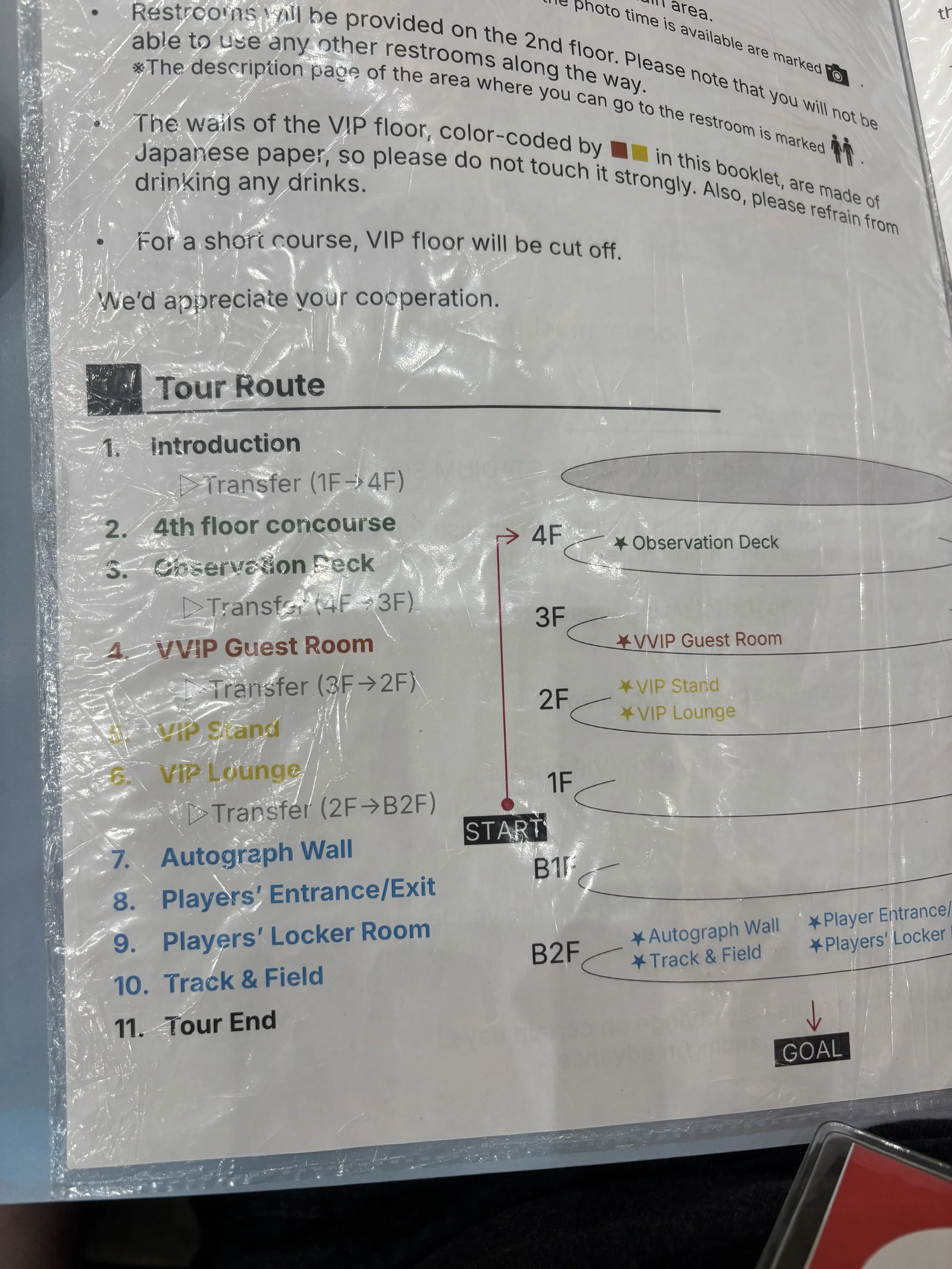
While the tour has no English translation, visitors will receive a booklet that outlines the entire tour and what is said in each section in English. Keep an eye out for plaques throughout the stadium that also add additional detail to the tour. With each section of the tour, there is plenty of time after the tour guide spoke to take pictures of videos of the area.
What else is there to do in the area?
The surrounding areas of the National Stadium includes open parks, cafes and community spaces. In the winter there is often an ice skating rink located right outside. In addition to these areas, there are places like the Japan Olympic Museum which pairs up nicely with the stadium tour as they are less than 10 minutes apart and make a great Olympic-themed day. Outside the Olympic Museums are even Olympic rings visitors can pose with that will have the National Stadium in the background.
Can I see the Olympic Cauldron in Tokyo?
Yes! Located outside the stadium is the 2020 Olympic Cauldron. Replicas of the Olympic Caludrons from the 1964 Tokyo Summer Games, 1972 Sapporo Winter Games, and the 1998 Nagano Winter Games.
FAQ
How much are tickets and when can you purchase them?
When purchasing a ticket for the national stadium tour you can not pay at the gate. But tickets can be purchased as late as 30 minutes before the time slot. Prices however may vary. From weekdays to weekends and public holiday tickets. However, there are no discounted prices at the time of writing for those with physical disabilities.
Weekdays:
Adults (High school age and above): 3,200 JPY
High school students and younger (Children): 1,600 yen
Weekends & Public Holidays:
Adults: 3,500 JPY
High school students and younger (Children): 1,750 yen
When are the tours?
The tours generally happen on select weekdays and specific weekend dates (schedules and exact open dates are released monthly on the MUFG Stadium Tour Official Site). With time slots being between 10.00am to 5.00pm.
Can I join if I am late?
Arriving after the start time may result in denied entry with no refunds. so plan to arrive 10-15 minutes beforehand. This will give you plenty of time to get ready for the tour.
Is the National Stadium tour recommended on a Rainy day or a hot day in Tokyo?
Yes. The tour is mainly indoors or under cover by the roof of the stadium. Although there may be chances you get wet, for example when going out to the sidelines of the pitch or the wind blows the rain in a certain direction. Warm weather days give visitors the opportunity to experience the brilliance of the architect’s designs as the architecture is designed to keep visitors cool.
