
What’s the Best Tokyo, Osaka, and Kyoto Itinerary for 7 Days?
The best 7-day Tokyo, Osaka, and Kyoto itinerary covers Japan’s three most iconic cities without feeling rushed. This golden route includes each city’s major highlights, while leaving room for lesser-known stops and locations.
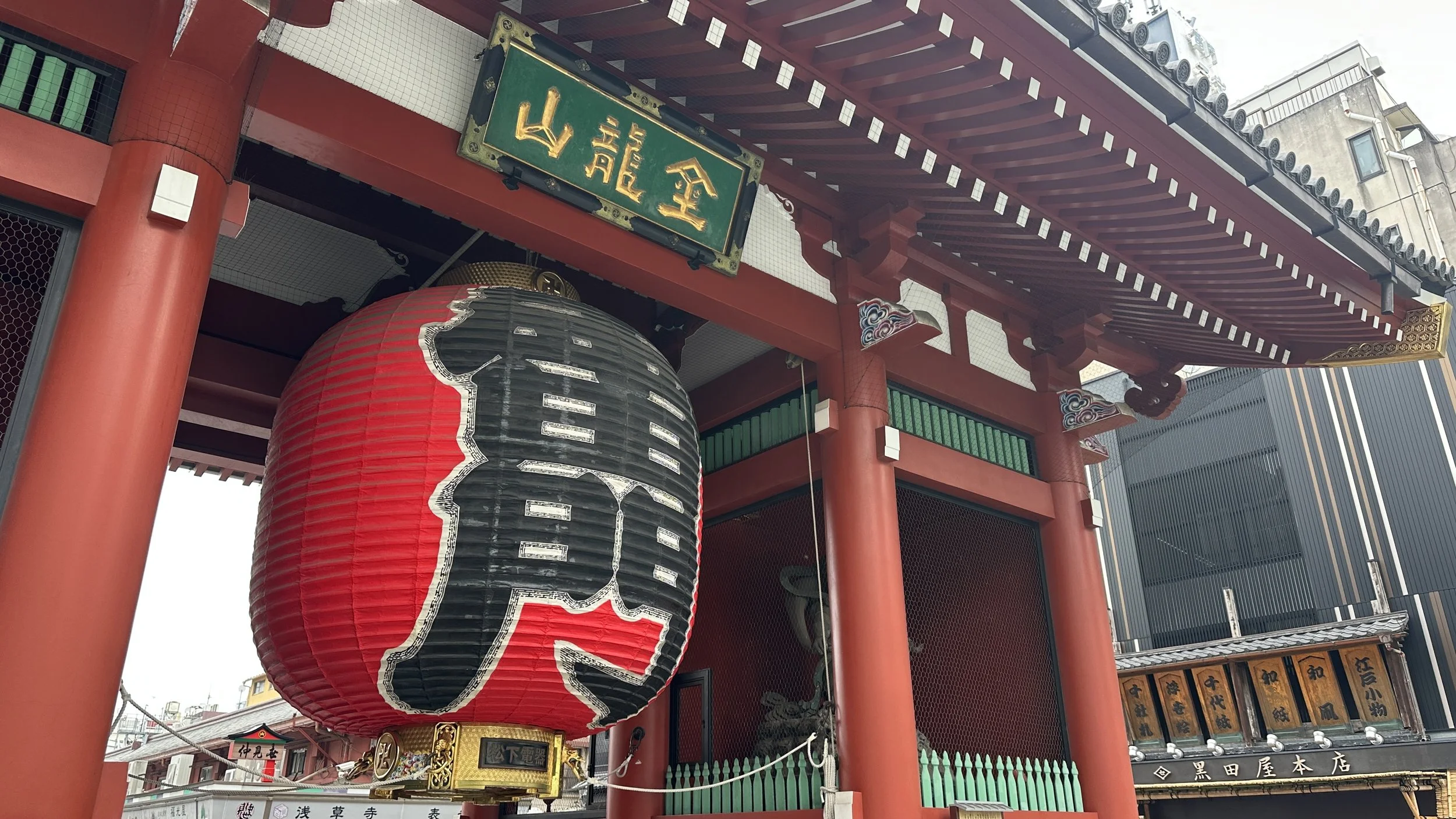
Senso-ji red lantern
Day 1 in Tokyo
Morning: Asakusa – Senso-ji & Tokyo Skytree
Start your morning by taking a photo at Kaminarimon Gate, against the massive red lantern. Walk towards Senso-ji, Tokyo’s oldest and most popular Buddhist temple, via Nakamise Shopping Street. Taste the local treats and snacks that Nakamise Shopping Street is known for, such as ningyo-yaki and senbei rice crackers.
Most tourists also miss the “Fan Fun Street” in Asakusa, located just right outside the Bandai Headquarters. This street is lined up with statues of popular Bandai characters, including Godzilla, Doraemon, and Crayon Shinchan! There is also a Bandai Namco Museum located inside the headquarters, featuring various toys and figures produced by the company.
From there, head over to Tokyo Skytree for a panoramic view of the city. Tokyo Skytree boasts two observation decks of 350 and 450 metres, which is the highest in Tokyo. They also often host time-limited collaborations with popular characters, including the Chiikawa and Pokemon franchise! Notably, Sky Restaurant 634 (Musashi), a Japanese-French fusion restaurant, is said to have the best view in Japan!
Afternoon: Ameyoko & Yanaka Ginza
Browse through the various food and snack stalls at Ameyoko Market. Historically, candies and sweets were sold along this street. However, it has since transformed into an open-air market selling food (e.g., fresh seafood, skewers), souvenirs, and cosmetic products.
Head over to Yanaka Ginza, which has largely preserved its retro, pre-war atmosphere. It’s also known locally as a cat town, with various cat statues and themed goods along this street. In the evening, catch Japan’s stunning sunset view from Yuyake Dandan, which literally translates into “sunset staircase”.
Evening: Shinjuku – Kabukicho & Golden Gai
Drop by Shinjuku, one of the best areas for nightlife in Tokyo. Head over to Kabukicho for the Toho Cinema building, where the iconic Godzilla Head is located at. End your day with some drinks at Shinjuku Golden Gai, a dense network of six narrow alleyways containing over 200 retro-style micro-bars.
Alternatively, catch the free nightly projection mapping show at Tokyo Metropolitan Government Building. Titled TOKYO Night & Light, the show remains the world’s largest permanent architectural projection display, certified by the Guinness World Records. This is a perfect family-friendly stop, with the show’s rotating schedule featuring iconic characters and pop-culture franchises like Godzilla, Pokemon, Pac-Man, and more. Content and showtimes vary by day, so do check the official schedule to avoid any disappointment.
Day 2 in Tokyo
Morning: Meiji Jingu & Harajuku
Start your day with a morning stroll at Meiji Jingu, a Shinto shrine dedicated to Emperor Meiji and his consort, Empress Shoken. In particular, the Meiji Jingu Inner Garden is known for its iris garden, with over 1,500 plants from 150 unique species in full bloom during June. You can also purchase amulets (omamori) or calligraphy stamps (goshuin) from the shrine’s counters, as a good-luck souvenir to bring home with you.
Head over to Harajuku’s Takeshita-dori, which is a fashion street lined up with trendy boutiques, vintage clothing stores, and accessory shops. Keep an eye for the various dessert stalls and character cafes along the street. Originally the birthplace of Japanese-style crepes, Takeshita Street’s dessert scene has since expanded beyond crepes, with unique street food like tornado potato, rainbow-colored rainbow cotton candy, and 10-yen cheese coins.
When walking along Takeshita-dori, it is also not uncommon to see staff carrying exotic animals like otters and ferrets to advertise their animal cafe. Spend an hour at one of these cafes, interacting with cute animals like micro-pigs, capybaras, owls, and more.
Head over to Togo Shrine, located just a stone’s throw away from Harajuku’s Takeshita-dori. This shrine offers super kawaii omamori and goshuin designs, featuring popular Sanrio characters like Cinamoroll, Pompompurin, and Hello Kitty, making them adorable good-luck souvenirs for friends and family!
Afternoon & Evening: Omotesando & Shibuya
Walk over to Shibuya via Omotesando, Tokyo’s luxury neighbourhood just a 5-minute walk away from Takeshita Street. Known as the “Champs-Élysées of Tokyo”, flagship stores of major international luxury brands line up Omotesando Avenue. Several brands are also operating their own branded cafes within their flagship stores, such as Ralph’s Coffee and Armani Cafe.
Alternatively, walk over to Shibuya via Cat Street, the “backstreets” of Harajuku. These alleys offer a completely different vibe from Omotesando Avenue, mostly lined up with independent streetwear fashion outlets and cafes instead. Some big international names, like Patagonia, Burton, and Oakley, are also tucked away in Cat Street.
Stop by the Nezu Museum, designed by renowned architect Kengo Kuma. The museum houses over 7,400 works of traditional Japanese and East Asian art and antiques, including notable national treasures. Behind the main building sits a large serene Japanese garden, featuring winding paths, ponds, and a traditional teahouse.
At Shibuya, take a photo with Hachiko, the akita dog that kept returning to Shibuya Station to wait for his owner, even after his owner had passed away. From there, cross the famous Shibuya Crossing and continue browsing through the surrounding shopping streets and malls.
Stop by Tower Records Shibuya, a must-visit pilgrimage site for music lovers. Known as a “Global Music Hub”, the flagship store carries a wide selection of music genres, ranging from J-Pop and anime soundtracks to classical and vinyl. Enjoy listening to record vinyls while sipping on locally-brewed beers at TOWER VINYL & TOWER RECORDS BEER (6F), the building’s latest addition after its early-2026 renovation.
In the evening, head up to Shibuya Sky’s observation deck to catch the sunset. It is highly recommended to purchase your tickets in advance, since the evening timeslots tend to sell out quickly.
Day 3: Tokyo / Osaka
Morning: Travel from Tokyo to Osaka via the Shinkansen bullet train
One of the fastest and most iconic ways to travel between Japan’s prefectures, with the long-distance journey taking around 2.5 hours. Arrive at Tokyo Station slightly earlier to purchase ekiben, which are railway lunchboxes meant for consumption during train rides. A wide selection of bentos are usually available, ranging from regional specialties to character-themed options.
Travelers carrying suitcases with total dimensions between 160cm and 250cm will need to reserve a “seat with oversized baggage area” for their train ride. Suitcases under 160cm do not require such reservations, since they can be stored on the overhead rack. Alternatively, travel hands-free by using a luggage forwarding service, which sends suitcases directly to your next hotel.
Afternoon & Evening: Dotonbori & Shinsaibashi
Spend the afternoon at Shinsaibashi, one of the best places for shopping in Osaka. Pick up some vintage shirts and accessories at Amemura (American Village), home to Osaka’s bustling youth and fashion culture. Walk through Shinsaibashi-suji Shopping Street, a 600-meter sheltered shotengai lined up with both local and international brands.
In the evening, walk towards Dotonbori for Osaka’s entertainment and dining district. Take photos with the iconic Glico Running Man sign before crossing Ebisubashi Bridge for beautiful views of the Dotonbori Canal. Alternatively, view the Dotonbori Canal from the Don Quijote Ferris Wheel (Giant Ferris Wheel Ebisu Tower), accessible via the Don Quijote Dotonbori store.
At Dotonbori, head on an Osaka food crawl by tasting the various street foods and snacks that the region has to offer (e.g., takoyaki, okonomiyaki, gyoza, kushikatsu, grilled crab legs). Do note that it’s not polite to walk while eating in Japan. Instead, you should stand near the stall to finish your snack, before moving to the next location.
Day 4: Osaka
Morning: Osaka Castle
Start the morning with a visit to Osaka Castle, a 16th-century historical landmark associated with Toyotom Hideyoshi, the second “Great Unifier” of Japan. Notably, Osaka Castle played a major role in Japan’s unification history, having experienced various fires and conflicts during the turbulent Sengoku (Warring States) era.
Osaka Castle Museum, an 8-story building inside the reconstructed main tower of Osaka Castle, continues to tell the stories of Japan’s unification history. Explore the various samurai-era artifacts, relics, and documents on display, before heading to the observation deck for a panoramic view of the city’s skyline.
Afternoon: Kuromon Ichiba Market & Sennichimae Doguyasuji Shopping Street
Enjoy lunch at Kuromon Ichiba Market, fondly known as “Osaka’s Kitchen”. Located near Nipponbashi Station, this covered market has over 150 stalls selling meat and seafood produce. Sample fresh seafood (e.g., grilled scallops, fresh sashimi) and wagyu beef skewers at Kuromon Market, ending your meal with Japanese-styled sweets or Western-style cakes.
Make your way to Sennichimae Doguyasuji Shopping Street after lunch, located 5-minutes away from Kuromon Market on foot. Browse the large selection of professional kitchenware, household goods, and pottery sold exclusively by specialty stores.
Evening: Tempozan Harbor Village
Head over to Tempozan Harbor Village, a family-friendly waterfront entertainment and shopping complex. Catch the sunset over the sea onboard Santa Maria, a 45 to 60-minute tourist sightseeing boat cruising around Osaka Bay. Alternatively, board the Santa Maria after sunset to enjoy the illuminations of the Osaka Bay area, including the iconic Tempozan Giant Ferris Wheel.
Experience Osaka Aquarium Kaiyukan after dark. After 1700h, the aquarium transforms into its “Night Aquarium” experience, with dim lighting and music creating a calm night sea atmosphere. Observe the nighttime behaviours of various sea creatures (e.g., ringed seals, whale sharks, penguins, otters), as they wind down for the evening. With fewer crowds compared to daytime, the aquarium is an ideal choice for a romantic, peaceful evening in Osaka.
Day 5: Osaka / Nara / Kyoto
Morning: Explore Nara Park
Travel to Nara Park, located 45-minutes away from Osaka City by car. The park is home to over 1,000 free-roaming sika deer, regarded as sacred messengers in Shinto belief. Interact with the deer and feed them shika senbei (deer crackers), which can be purchased easily from various park vendors. Some deer can get aggressive when they see food, so do keep the crackers hidden in your bag until you’re ready to feed the deer.
Drop by Todai-ji Temple, located in the northern part of Nara Park. Recognised as a UNESCO World Heritage Site, Todai-ji is one of Japan’s most historically significant temples. The temple’s main hall, the Daibutsuden (Big Buddha Hall), also houses one of Japan’s largest bronze Buddha statues. Do also try to crawl through the giant wooden pillar located in Daibutsuden. Legend says that individuals who successfully crawl through the hole will be blessed with good health, protection from bad luck, and enlightenment in their next life.
Escape the deer crowds at Isuien Garden, a serene Japanese garden tucked between Todai-ji and Kofuku-ji. Isuien Garden is divided into two parts: an Edo-period front garden, and a larger Meiji-era back garden. The back garden is particularly known for shakkei (borrowed scenery), incorporating background views of Todaiji’s Nandaimon Gate and Mount Wakakusayama. The Neiraku Museum of Art, featuring antique pottery from ancient China and Korea, is also located right next to the back garden.
Afternoon: Explore Uji (if traveling by car)
Spend the afternoon at Uji, known for its world-class green tea and ancient cultural landmarks. Start off at Byodo-in Temple, a UNESCO World Heritage Site, whose Phoenix Hall is featured on Japan's 10-yen coin. Although the temple has experienced various fires over the centuries, the Phoenix Hall survived, making it one of the last few remaining examples of Heian-period architecture in Japan.
Enjoy a quick matcha tea break at Byodo-in Omotesando, a tea-shop-lined street filled with stores selling matcha-flavored desserts and snacks. Keep a lookout for Nakamura Tokichi, a popular Japanese tea house using high-quality ceremonial-grade matcha, for matcha parfaits, matcha soba noodles, and other matcha-related sweets.
Stop by Uji Bridge, one of Japan’s three oldest bridges. The bridge has experienced numerous destruction since its initial establishment in 646 AD, with the current structure completed in 1996 using Japanese cypress with bronze detailing. Uji Bridge is also closely tied to The Tale of Genji, a popular Japanese literary masterpiece regarded as the world’s first novel. In honor of the novel’s author, a Murasaki Shikibu statue also sits at the end of the bridge.
Evening: Explore Kyoto
End your day at Gion, Kyoto’s famous geisha district. Walk through Hanamikoji Street, filled with preserved wooden machiya teahouses, known for featuring red lattice bengara windows and inuyarai bamboo fences. You may even spot a geiko or maiko on their way to their evening appointment at Hanamikoji Street. However, please be respectful: it is rude to take pictures of geiko or maiko without permission. Some of the smaller surrounding, residential areas are also off-limits to the public.
Make your way to Shirakawa Canal, one of Gion’s most picturesque corners. Cross over to Pontocho Alley, a lantern-lit historic district known for its atmospheric dining. Located next to the Kamo River, Pontocho Alley offers a wide variety of dining options, ranging from traditional Kyoto-style cuisine to Italian and French cuisines.
Day 6: Kyoto
Morning: Fushimi Inari Taisha Shrine
Beat the crowds by arriving early at Fushimi Inari Taisha Shrine, one of Kyoto’s top attractions. Walk through the famous Senbon Torii (or red archways), where over thousands of torii gates line the hiking trail up to Mount Inari. Most visitors head back after about a 5-10 minute walk, but keep walking to enjoy the archways with fewer people and panoramic views of Kyoto that appear after the midway point. it takes about 2 hours to go through the torii gates and complete the full hike up Mount Inari, so do come prepared with water and snacks for your journey.
Fushimi Inari Taisha is also partially wheelchair-accessible, with the shrine’s main grounds largely being flat, paved ground. Elevator access is also available until the first section of the torii gates, though the trail after remains inaccessible due to steep inclines and stoned steps.
Do keep a lookout for the guardian fox statues (kitsune) at Fushimi Inari Taisha, said to be the spiritual messengers of the rice deity Inari Okami. These statues may look alike, but they hold different symbolic sacred objects in their mouths or paws, representative of different blessings. The food stalls and restaurants located around the shrine also carry a wide selection of local foods with fox elements, such as inari sushi, kitsune udon, and kitsune-shaped senbei.
Afternoon & Evening: Higashiyama – Heian-jingu Shrine, Kiyomizu-dera, Yanaka Shrine
Embark on a temple-and-shrine trail through Kyoto’s Higashiyama district. Start off at Heian-jingu Shrine, known for its 24-meter tall vermilion torii gate. Explore the shrine’s main buildings, a smaller-scale replica of the original Chodoin (State Hall) from the ancient Heian-kyo capital.
Make your way towards Kiyomizu-dera temple via Sannenzaka and Ninenzaka, two historic stone-paved pedestrian alleys lined with preserved traditional townhouses, craft and pottery stores, teahouses, and dessert stores. Take a quick coffee break at the Ninzenaka Starbucks, housed in a century-old machiya (traditional wooden , for a unique architectural and cultural experience.
Enjoy Kyoto’s stunning hillside views from Kiyomizu-dera’s massive wooden butai stage, which is a platform jutting out from the temple’s main hall. Notably, both the main hall and wooden stage were built with kake-zukuri, an intricate interlocking wooden joinery that uses no nails. The temple typically closes at 1800h, so you may also get a chance to catch the evening sunset’s golden hour view from the wooden stage.
End your day at Yasaka Shrine, located at the edge of Kyoto’s Gion district. Enjoy the lantern illumination after dusk, where hundreds of traditional paper lanterns light up across the shrine grounds. Yasaka Shrine is open 24 hours, thus making it a peaceful place to wind down after an eventful day.
Day 7: Kyoto
Morning: Arashiyama – Arashiyama Bamboo Grove & Tenryu-ji
Start the day at Arashiyama Bamboo Forest, walking through the 400-meter path lined with towering bamboo. For a crowd-free experience, opt for a traditional rickshaw tour that provides access to exclusive, vehicle-restricted paths. Alternatively, stop by Okochi Senso Villa, the former home of Denjiro Okochi, a famous Japanese film actor. Take a quick break from the crowds at the villa’s teahouse, enjoying a cup of hot tea while overlooking the scenic views of Arashiyama.
Make your way to Tenryu-ji Temple, the most important temple in the Arashiyama region. Founded in 1339, the temple has been damaged by various fires and wars over the centuries. However, its Sogenchi Garden, designed by Zen master Muso Soseki, still preserves the original 14th-century appearance. It makes clever use of shakkei (borrowed scenery), with the forested Arashiyama and Kameyama mountains framed as the garden’s natural backdrops.
Afternoon: Nishiki Market & Nijo Castle
Have lunch at Nishiki Market, a covered shopping street lined with over 130 food stalls. Known affectionately as “Kyoto’s Kitchen”, enjoy a wide variety of Kyoto’s local delicacies (e.g., saba sushi, dashimaki tamago, tsukemono, yuba). While most stalls sell takeaway food and snacks, the market is also home to a few sit-down restaurants. Note that most stalls only accept cash; credit cards and other forms of payment methods are not available.
Head over to Nijo Castle after lunch, located a short drive away from Nishiki Market. Built in 1603, Nijo Castle witnessed both the rise and fall of Japan’s shogun-era. Notably, the historic Taisei Hokan ceremony, which marked the end of Japan’s samurai rule, was held on the castle grounds. Explore the Ninomaru Palace, paying extra attention to the palace’s “nightingale floors”, deliberately engineered to serve as an early warning system against intruders and assassins.
Plan your Japan trip with TokudAw.
Fitting Tokyo, Osaka, Nara, Uji, and Kyoto into one Japan trip can be a logistical headache, especially with early starts to popular tourist destinations. Navigating Japan’s public transportation system, made more complicated by language barriers, may also become a hassle for visitors traveling in large groups.
Let TokudAw handle the logistics for you, with private vehicle transport ensuring that you arrive at your destinations smoothly, without stressing about train transfers or crowded platforms. TokudAw also designs custom Japan itineraries around your travel style, thus ensuring a comfortable daily pacing built around your interests.
Travel around Japan comfortably with TokudAw. Enjoy Japan, without worrying about planning.
