
What Can Design Students Learn From Traveling in Japan?
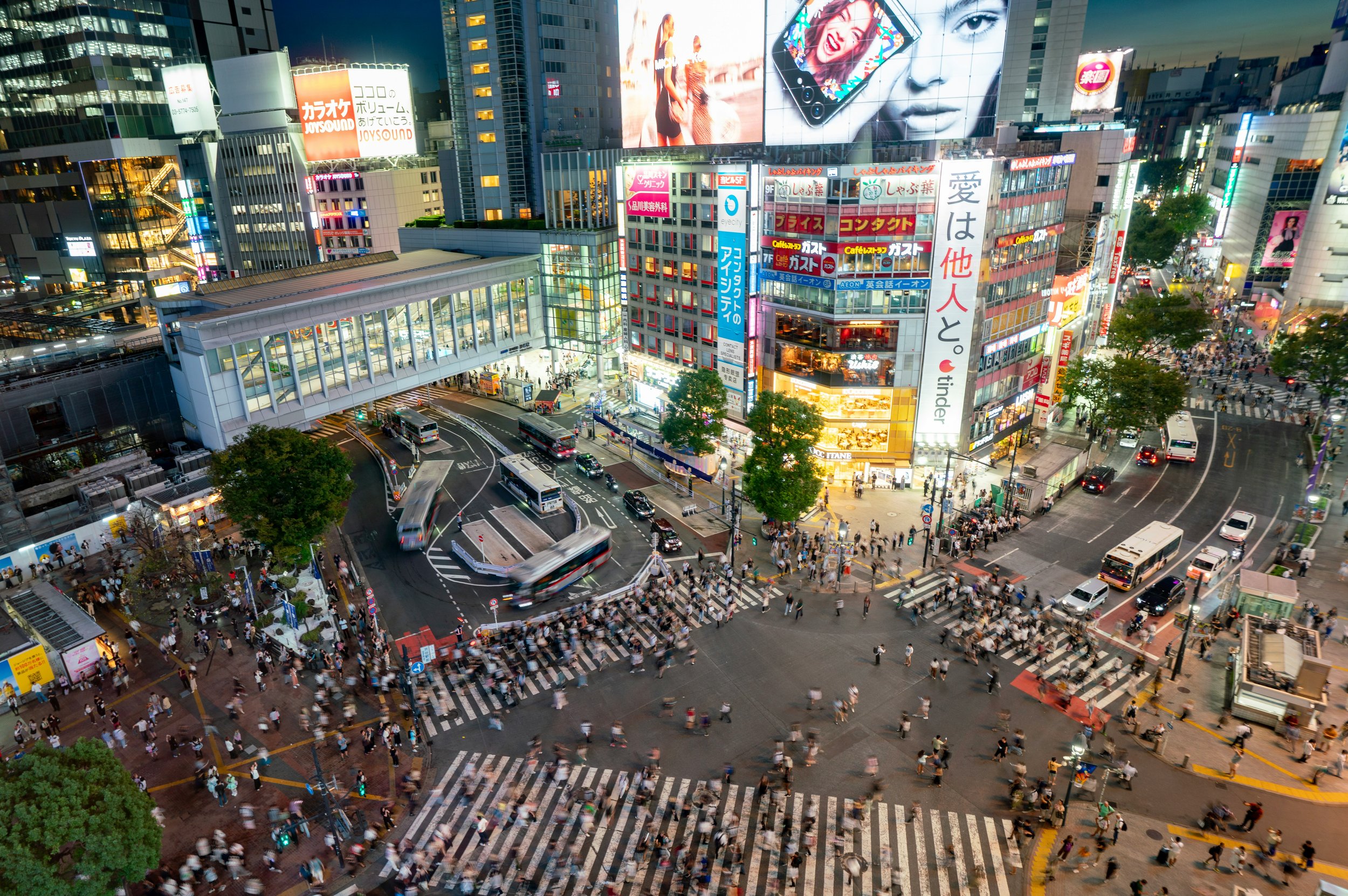
Source: Unsplash. Shibuya Crossing shows how Tokyo’s busy streets, bold signage, and visual hierarchy create a fast-moving city experience that design students can observe and learn from.
If you're studying design, it's easy to think inspiration only comes from classrooms, museums, or famous designers. Japan proves otherwise. Some of the best design lessons happen while you're trying to find the right train platform, visiting a museum, ordering food, or simply walking through a city. From thoughtful customer service to clear wayfinding and playful communication, Japan is full of small details that often go unnoticed. Together, they create experiences that feel organized, welcoming, and easy to understand. Whether you're studying graphic design, UX, branding, product design, or marketing, these everyday moments can change the way you think about design.
Great Design Solves Problems Before They Happen
One thing you'll quickly notice in Japan is that many places are designed to answer your questions before you even have to ask them. Need to know where to stand for the train? There are markings on the ground. Not sure which exit to use? Stations clearly label exits with numbers, colors, and maps. Visiting a museum? Most exhibits include simple instructions, visuals, or interactive displays that help visitors understand what to do next. This approach reflects omotenashi, the Japanese idea of anticipating someone's needs before they ask. For designers, it's a reminder that the best user experience often feels effortless because so much thought has already gone into it. The same approach can be seen throughout Japan's retail stores. Customers are greeted as soon as they enter, products are organized in a way that makes them easy to find, and checkout flows smoothly without feeling rushed. Every detail is designed to make the shopping experience simple, comfortable, and stress free.
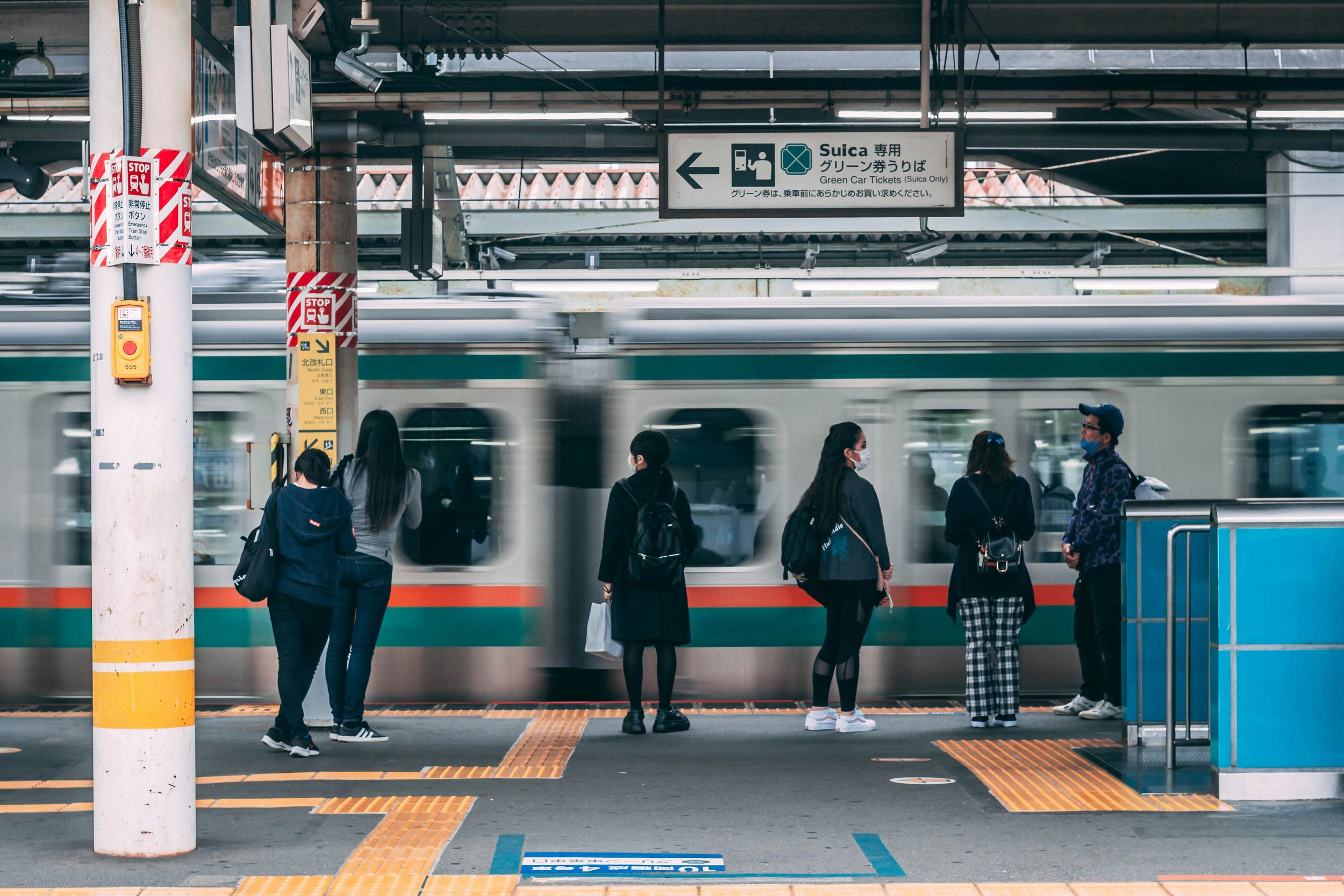
Source: Unsplash. Commuters wait for a train at a Tokyo station, highlighting the clean layouts, clear wayfinding, and efficient public transportation design that shape everyday life in Japan.
You Don't Need to Speak Japanese to Understand Good Design
One of the most impressive things about traveling through Japan is how much information is communicated without relying on words. Train stations use colors, icons, numbers, arrows, and maps to guide millions of people every day. Museums combine visuals with interactive displays so visitors can learn by exploring instead of simply reading long walls of text. As a design student, it's a great reminder that communication isn't always about saying more. Sometimes it's about saying less and presenting information in a way that people instantly understand. A great example of this can be seen at the NHK Broadcasting Museum, where visitors can explore four floors of exhibits filled with interactive displays. Instead of relying only on written explanations, many exhibits encourage visitors to learn by participating, making information easier to understand and more engaging for people of different ages and backgrounds.
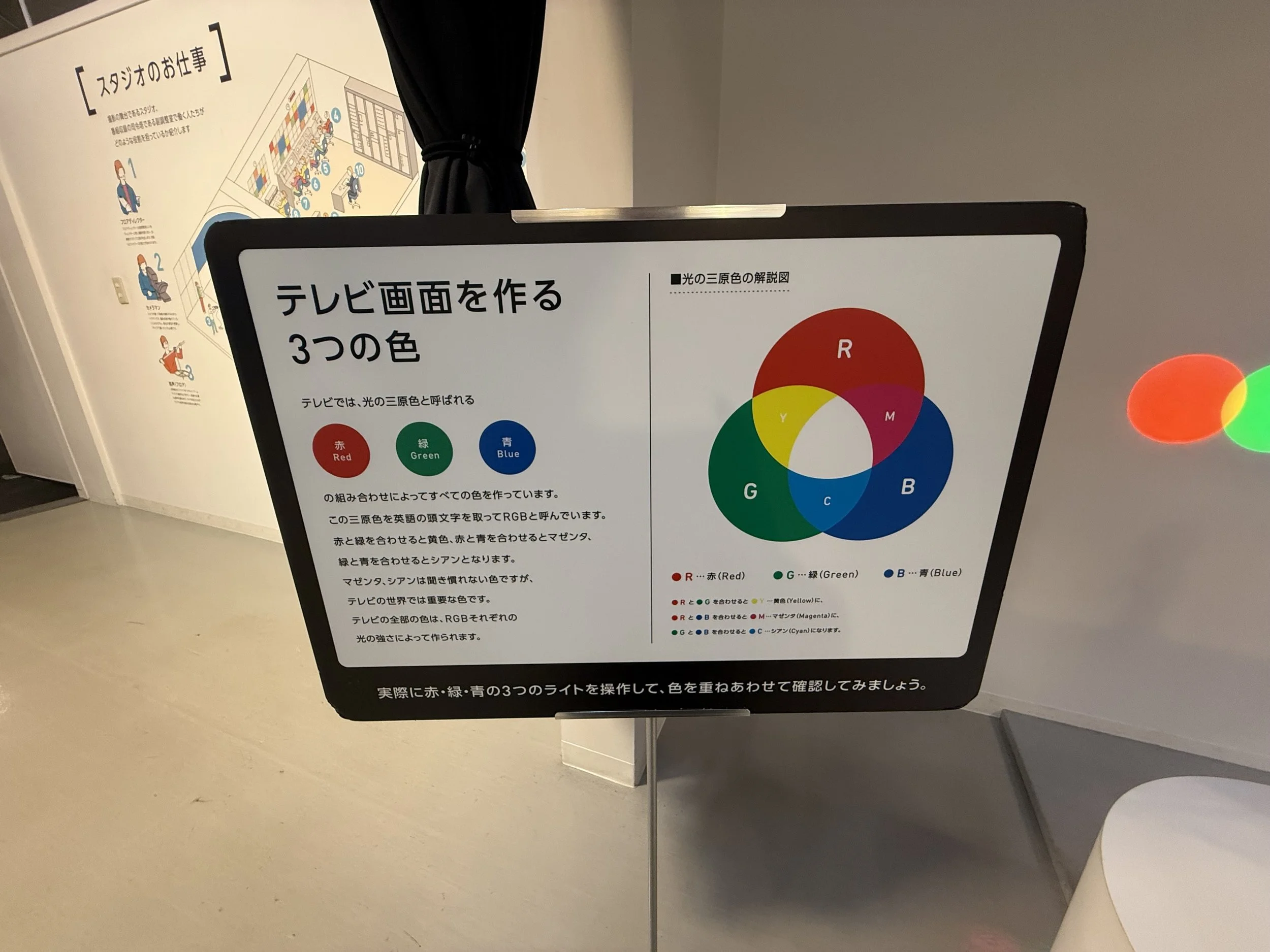
An interactive exhibit explaining the RGB color model demonstrates how color theory is applied in digital displays, giving design students a hands on look at the principles behind screen based visual communication.
Organization Matters More Than You Think
One lesson that's easy to overlook is how much organization affects the overall experience. Japan is known for being clean and efficient, but what really stands out is how intentionally spaces are designed. Information is organized so people know exactly where to look, pathways naturally guide visitors from one place to the next, and signs are placed where they're needed instead of where they're convenient. For design students, this is a great reminder that hierarchy isn't just something you think about when laying out a website or poster. It's something people experience every day. When information is organized well, people spend less time figuring things out and more time enjoying the experience. Whether you're creating an app, designing a brochure, or building a website, the goal should always be the same: make it easy for people to understand what comes next.
Playfulness Can Make Communication More Effective
One thing that makes Japan unique is how often playful design is used to communicate information. Characters, mascots, colorful illustrations, and interactive displays appear everywhere, from museums and attractions to public campaigns and transportation. Tokyo DisneySea is a great example of this. Familiar characters, themed environments, and colorful visual details create an experience that feels welcoming before guests even step onto an attraction. Instead of making information or spaces feel formal or intimidating, playful design encourages people to explore, interact, and pay attention. It also shows that even serious messages can feel easier to understand when they are presented through thoughtful, engaging design.
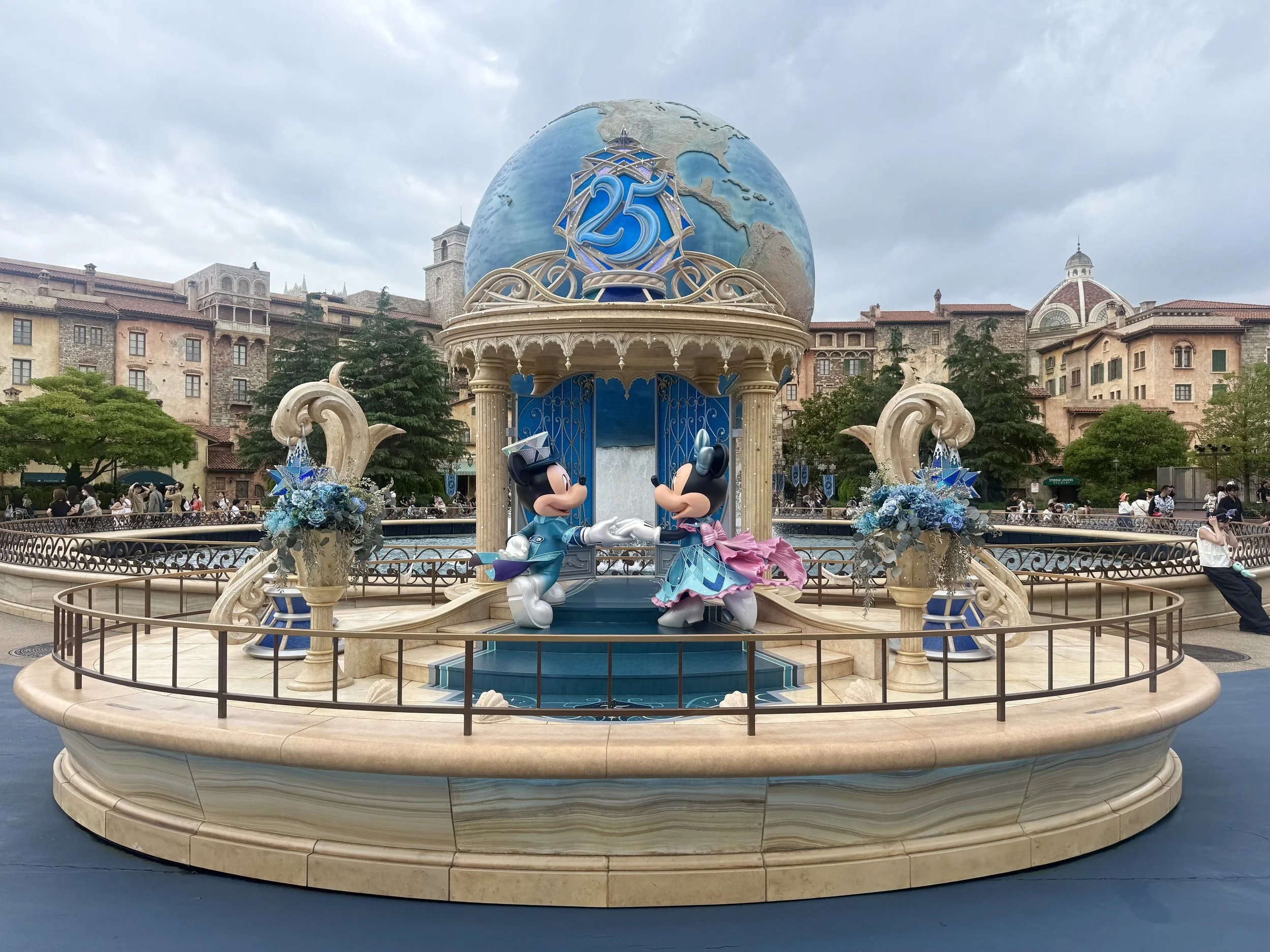
Tokyo DisneySea demonstrates how playful design can make communication more effective. Through colorful environments, familiar characters, and immersive storytelling, the park creates an inviting experience that encourages guests to explore and engage with their surroundings.
Accessibility Is Good Design
Good design should work for as many people as possible, and that's another lesson that stands out while traveling through Japan. Many public spaces include wide walkways, elevators, ramps, tactile paving, seating areas, and clear directional signage that make it easier for people of all ages and abilities to move comfortably. Accessibility isn't only about meeting requirements. It improves the experience for parents pushing strollers, travelers carrying luggage, older adults, wheelchair users, and even visitors who simply appreciate clear directions and well planned spaces. Design students often think about accessibility in terms of websites or apps, but traveling through Japan shows that accessibility applies to every kind of design. Whether it's a physical environment, a product, or a digital experience, designing for more people almost always results in a better experience for everyone.
Attractions like Yomiuriland also show how thoughtful design can improve the visitor experience. Wide paved walkways, ramps, elevators, and plenty of open space make it easier for wheelchair users, families with strollers, and guests with mobility needs to move comfortably throughout the park. These features blend naturally into the environment, showing that accessibility can be both functional and well designed.
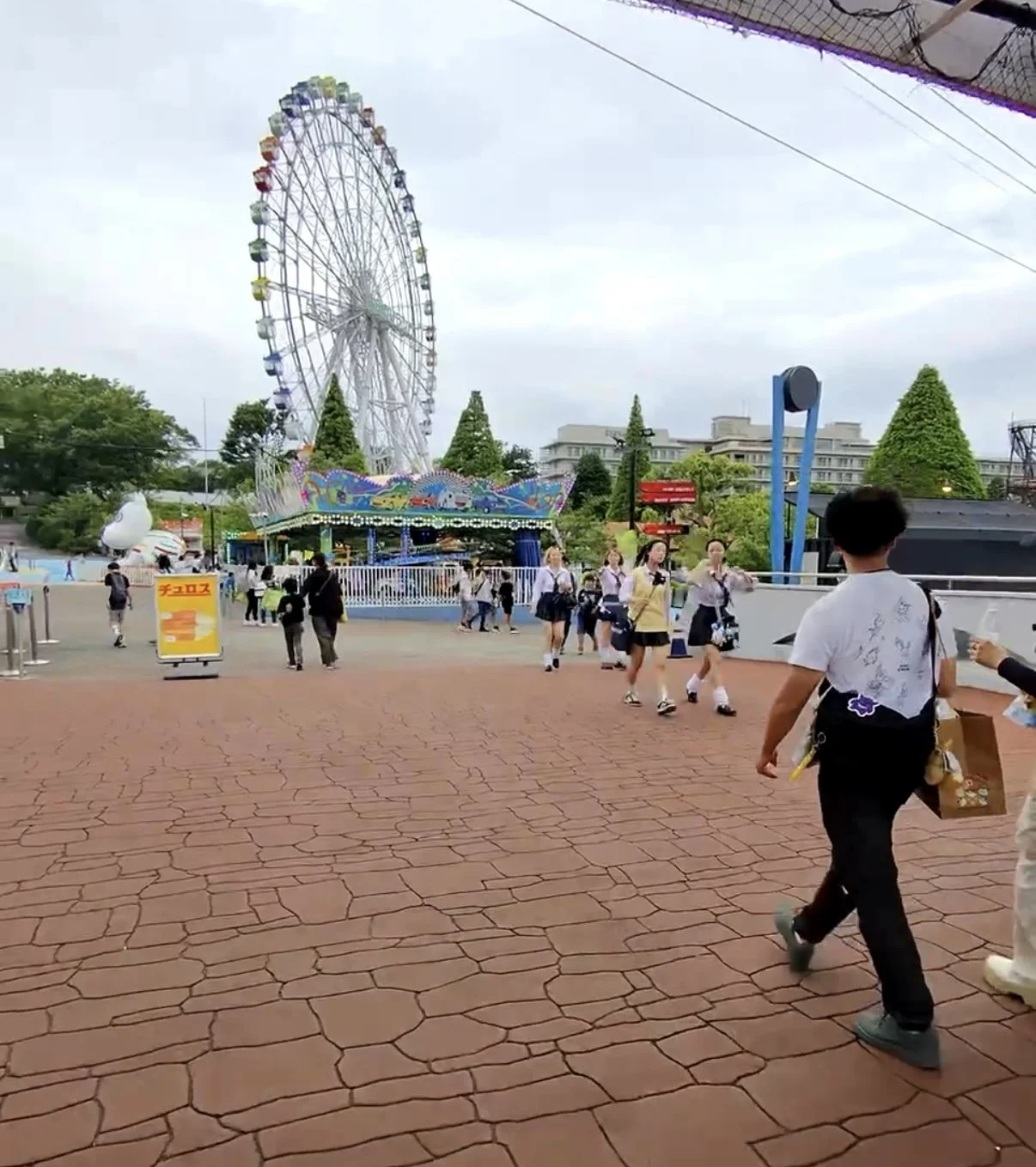
Walking through Yomiuriland highlights how thoughtful wayfinding, open space planning, and colorful attractions work together to create an engaging visitor experience. Design students can observe how environmental graphics and layout influence movement, navigation, and the overall guest journey.
Some of the Best Design Lessons Are Hands On
Not every design lesson comes from looking at a building or reading an information board. Some of the most memorable experiences are the ones where you're actively involved. Hands-on experiences encourage people to observe, experiment, and think differently. Rather than simply reading about a concept, visitors get the opportunity to experience it for themselves. TokudAw's STEAM-based experiences are a great example of this approach. By combining science, technology, engineering, art, and mathematics with Japanese culture, these experiences encourage visitors to learn through participation instead of observation. Whether it's discovering traditional craftsmanship, exploring food science, or learning how creativity and engineering work together, these experiences offer a different perspective on design that goes beyond the classroom. For design students, these experiences demonstrate that great ideas often come from bringing different disciplines together rather than keeping them separate.
Experiences like the Guruguru Shakashaka salt-making workshop show how design, science, and creativity can come together in a memorable way. Visitors compare different salt flavors, create their own custom blend, and learn how small changes in ingredients can completely change the final product. Pairing this experience with an umeboshi tasting at Tachigui Umeboshi-ya located just across the hall, demonstrates how food can become an engaging way to explore culture, experimentation, and design thinking.
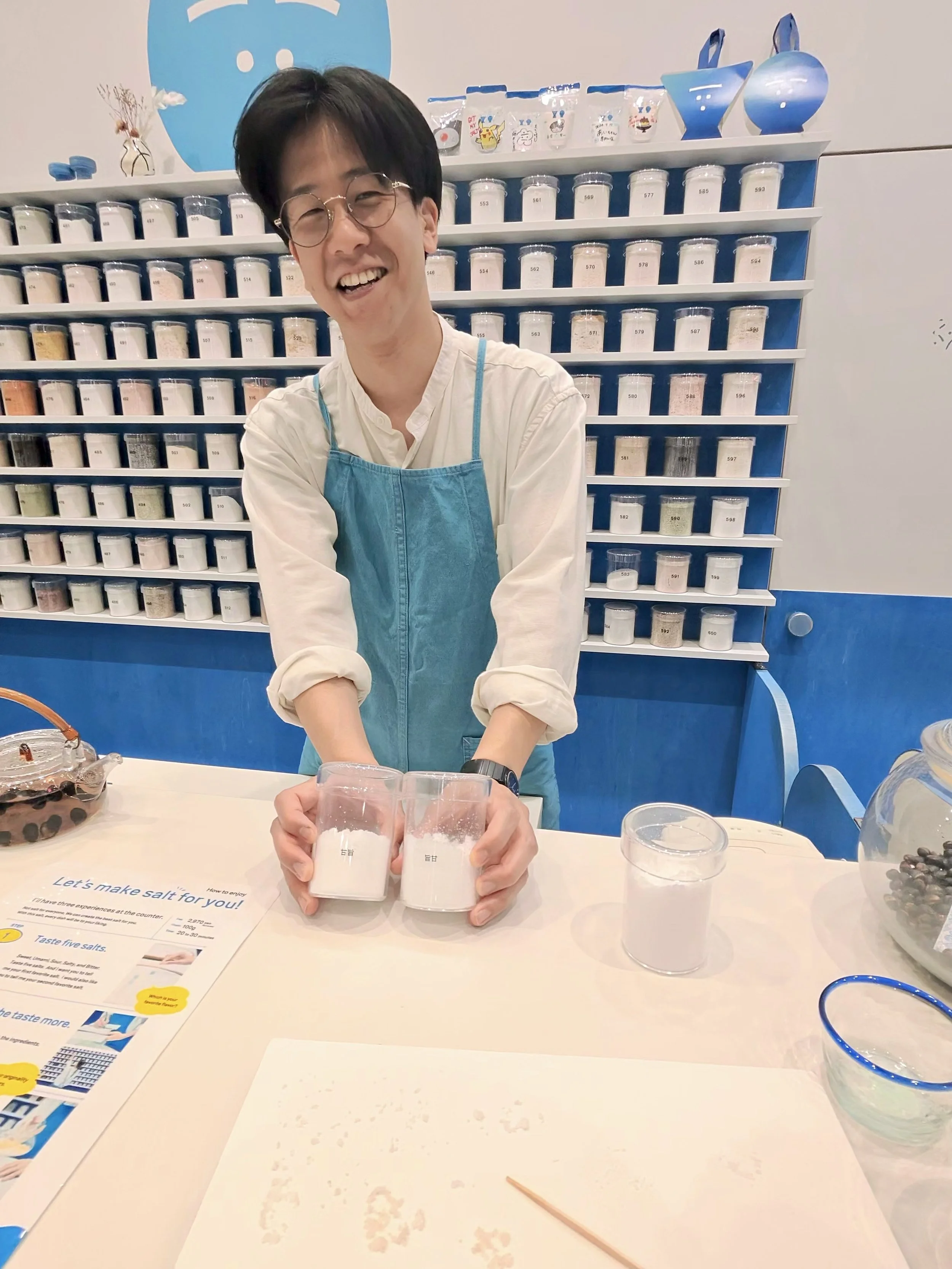
An interactive salt workshop demonstrates how hands on experiences can make learning more engaging. By allowing visitors to taste, compare, and create their own product, the experience transforms a simple retail space into an educational environment, showing how thoughtful interaction design can strengthen communication and create memorable user experiences.
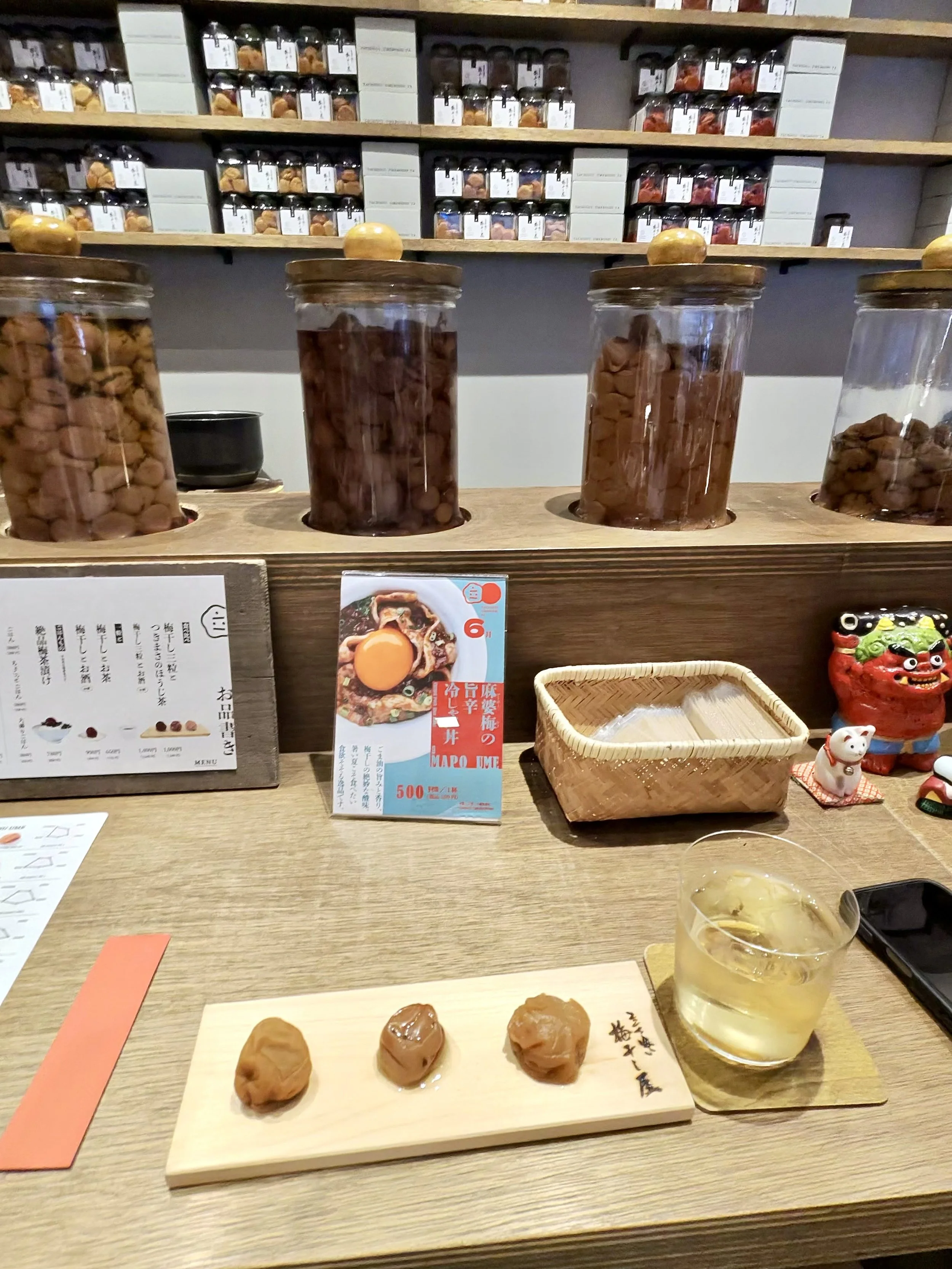
A specialty ume (Japanese plum) shop demonstrates how thoughtful product presentation and organized displays can enhance the customer experience. Simple packaging, clean layouts, and carefully arranged tastings show how visual design can communicate quality, encourage interaction, and strengthen a brand's identity.
Why Traveling Slowly Helps You Notice More
One of the biggest mistakes travelers make is trying to fit too much into one day. When you're constantly rushing from one destination to another, it's easy to miss the small details that make Japan such an inspiring place for designers. Sometimes the most valuable observations happen while sitting in a train station, walking through a museum, or noticing how people naturally move through a public space. These moments encourage you to slow down and pay attention to the decisions behind the design. That's why flexibility can make such a difference. Instead of following a rigid schedule, TokudAw creates personalized itineraries based on each traveler's interests. Combined with Japan Private Drivers, travelers can enjoy comfortable transportation, flexible daily pacing, and hassle free logistics while spending more time exploring the experiences that matter most.
What Design Students Can Take Away From Japan
Traveling through Japan teaches design lessons that are difficult to learn from a textbook alone. Every train station, museum, attraction, and public space offers examples of how thoughtful design can improve communication, create better experiences, and make everyday life easier. For design students, the biggest lesson isn't about following trends or creating something that looks impressive. It's about designing with people in mind. When experiences are organized, welcoming, accessible, and easy to understand, good design often goes unnoticed because everything simply works. Whether you're studying graphic design, UX, branding, product design, or marketing, Japan offers countless examples that can inspire the way you think about your own work long after your trip is over.
Design Lessons From Traveling in Japan

This table summarizes the key design lessons observed throughout Japan, including omotenashi, visual communication, organization, accessibility, playfulness, and STEAM learning. Together, these principles demonstrate how thoughtful design can create more intuitive, engaging, and user centered experiences.
Frequently Asked Questions
Why is Japan a great destination for design students?
Japan offers inspiration beyond museums and classrooms. Everyday experiences, public spaces, transportation, and cultural attractions demonstrate how thoughtful design improves daily life.
What can UX design students learn from Japan?
UX students can observe user centered design through clear wayfinding, accessibility, visual communication, and proactive hospitality.
What is omotenashi?
Omotenashi is the Japanese philosophy of anticipating a guest's needs before they ask. It focuses on creating thoughtful, welcoming experiences that feel effortless.
Why are STEAM experiences valuable for design students?
STEAM experiences combine science, technology, engineering, art, and mathematics through hands-on learning, helping students understand how different disciplines work together to solve problems creatively.
How can TokudAw help travelers interested in design?
TokudAw creates personalized itineraries that match each traveler's interests, making it easier to discover meaningful cultural experiences. Combined with Japan Private Drivers, guests can explore Japan at their own pace with comfortable transportation and hassle free logistics.
