
Where to Buy One-of-a-Kind Kimono Souvenirs in Japan (2026 Guide)
TL;DR: The best one-of-a-kind kimono souvenirs come from stores and studios working with real, once-worn kimono and obi rather than printed fabric — think Tokyo Kimono Shoes and Asakusa Tatsumiya for walk-in shopping in Asakusa, Tokyo Kimono Make and Kanzashi Sugino for hands-on workshops, and Annaj or Far East Fabric if you'd rather order online. Because every kimono bolt carries its own pattern, nothing on this list repeats — what you bring home won't be sitting in anyone else's suitcase too.
Almost every traveller returns from Japan with the same suitcase, filled with snacks and souvenirs from Don Quijote or the airport gift shop. The alternative isn't just "buy something handmade" — it's kimono specifically, because the raw material makes uniqueness close to automatic. Every kimono and obi ever woven carries its own pattern and wear, so nothing cut from one is ever quite repeated in a second piece.
We've grouped 18 stores, studios, and brands below by how you'd actually shop them: storefronts you can walk into, workshops where you make something yourself, and online or mail-order options for brands that aren't near your itinerary.
Storefronts You Can Walk Into
1. Tokyo Kimono Shoes
Source: Time Out
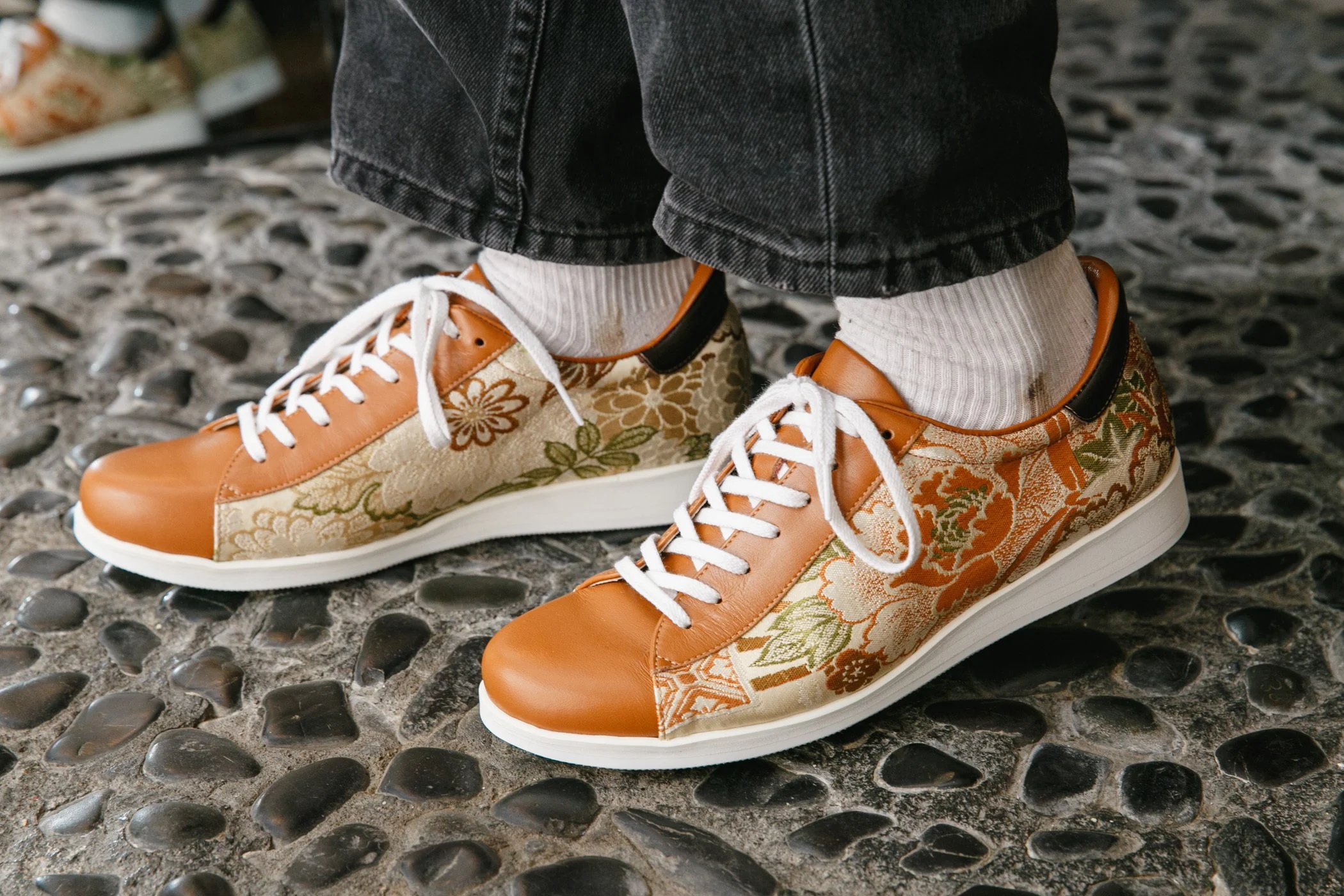
Located in Asakusa, TOKYO KIMONO SHOES is one of the best-known spots in Tokyo for kimono sneakers and other upcycled kimono souvenirs. Every product is one-of-a-kind, made with genuine leather and upcycled kimono fabric. The studio works with a finite stock of actual, once-worn vintage kimonos, turning them into stylish, modern products.
As the kimono shoes are handmade, full customisation requests take about two months, though ready-made sneakers are also sold in-store. For easier souvenirs to pack, travellers may also wish to consider the brand's smaller kimono fabric accessories, such as ties, card cases, and purses.
Where: Hanakawado, Asakusa, Taito-ku
Price range: ¥16,000–48,000
Good to know: Ready-made stock available same-day; custom orders need about two months' lead time
2. Tansu-ya
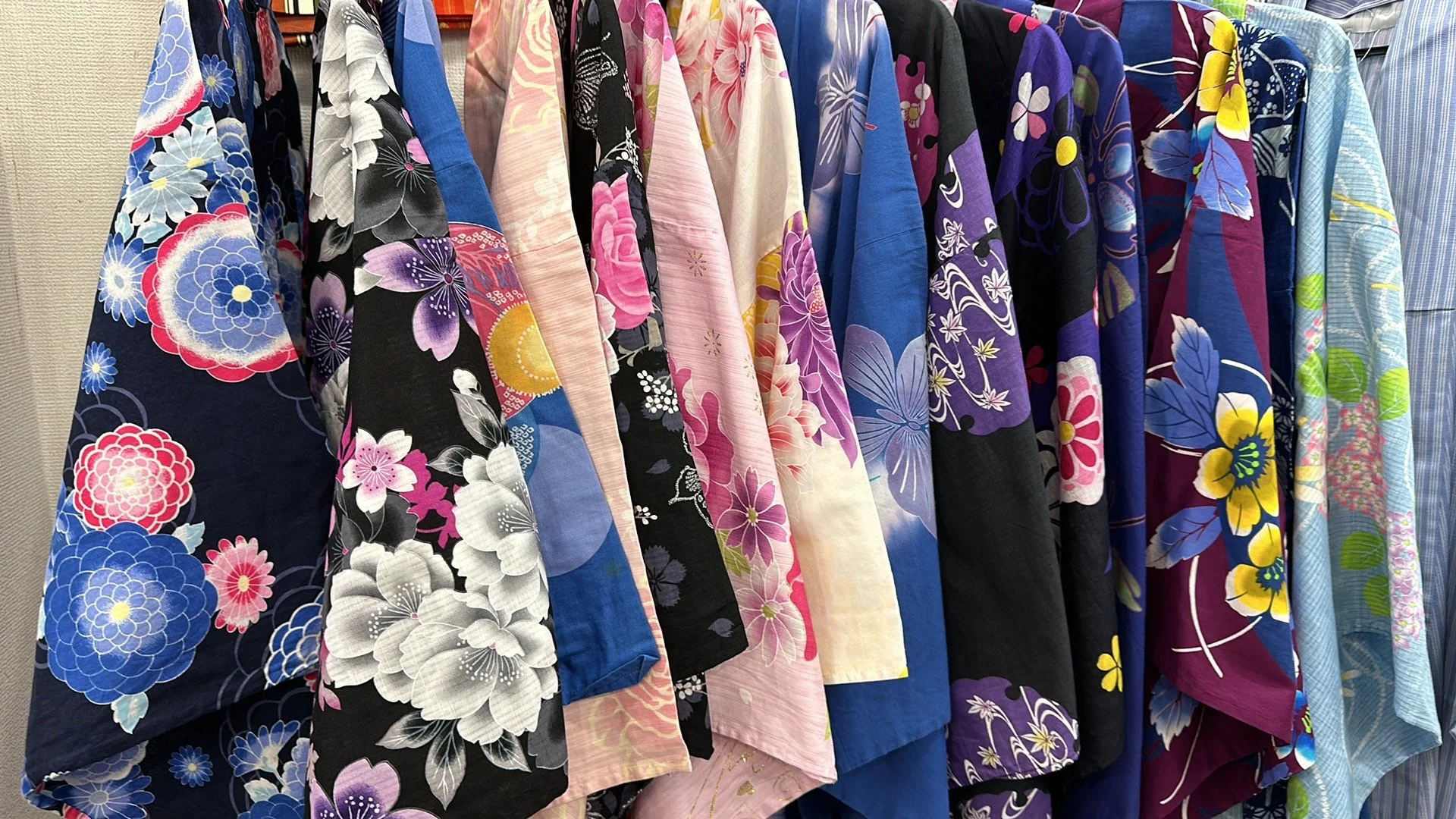
Tansu-ya is a nationwide chain that specialises in secondhand kimono, with several branches in Asakusa alone, making it one of the easiest vintage kimono shops in Tokyo to visit. There’s also a MEGA Tansuya outlet at Haneda outlet, perfect for travellers looking to pick up some last-minute souvenirs. Each piece is cleaned and mended before it goes back on the rack.
Source: Image taken by TokudAw Staff
The easiest win for a first-time buyer is a haori jacket: the loose, knee-length kimono jacket traditionally worn over a kimono, which layers just as naturally over jeans or a t-shirt the moment you're home. It doesn't need the precise sizing a full kimono does, it's kind to a shopping budget, and since it's cut from a single bolt of fabric that will never be printed again, it's about as close to a wearable one-off as souvenir shopping gets.
Where: Several Asakusa branches (Asakusa Shop, Asakusakokaidomae Shop, Shinnakamise Shop, Umezonomae Shop)
Price range: from ¥1,000
Good to know: Cash-friendly; rewards unhurried browsing over a quick pass-through
3. Engawa Asakusa
Engawa Asakusa is a multi-concept space built to showcase contemporary Japanese craft, and a popular stop for travellers looking for unique kimono souvenirs near Senso-ji Temple. All products showcased skilfully integrate Japanese tradition with modernity, transforming cultural elements into practical products for everyday use. Past and current pieces have included trays woven from kimono fabric, Niigata-brewed sake cosmetics, a designer's take on the daruma doll, and small-batch goods from Omotenashi Selection award winners — the kind of finds you'd otherwise have to chase down region by region.
Where: Asakusa, Taito-ku, 3 minutes from Asakusa Station
Price range: varies by item
Good to know: Closed Wednesdays; easy to pair with a Senso-ji visit
4. bikudesigns
Run out of a tiny studio in Shimokitazawa, bikudesigns turns vintage kimono cloth into kimono jewellery — earrings, necklaces, bracelets, and headbands — each one cut from fabric that was never mass-produced to begin with.
The studio also doubles as a small platform for other Japan-based independent makers, so the shelves shift over time. bikudesigns also offers hands-on kimono workshops, ranging from natural dyeing to embroidery, allowing travellers to make their own souvenirs instead of simply purchasing one.
Where: Shimokitazawa, Setagaya-ku — a cross-town trip from Asakusa
Price range: ¥2,500–6,500
Good to know: Limited weekday hours; call ahead
5. Asakusa Tatsumiya
Source: Time Out
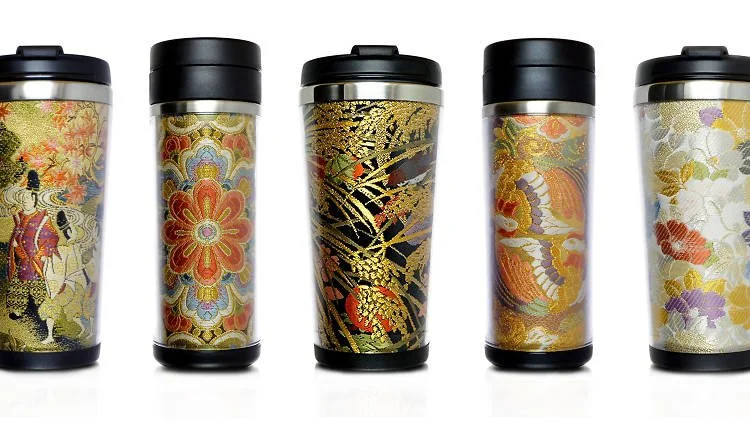
Founded 80 years ago, Asakusa Tatsumiya specialises in souvenirs featuring high-grade Nishijin-ori: delicate silk obi sashes carefully produced by skilled artisans in traditional textile factories.
Tatsumiya is most well-known for its Kimono Tumbler, an obi-fabric drinking tumbler that was awarded the 2018 OMOTENASHI Selection Award. The store also carries other kimono-fabric souvenirs, such as cushions, tapestries, and table runners.
Where: Asakusa, 2 minutes from Asakusa Station
Price range: ¥6,000–30,000
Good to know: Closed Wednesdays; also sold at Kabuki-za in Ginza
6. Annaj
Source: Annaj, Tokyo Kimono Show
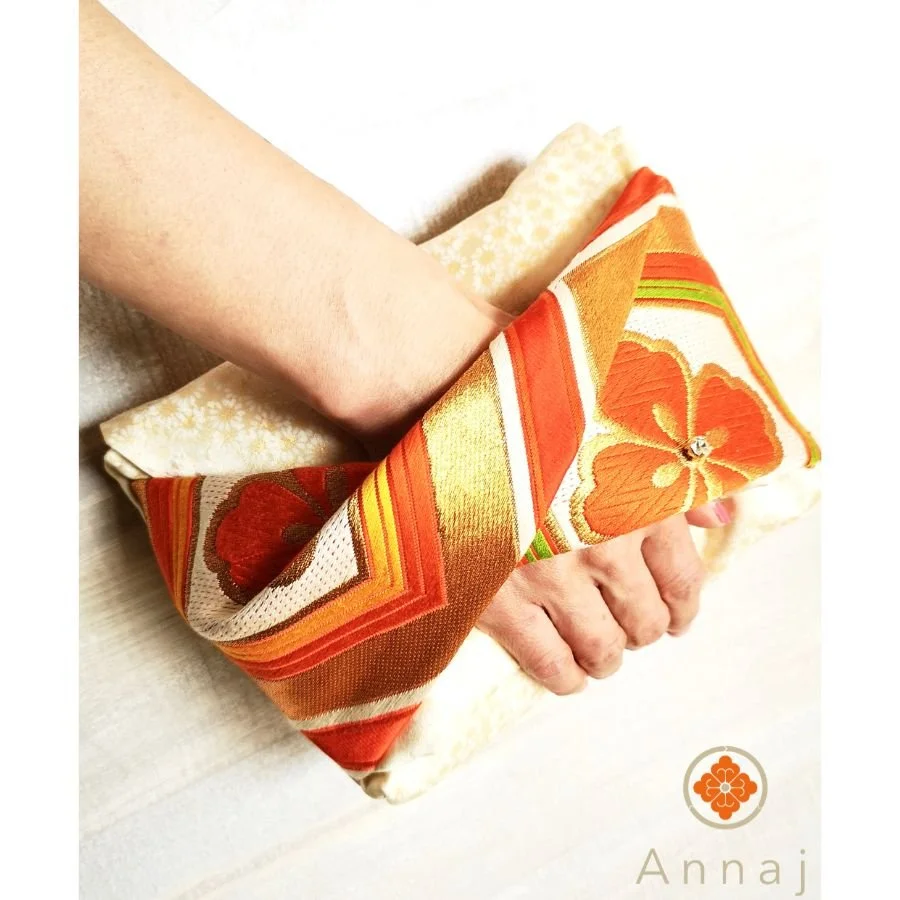
Annaj transforms vintage kimono sashes and obijime cords into modern kimono bags and accessories, suitable for everyday wear. The brand is known for utilising bold, high-quality Showa-era fabrics, featuring gold thread, embroidery, and Nishijin weaving.
Annaj's products are carefully crafted by skilled artisans in Toyooka, Hyogo, Japan's largest bag-production region. There's no dedicated Annaj storefront, but the brand is sold permanently at ENWA TOKYO in Matsugaya, near Asakusa, and at Ishii Folding Box Shop in Tsukiji Outer Market. A portion of Annaj's proceeds also go towards supporting women's organisations.
Where: ENWA TOKYO, Matsugaya, Taito-ku (near Asakusa); Ishii Folding Box Shop, Tsukiji Outer Market
Price range: not publicly listed
Good to know: Also tours department-store pop-ups nationwide and occasionally overseas
7. Far East Fabric
Based in Fukuoka, Far East Fabric repurposes vintage, high-quality kimono fabric into modern apparel — including kimono aloha shirts — suitable for everyday wear. The brand is known for prioritising Oshima-tsumugi, a durable silk renowned for its unreplicable texture and colour.
All products are handcrafted in Japan through a delicate production process. As the showroom is in Kitakyushu, this is better suited to a Kyushu-leg stop or mail order than a Tokyo itinerary.
Where: Kitakyushu, Fukuoka — not Tokyo
Price range: ¥33,000–99,000
Good to know: Mail-order remakes accepted
Hands-On Workshops & Experiences
8. Some no Sato Ochiai
Founded in 1920 in Nakai, Shinjuku, Some no Sato Ochiai specialises in Edo sarasa: a traditional stencil-dyeing technique using hand-carved paper stencils, brushed with dye onto silk or cotton. Inside the facilities, visitors may also observe the fabric dyeing process through glass panels.
For travellers looking for a hands-on kimono dyeing workshop in Tokyo, there are sessions that allow visitors to dye their own tenugui or fabric panel to take home. If you're short on time, the on-site store also stocks ready-made Edo sarasa goods, such as tote bags, wrap skirts, and hand-dyed tenugui.
Where: Nakai, Shinjuku-ku, 4 minutes from Nakai Station
Price range: workshop pricing on request; shop goods ¥2,200–38,500
Good to know: Closed Mondays; workshops should be booked ahead
9. Kanzashi Sugino
Source: Kanzashi Sugino
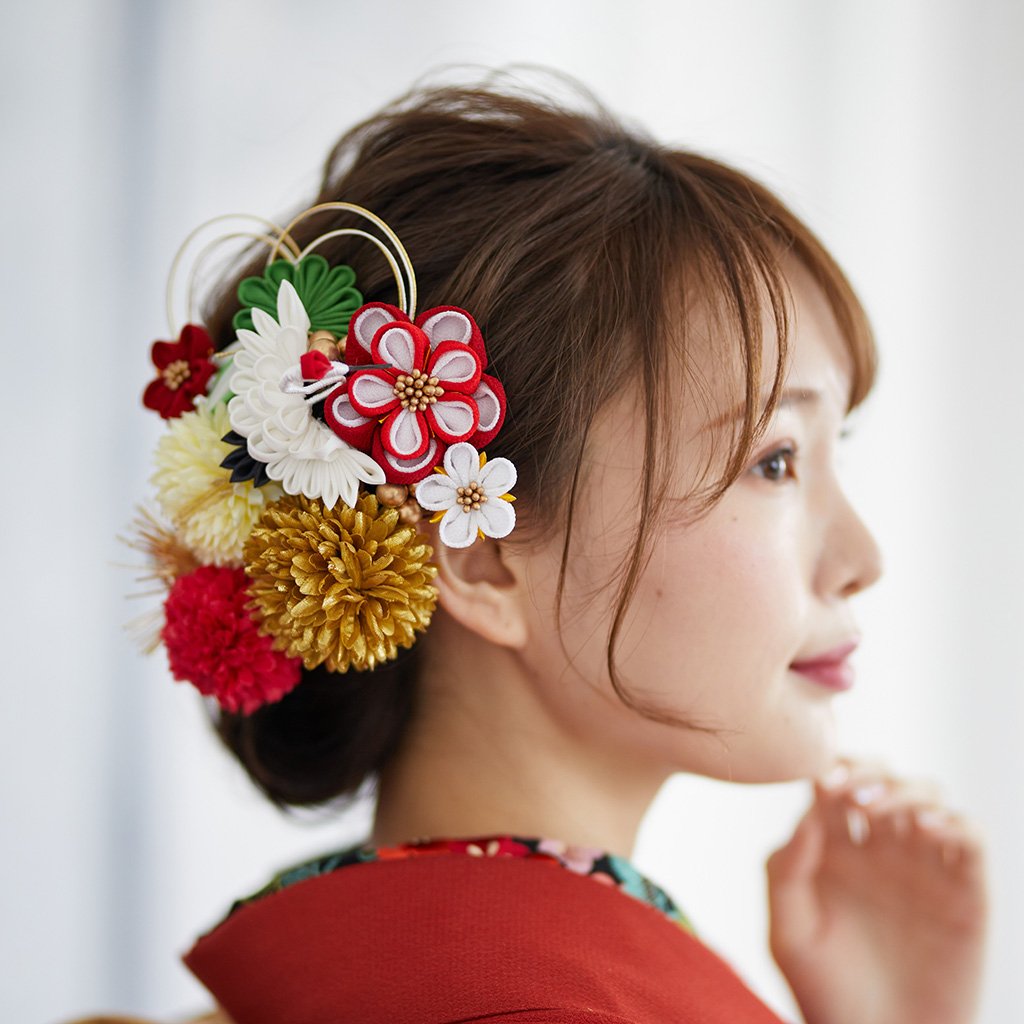
Tsumami kanzashi are traditional Japanese hair accessories with a historical legacy of delicate craftsmanship: fine fabrics are cut into small, perfect squares, before being delicately folded, pinched, and assembled into flower shapes. Kanzashi Sugino, a third-generation family workshop founded in 1948, has kept the technique alive ever since: the studio received a Tokyo Traditional Craft Industry Distinguished Craftspeople Appreciation Letter in 2018, and its lead artisan, Satoko Sugino, is a certified Tokyo Traditional Craftsman specialising in Edo tsumami kanzashi.
Travellers looking for an authentic, hands-on kimono craft workshop in Tokyo may consider participating in a session at the studio, where they will learn the art of tsumami-zaiku directly from the studio's master artisans.
Where: Mukojima, Sumida-ku — a short walk across the Sumida River from Asakusa
Price range: not listed publicly; book via the studio's workshop page
Good to know: English instruction provided; the finished piece needs about 24 hours to dry before wearing
10. Tokyo Kimono Make
Tokyo Kimono Make offers a 90-minute kimono remake workshop, where participants may choose their preferred piece of kimono clothing from the studio's vast selection, before transforming it into a customised, two-piece modern outfit suitable for everyday wear. The experience slightly differs for male participants, who bring home a personalised kimono with their name and family crest instead.
This kimono workshop experience was also awarded the Gold Prize at the OMOTENASHI Selection.
Where: Kiba, Koto City — a train ride from Asakusa
Price range: ¥6,000 per person
Good to know: Bookable via Klook; English-speaking staff throughout
11. Mikan
Mikan is a small, private kimono bag-making workshop located in Arashiyama, Kyoto. Participants first choose their favourite textile from the studio's curated selection of vintage kimono and obi fabric, before transforming it into a bag of their preferred design.
The workshop is beginner-friendly, with no prior sewing skills required.
Where: Arashiyama, Kyoto — not Tokyo
Price range: $75–220 (2-hour experience); $110–160 (one-day workshop)
Good to know: Beginner-friendly, no sewing experience required
Online Shops & Mail-Order
12. NEO KIMONO — "Obi de Boots iki”
Source: NEO KIMONO, Tokyo Kimono Show
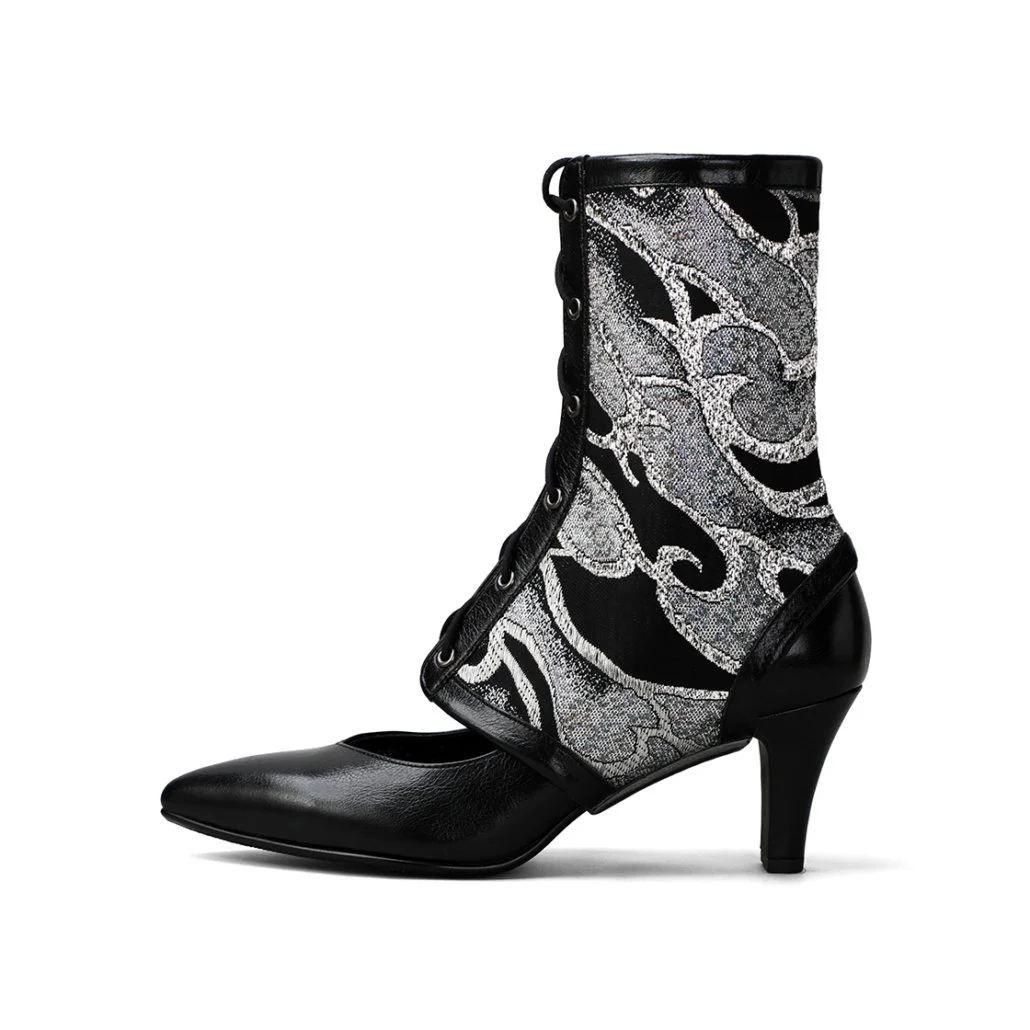
Known for their "Obi de Boots iki" product lineup, NEO KIMONO stocks heel and pump covers crafted from traditional Kyoto Nishijin silk fabric, allowing users to freely style kimono boots while preserving traditional aesthetics.
As these boot covers are crafted from genuine, delicate silk fabric, they are not rain-proof. Travellers interested in purchasing one of these obi fabric boot covers may wish to check out NEO KIMONO's online store.
Where: Online only; company registered in Taito-ku
Price range: ¥33,000–44,000 (limited editions to ¥198,000)
Good to know: Fits heels 3–11cm, shoe sizes 22.5–25.5cm
13. Relier81
Based in Kyoto, Relier81 transforms unused vintage kimono and obi sashes into modern shoes, bags, and apparel suitable for everyday wear. All products are one-of-a-kind, with unique pattern placements even among products using the same piece of fabric.
Relier81 is best known for its kimono-fabric footwear collection, handmade by skilled Japanese artisans.
Where: Kyoto-based (online shop; no confirmed walk-in address)
Price range: ¥26,400–34,100
Good to know: Best known for its footwear line
14. atelier Suzuki Parasol
Source: Atelier Suzuki Parasol
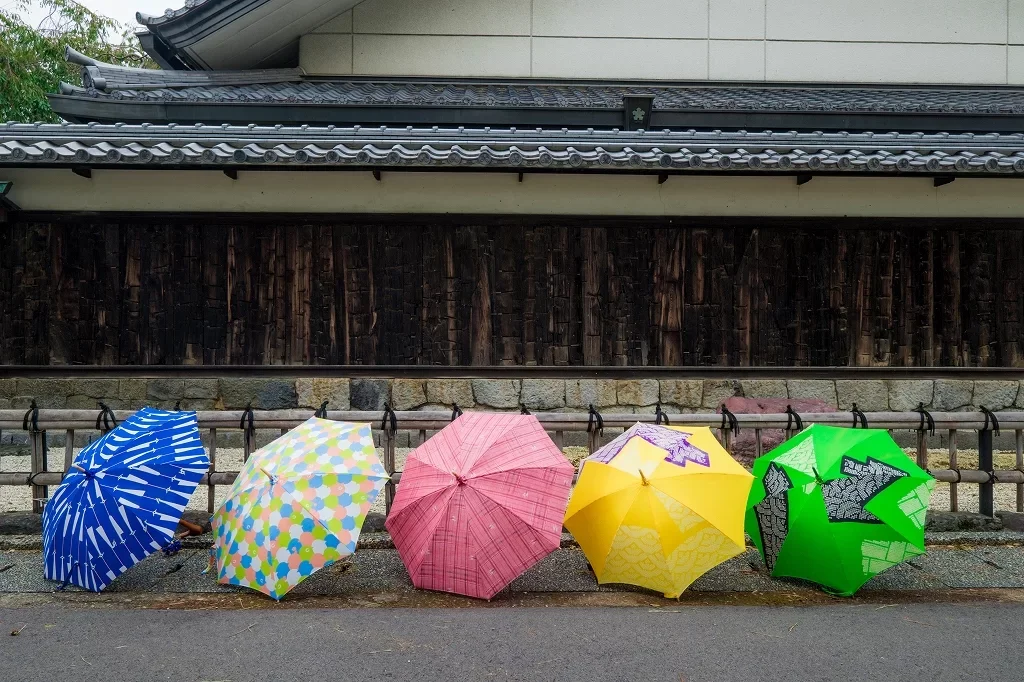
Based in Gifu, atelier Suzuki Parasol turns your vintage kimono fabric into a one-of-a-kind kimono parasol. All umbrellas are carefully handcrafted by skilled Japanese artisans, using traditional techniques dating back over 70 years.
For travellers who don't have a kimono to send in, the brand also sells ready-made parasols and bags on its online store, using fabric sourced by their artisans.
Where: Gifu Prefecture — mail-order only
Price range: ¥16,500–22,000 (tailoring/reupholstery); ¥4,180–4,950 (miniatures)
Good to know: One kimono or yukata yields two parasols; one haori yields one
15. MEDAA
MEDAA is best known for its square kimono parasols, which feature an original square-panelled silhouette. These parasols are handcrafted purely from vintage silk kimono, with inner linings carefully chosen to contrast with the outer fabric.
Apart from parasols, the brand also carries haute couture dresses and other kimono fabric accessories. As all products are meticulously handcrafted by a single artisan, stock is strictly limited.
Where: Online only; no physical address found
Price range: ¥12,100–33,000
Good to know: Also carries dresses and accessories; stock strictly limited since one person makes everything
16. ONYOU'S GALLERY
ONYOU'S GALLERY is an artisan workshop known for its innovative upcycled kimono apparel, modern obi belts, and unique Japanese fashion.
The brand is best known for its "Onyou Kimono x Wao-shi" product lineup, where obi fabric is paired with Japanese leather, before being transformed into a modern, Western-style belt fitted with metal buckles.
Where: Online marketplace (minne.com); no physical location
Price range: ¥27,500–55,000
Good to know: Custom orders take about three months
17. KIMONO-CYCLE
Source: KIMONO-CYCLE
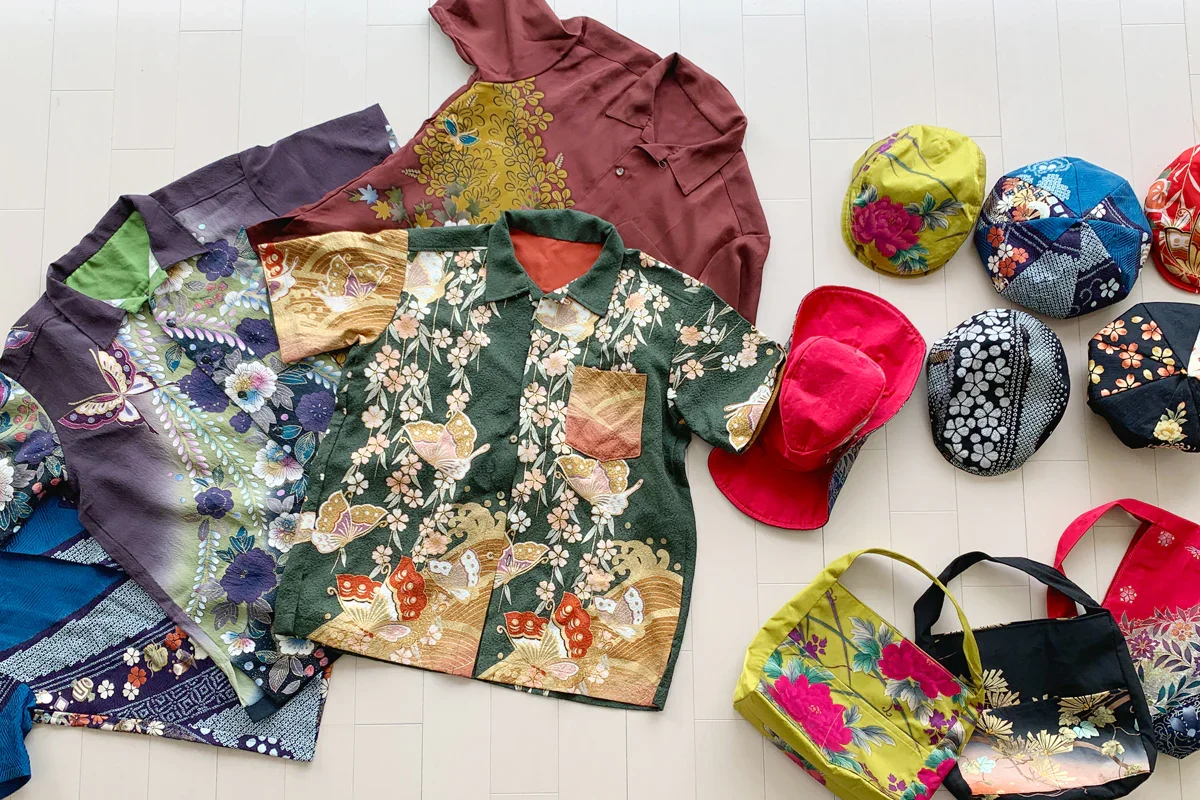
Based in Tsuruoka City, Yamagata, KIMONO-CYCLE transforms vintage, high-quality kimono into contemporary apparel suitable for everyday wear. The brand works only with 100% pure silk fabric, ensuring all products are of the highest quality.
The brand is best known for its kimono aloha shirts, though it has since expanded its product lineup to include structured kimono hats, caps, and tote bags.
Where: Online; phone prefix suggests a Tsuruoka, Yamagata base
Price range: ¥9,900–14,850 (hats)
Good to know: No confirmed Tokyo storefront; also carries aloha shirts and bags
18. R4Yours
Based in Tsunan, Niigata, R4Yours is a regional brand focusing on everyday products that combine local forestry preservation with fabric upcycling.
The brand is best known for its Echigo cedar chopsticks, produced in line with sustainable forest conservation practices. It also carries washable chopstick cases sewn from yukata fabric, each one handcrafted by the local community. R4Yours was awarded an OMOTENASHI Selection Award.
Where: Tsunan, Niigata — online/product listing only
Price range: not listed
Good to know: 20 designs available, including ukiyo-e prints made for overseas buyers
Plan Your Kimono Trail with TokudAw
Roughly a third of this list sits within walking distance of Senso-ji; the rest is scattered from Shimokitazawa to Fukuoka, Kyoto to Niigata. Chasing all of it by train would eat an entire trip. TokudAw builds private-vehicle itineraries paced around what you actually want to see — grouping the Asakusa storefronts into one unhurried morning, working a workshop reservation into the day without you juggling a booking site in another language, and handling the logistics of a cross-town or cross-prefecture detour so you're not the one figuring out train transfers.
Contact our team to build a souvenir-shopping day, or a full itinerary, around it.
At a Glance
| Storefronts | Workshops & Experiences | Online & Mail-Order | |
|---|---|---|---|
| What you're doing | Browse and buy a finished piece | Make or customise something yourself with an artisan guiding you | Order a finished piece, or send a kimono in to be remade |
| Typical price range | ¥1,000–99,000 | ¥6,000–33,000 (where listed) | ¥4,180–55,000 |
| Book ahead? | Not usually, though custom orders take weeks | Yes — most require reservations | N/A, though remake services need lead time |
| Best for | Travellers who want to walk in and walk out with something | Travellers who want the souvenir to come with a story from their own hands | Travellers whose itinerary doesn't pass through the brand's city |
FAQs
Can I visit all 18 of these in one Tokyo trip? No — only about a third are actually in Tokyo, mostly clustered around Asakusa. The rest are in Kyoto, Fukuoka, Gifu, Niigata, or Yamagata, or are online-only. Treat the Asakusa cluster as a single day, and the rest as bonus stops if your itinerary already passes through those cities.
Do the workshops need to be booked in advance? Yes, in almost every case. Some, like Tokyo Kimono Make, go through third-party booking platforms; others, like Kanzashi Sugino, take reservations directly. Book before you land, especially during cherry blossom or autumn foliage season.
What's the actual difference between "upcycled kimono" and "kimono-print" souvenirs? Every store on this list works from real, once-worn kimono or obi fabric, meaning no two finished pieces are identical since no two bolts share the same wear or pattern placement. Kimono-print souvenirs, by contrast, are printed to match a design, so the same pattern can repeat across hundreds of units.
Can I send my own kimono to be remade instead of buying a store's existing stock? A few brands accept this: atelier Suzuki Parasol and Far East Fabric both take mail-in remake orders, and Some no Sato Ochiai and bikudesigns can sometimes work with fabric you bring to a workshop in person, depending on its condition.
Are these souvenirs easy to pack home? Soft goods — ties, hats, bags, tenugui — pack flat with no issue. Footwear, parasols, and ceramics need more care; several shops, including Tokyo Kimono Shoes and atelier Suzuki Parasol, will ship internationally if you'd rather not carry a finished piece home yourself.
Key Takeaways
Only about a third of these stores are actually reachable on foot in Tokyo, mostly clustered in Asakusa
Workshops need advance booking; storefronts generally don't
Every piece on this list is upcycled from real kimono or obi fabric, not printed to match a pattern
TokudAw can build a private-vehicle day around the Asakusa cluster, or fold a workshop into a wider itinerary