The Perfect Burnout Remedy for Busy Professionals: Slow Travel in Japan
As professionals in today’s world, people are constantly bombarded with notifications, expectations, and the pressure that comes with endless tasks and messages. The common bodily response is burnout, eventually growing tired of always being “on”. Unfortunately, this leaves people who have achieved the career success that they’ve worked so hard to acclimate to feel empty and burdensome as the stress depletes their life force. As important as it is to identify and treat burnout, it doesn’t always present itself directly. Sometimes it announces itself in symptoms such as numbness, short patience, and the constant feeling of being “on edge”. This can manifest in a growing resentment toward tasks you used to enjoy, the sense that you’re living a life immune to change, and generally feeling detached and unmotivated in the workplace.
Many people suffering from work-related burnout feel that what they need is a trip with a packed itinerary of new activities and experiences. However, the solution we propose is calm travel. An itinerary of places that slow your nervous system instead of overstimulating it.
Japan offers a culture that has deeply integrated this practice of slowing down, understanding that the most meaningful moments in life are not the ones we rush through, but what we pause to savor.
At a Glance: 5 Ways Japan Restores Life Balance for Burned-Out Professionals
Before we explore each path in depth, here are the key ways Japan can help you reset your nervous system and find your way back to your best self, both personally and professionally.
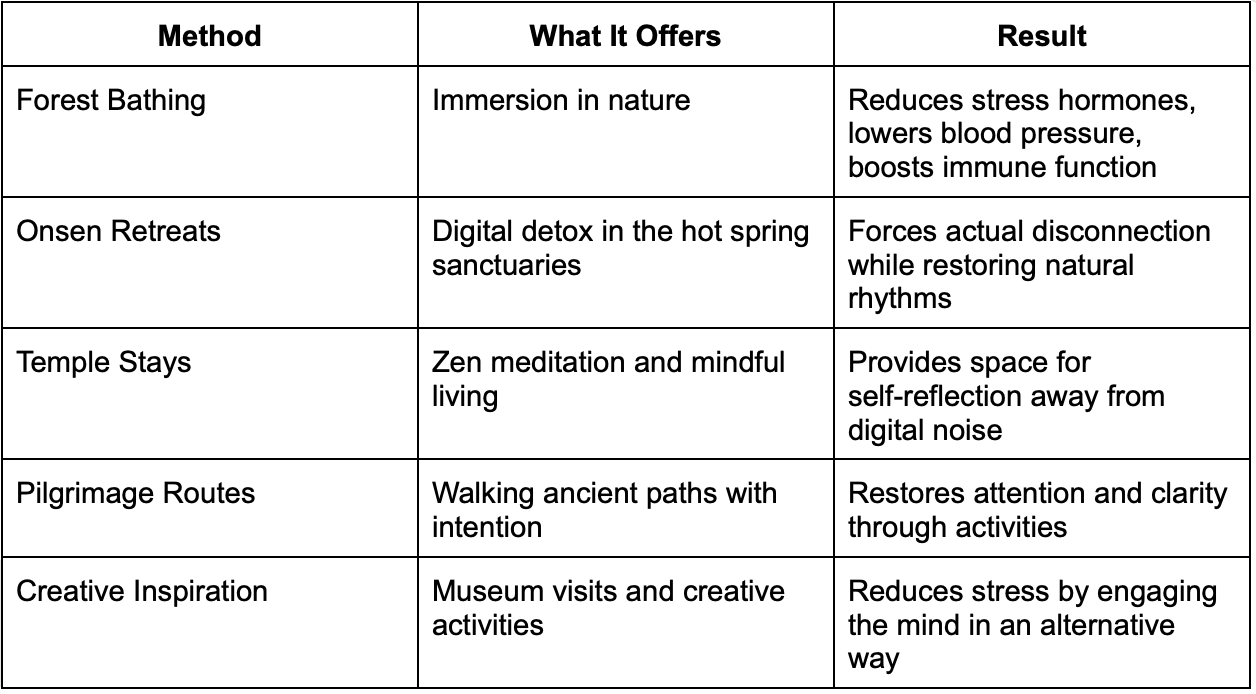
We will explore each of these paths in depth, showing you how they can help you step away from the noise.
Why You’re Burned Out and Why it’s a Problem
Burnout is not just “being tired”. It is a psychological condition resulting from prolonged, unmanaged stress, particularly in work or mentally demanding environments.
The World Health Organization defines it by three key components:
Emotional Exhaustion: Feeling drained, overwhelmed and depleted even after significant rest. This is often accompanied by difficulty with motivation and socialization.
Depersonalization: Feeling disconnected from work, relationships, and oneself.
Reduced Sense of Accomplishment: Feeling as if your efforts are ineffective or unimportant, usually caused by constant pressure to perform and achieve.
In Japan, the government recognized this crisis of work-life balance in correlation with mental health. This led to the 1982 forest bathing national health program in response to companies having employees doing over 80 hours of overtime monthly growing intensive stress levels. The results were significantly notable. Studies showed reduced blood pressure, lower cortisol, stronger immune function, and measurable changes in general mental health, even with just 30 minutes of forest bathing. The Japanese government built hundreds of certified forest therapy trails for workers to access during the workday, establishing the Japanese Society of Forest Medicine in 2007.
Solutions like this can be found all throughout Japan for any burned out professional.
The Solution
Japanese burnout recovery includes:
A culture of quiet respect which is medicine for the overwhelmed brain.
Deep reverence for nature that offers a counterpoint to constant social and work demands.
Ancient wellness practices like forest bathing and Zen meditation supported by modern science.
Digital detox industry that instates policies, guided meditation, and workshops.
Forest Bathing or ‘Shinrin-yoku’
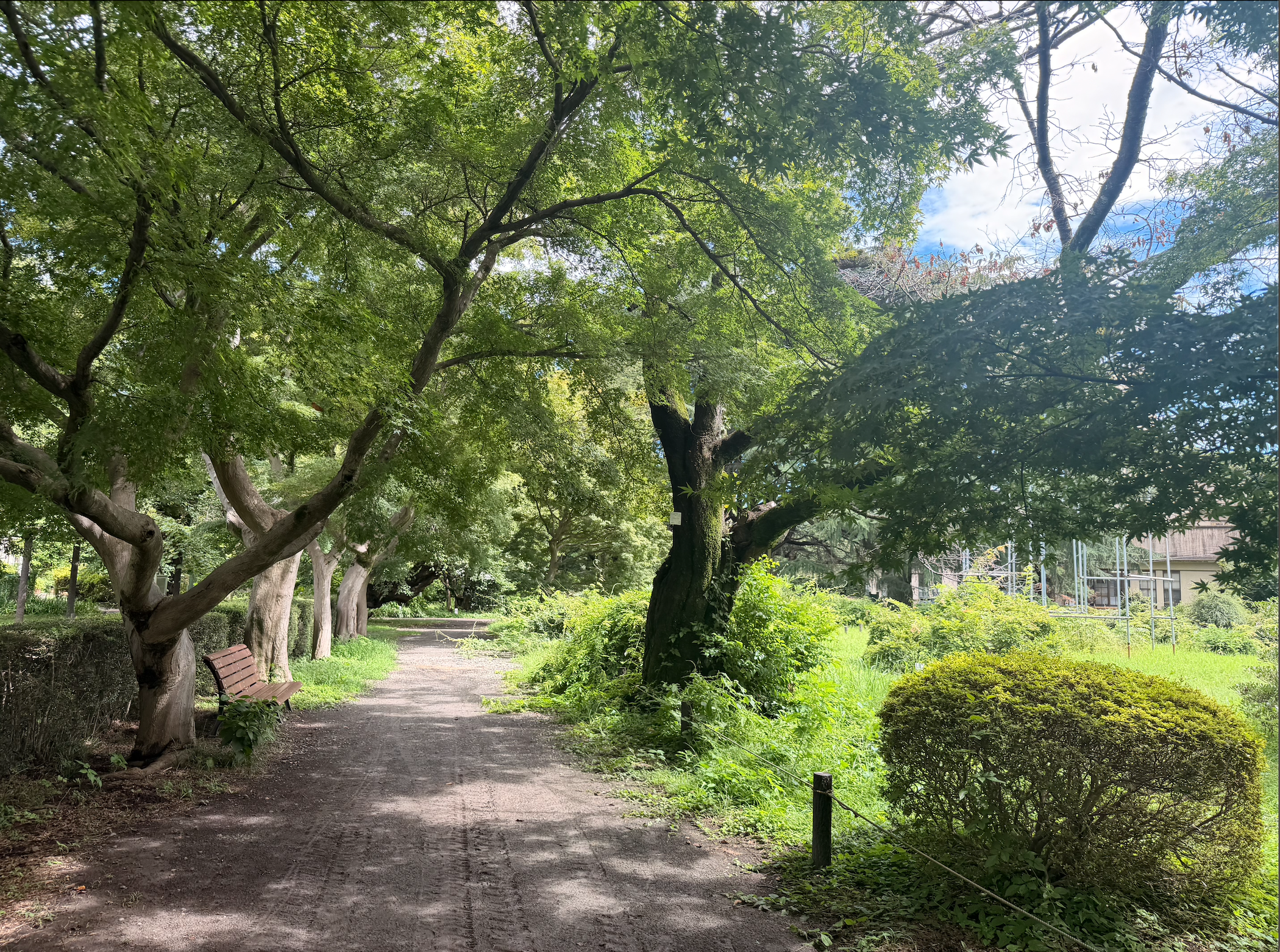
Forest bathing was first conceptualized in Japan in the 1980s, designed to help stressed masses find respite from burnout by taking advantage of the country’s extensive protected forest land space.
The Science of Forest Bathing
By immersing yourself in this kind of natural environment, you absorb your surroundings through all of your senses. And the science to back this method up is remarkable, inhaling compounds that trees release actually reduces concentrations of stress hormones and boosts the activity of white blood cells, subsequently boosting one’s immune system.
This is especially beneficial and accessible to professionals as forest bathing does not require major time commitments to achieve results. Even a short walk through a natural trail can produce a state of “soft fascination” where your brain isn’t processing a flood of competing visual stimuli and thus releasing stress.
Where to Go
The historic Hakone Hachiri Trail features 400 year old teahouses and scenic views along Lake Ashi with a perfect blend of nature and cultural immersion.
Forced Disconnection at an Onsen
Japan’s rural onsen retreats are gaining attention as top destinations for those yearning to break free from work related burnout. These hidden hot spring sanctuaries blend ancient Japanese traditions with beautiful natural settings.
Why It Helps
Most traditional Japanese inns offer dedicated technology-free areas and beneficial amenities such as meditation rooms, books, and outdoor baths without artificial light. For those who find it difficult to “turn it off”, some even provide digital lockboxes for guests to sequester their devices. For professionals, these retreats offer permission to exist beyond productivity, creating a unique relaxing environment unlike anywhere else in the world.
Where to Go
Kusatsu Onsen is coined for its vibrant yubatake hot water fields that guests can interact with in their walks through the steam covered streets and guided soaking rituals at sunrise to reconnect with their natural rhythms.
Temple Stays or ‘Shukubo’
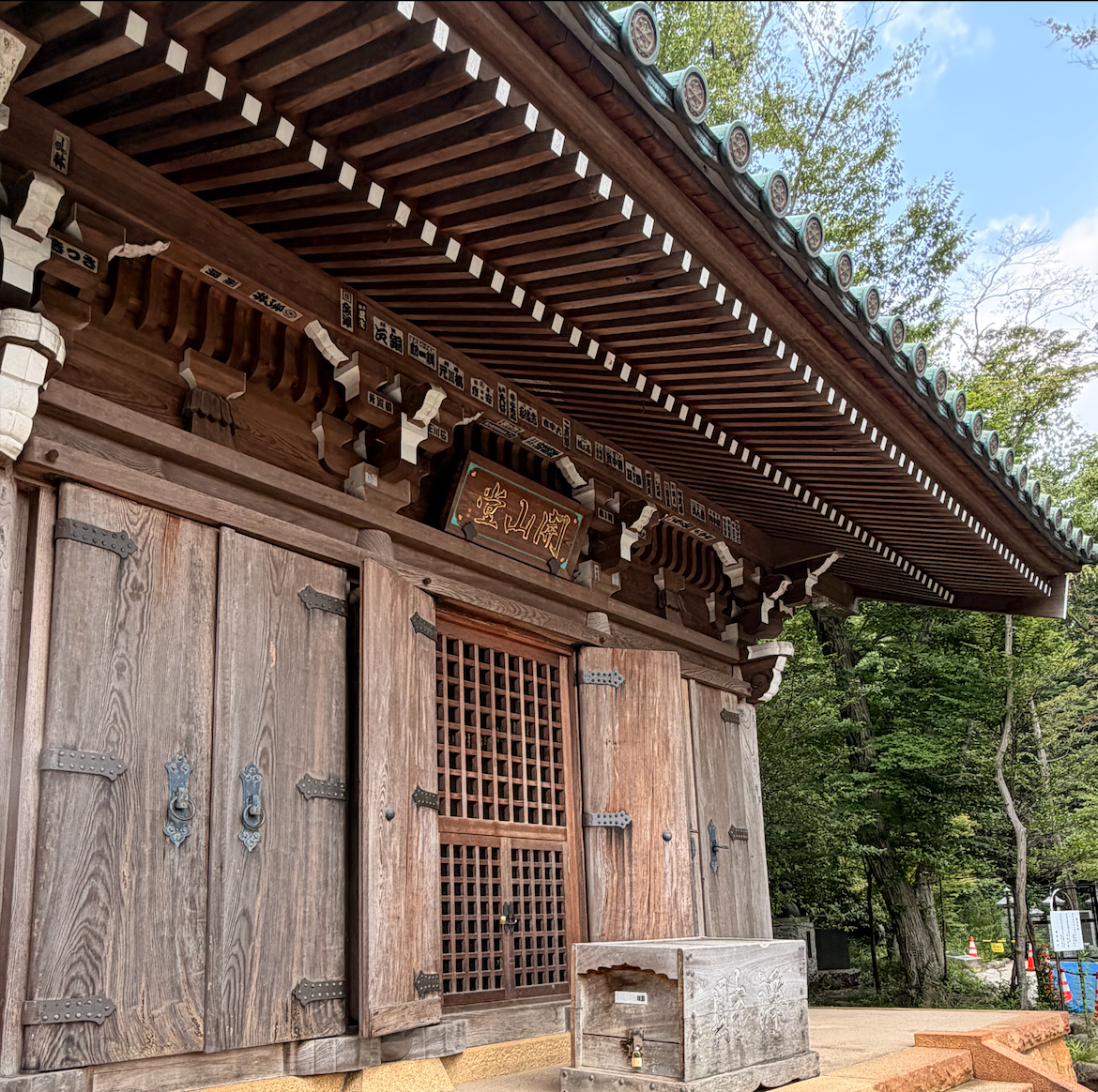
Just 20 minutes from Fukuoka City lies Shinryu-ji Temple in Sasaguri Town is home to the 88 temple Shikoku pilgrimage route which is a nationally rare location where a pilgrimage can be completed within a single town.
The Experience
The Sasaguri Town Tourism Association has developed corporate training programs combining several methods of digital detox, including:
Henro, pilgrimage walking through forest trails
Meditation, quiet reflection in temple halls
Sutra copying, for focus and stillness
Waterfall meditation, for mental purification
The Results
For professionals, the quiet atmosphere of a temple stay provides a space to practice mindfulness, a practice known as “uketamoh”, which lets you learn to live in the moment. These programs have been used for executive training and new employee orientation at manufacturing companies and educational organizations. Participants report relief from tension, stress reduction, and improved team relationships.
Walk with Intention
The physical benefits of walking combined with the spiritual energy of intention and awareness is a powerful antidote to the frenetic pace of professional life. Japan’s pilgrimage routes offer a unique combination of physical activity, spiritual reflection, and connection to nature.
Dewa Sanzan Context
The three sacred mountains in Yamagata Prefecture each represent a different aspect of time:
Mount Gassan- past
Mount Haguro- present
Mount Yudono- future
The Results
For professionals, walking these paths, worn by worshippers for years, is mostly done in silence as a meditative practice that allows you to learn to live in the moment. The yamabushi mountain ascetics’ practice of “uketamoh” accepting everything as it is, offers a powerful lesson for high achievers who are accustomed to controlling outcomes. It teaches the value of surrender, presence, and trusting the path beneath your feet.
Creative Rejuvenation

Panasonic Energy sent employees to the islands of Naoshima and Teshima in the Seto Inland Sea for an “art retreat” that combined museum visits with dialogue, directly reducing participant stress by 30% as well as effects lasting after the program. With changes in pace, environment, and motivation, we can find realizations we don’t typically notice in our daily work. Connecting to our inner creative genius in ways that we could not within the workplace brings forth a solution to burnout that not many people consider.
The Science
The retreat was designed to encourage dialogue among employees and generate ideas. The unique space of the Teshima Art museum, a building where the boundary between the internal and external blurs creates the perfect environment for innovation.
The Results
For professionals, art appreciation and stillness offer a form of brain activity that still gives the brain a break from overstimulation and “problem solving” mode. It allows for new connections to form and creative ideas to emerge.
The Psychology Behind Slow Travel
The practices described above are not just cultural experiences or sightseeing travel, they are backed by the science of well being.
Reduces Stress:
Slow travel in Japan allows travelers permission to simply exist. Genuine connection, mental unload, and conscious introspection allows for a reduced cortisol level and regulated stress.
Widens Attention Span:
Digital overload depletes cognitive resources while natural spaces restore our capacity for attention and reflection.
Regulates Nervous System:
Constant digital connectivity keeps the sympathetic nervous system in a state of hyperarousal. Slow travel provides the conditions for the parasympathetic nervous system to operate properly, allowing the body to generate true healing.
Brings Back Curiosity:
Burnout recovery often involves reconnecting with purpose, rediscovering what truly matters beyond the performance metrics and professional validation. Japan’s slow travel experiences create space for introspection and self-inquiry, blossoming true creativity that can be leveraged both in and out of the workplace.
The Tokudaw Difference
Here at TokudAw, we understand that burnout recovery requires more than a change of scenery, it requires a change in mindset.
Our private, self paced itineraries allows you to:
Move at your own rhythm: No rushing to catch trains or running on strict group tour time, the pace is yours alone.
Travel with comfort and accessibility: Our private vehicles provide a climate controlled space where you can decompress between experiences.
Experience authentic Japanese wellness: Our guides connect you with forest bathing trails, temple retreats and onsen experiences that aren’t as publicized.
We offer flexible scheduling and personalized guidance to help you design a journey that prioritizes your recovery, not your productivity.
FAQ: Burnout Recovery and Slow Travel in Japan
Does forest bathing really work?
Forest bathing has been shown to reduce stress hormones like cortisol, lower blood pressure, and boost immune function. Inhaling phytoncides released by trees has scientifically measurable physiological benefits.
How long does it take to feel the benefits of slow travel?
Even short periods of immersion can produce significant results. Participants in a mindful farming retreat in Chiba reported feeling calmer, less stressed, and more grounded after just three days away from screens.
Are these experiences suitable for corporate groups?
Of course! The Sasaguri Town Tourism Association offers pilgrimage based corporate training programs combining walking meditation, sutra copying, and waterfall meditation. Panasonic Energy has conducted art retreats in the Seto Inland Sea with measurable stress reduction results.
What makes temple stays effective for burnout recovery?
Temple stays provide a complete break from digital stimulation. Access to ancient meditative practices and a space for self-reflection away from the demands of professional life, some temples even offer complete digital detox.
How can TokudAw help me plan a burnout recovery trip?
TokudAw offers private, self-paced itineraries with comfortable transportation and local guides who can connect you with authentic wellness experiences. We design trips around your recovery goals rather than a fixed schedule.
