Digital Detox in Japan: How to Slow Travel, Detox from Screens, and Return to Reality
We all know what it feels like to reach our breaking point.
At the end of a long day of work or school, you find yourself doom-scrolling through social media for every bit of your free time. In this daily routine, your brain starts to feel foggy and despite consuming so much content, you feel more disconnected than ever. Disconnected from yourself, the people around you, and the world at large.
What if you had a completely alternative wind-down experience based on your exposure to Japanese Zen Culture? You, sitting in a quiet Japanese garden, listening to a gentle waterfall, are resetting your brain from its constant state of being over-worked. You get a moment of peace, with no notifications, alerts, or urgency. Instead, these anxiety-makers are replaced with the slow, deliberate rhythm of the world around you in which you are finally still and silent enough to observe.
A world like this still exists in modern day and is yours to experience. Japan has mastered the art of balancing cutting edge technology with ancient wisdom, offering the perfect setting for pressing the reset button.
At a Glance: 5 Ways You Can Slow Down and Detox in Japan
Before we explore each method in depth, take a look at the key way Japan can help you disconnect from screens and reconnect with yourself.
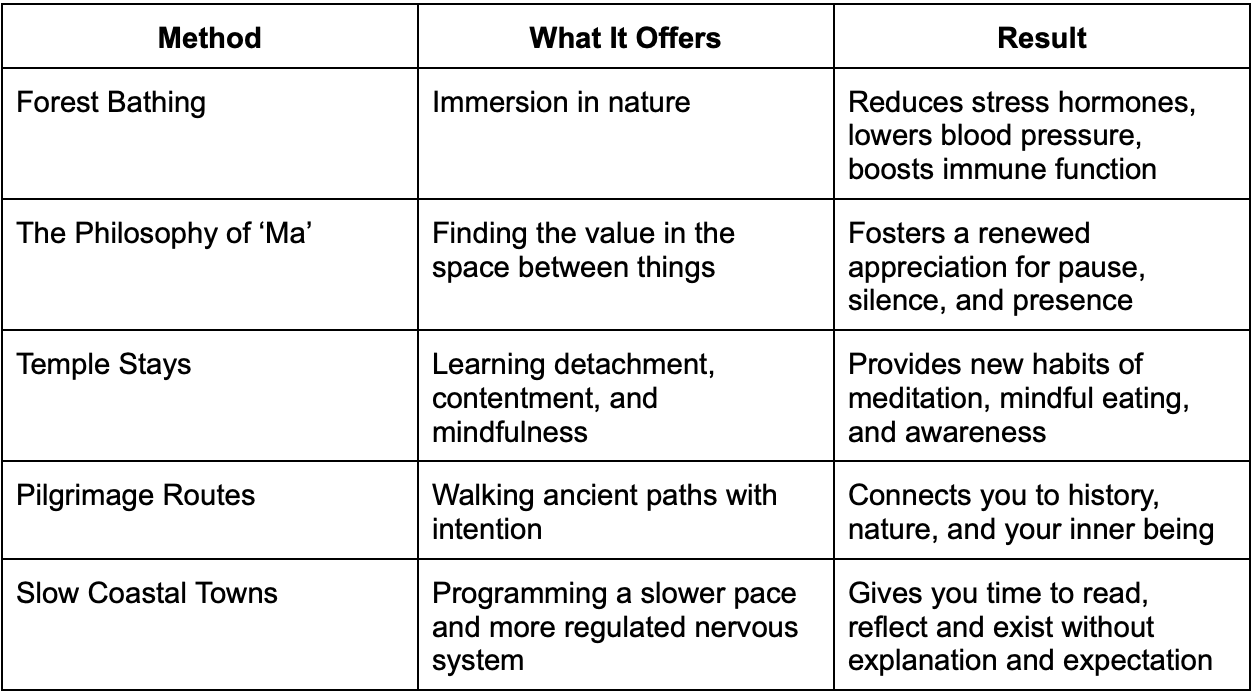
We will explore each of these paths in depth, showing you how they can help you step away from the noise and use our limited time of existence in a more meaningful way.
Why You’re Exhausted
There is a serious humanist danger at the center of modern life. We are more connected than ever, spanning the greatest distances, and people are still experiencing loneliness at an epidemic level. We have the capabilities to scroll through carefully curated glimpses of other people’s lives and only end up feeling inadequate through this exposure. We have the capabilities to consume endless news cycles and only end up feeling anxious through this education. Our phones have devolved from sophisticated tools of communication to something we use to distract ourselves from our lives, much to our own detriment.
This is no one person’s fault. Our blossoming digital world thrives on the burned out brains of hard-working modern populations. Social media algorithms are engineered to keep us engaged and dependent on imitation dopamine, not to keep us happy. Lucky for us, awareness of this is the first step to moving towards a better, more connected lifestyle for ourselves.
In Japan, there is a Zen Buddhist concept that speaks directly to this problem known as “mushin” or “no mind”. It is the principle of accepting change without resistance, which we could adopt in the form of releasing our grip on our screens, anxieties, and relentless pursuit of productivity. Mushin is not about giving up, but rather surrendering the illusion that we can control everything, creating a more peaceful reality.
Why it’s a Problem
The question children hear the most as new people on the planet is, “What do you want to be when you grow up?” Why do we ask this? It cements the idea that one must become something in this world, it is not a matter of ‘if’ but a matter of ‘what’. This translates to the most asked questions between adults, “So, what do you do for work?” Again, treating our function in society as our identity.
German philosopher Martin Heidegger argued that we often live in a state of “inauthenticity”, treating our lives as a series of tasks to be completed and not much more. This makes it to that we become so focused on the future outcome of our present actions that we are completely absent from the present moment. In his terms, we are distracted from the fundamental question of what it means to exist.
Across cultures and strains of philosophical thought a common argument is presented that human beings are not designed for relentless and all consuming productivity. Living in such a way will inevitably rob us of the connection, wonder, and love that comes from presently experiencing the journey of life. In Shintoism, for example, the sacred is not separate from the observable world. They believe that kami (spirits) dwell in mountains, rivers, trees, and stones. To be present in nature is to be present in the presence of the “divine”.
This is why the modern epidemic of burnout is not just a mental health issue, it is a spiritual crisis. It is the manifestation of a worldview that has forgotten who we are and what we are capable of. Many people live miserably, suffering from anxiety and depression, because they are trapped in systems of endless expectations from which they cannot escape. We are not here to sell you that the permanent solution is just a vacation or a week of rest. It is the continuous reclamation of our fundamental humanity and the recognition that we cannot assign intrinsic value to output.
This is why burnout recovery is a spiritual practice. It is the act of acting on our capacity for presence and therefore happiness rather than surrendering it to work. And Japan, with its profound traditions of “shinrin-yoku”, ma, and omotenashi, offers a place to begin that reclamation.
The Solution
Many people don’t know that Japan offers a rare opportunity to learn from a culture that has deeply integrated the practice of slowing down. Whether you are experiencing the precise rituals of the tea ceremony or the meditative silence of a Zen garden, you are adapting the understanding that every moment of life is meaningful and cannot be rushed through.
If you’re looking for “off the beaten path” travel in Japan, look beyond the Golden Route, the popularized path connecting Tokyo, Osaka, Kyoto, and Hakone. The countryside, rural, and coastal regions offer an equally beautiful, yet completely different experience, offering a slower and deeper connection to Japan’s agricultural and spiritual heritage.
Let’s examine how you can find solutions tailored to you in Japan.
Forest Bathing or ‘Shinrin-yoku’
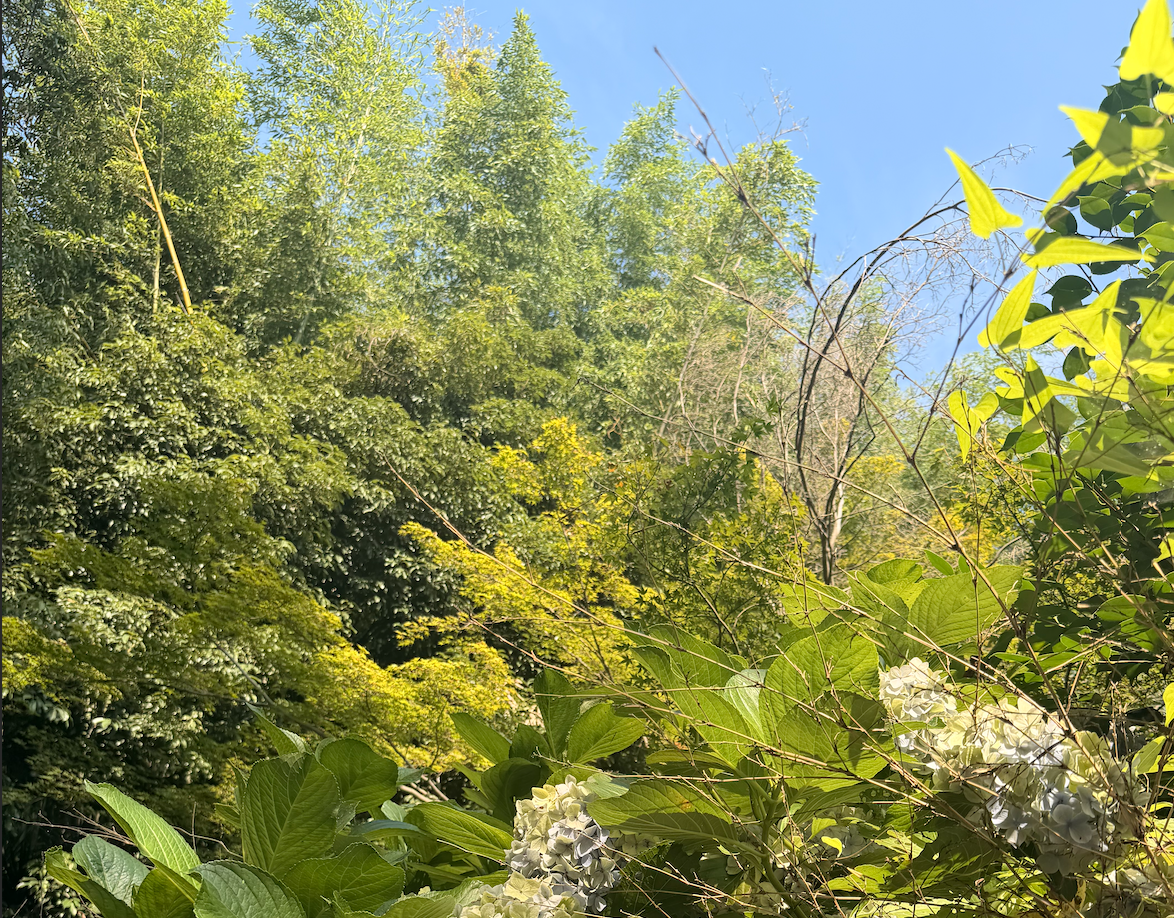
In the 1980s, the Japanese government coined shinrin-yoku as a public health initiative. The practice involves walking slowly through a forest, breathing deeply, and mindfully engaging with your surroundings.
The Science of Forest Bathing
Studies have shown that spending time in a forest environment:
Reduces stress hormones like cortisol and adrenaline
Lowers blood pressure and reduces inflammation
Boosts immune function by increasing natural killer cells which fight infections and cancer
Improves mood by increasing serotonin and oxytocin levels
Enhances sleep quality and reduces anxiety and depression symptoms
In one study, researchers found that just 20 minutes of forest bathing began to show anti-anxiety and antidepressant effects, with a peak at two hours.
Trees release substances called phytoncides which are natural compounds that protect them from insects and decay. When those compounds are breathed in, our bodies respond by boosting our immune system, essentially inhaling health.
For more on the science behind this practice, check out our previous blog post on forest bathing and stress reduction!
Where to Go
Japan offers countless forest bathing destinations. A great example is the ancient cedar forests of Yakushima, which actually inspired the forest in Studio Ghibli’s Princess Mononoke. For an immersive guided experience, consider a temple stay on Mount Koya (Koyasan), where you can combine forest bathing with Zen meditation and traditional vegetarian cuisine.
For more suggestions, check out our Instagram post with recommendations on other places to visit!
The Philosophy of ‘Ma’
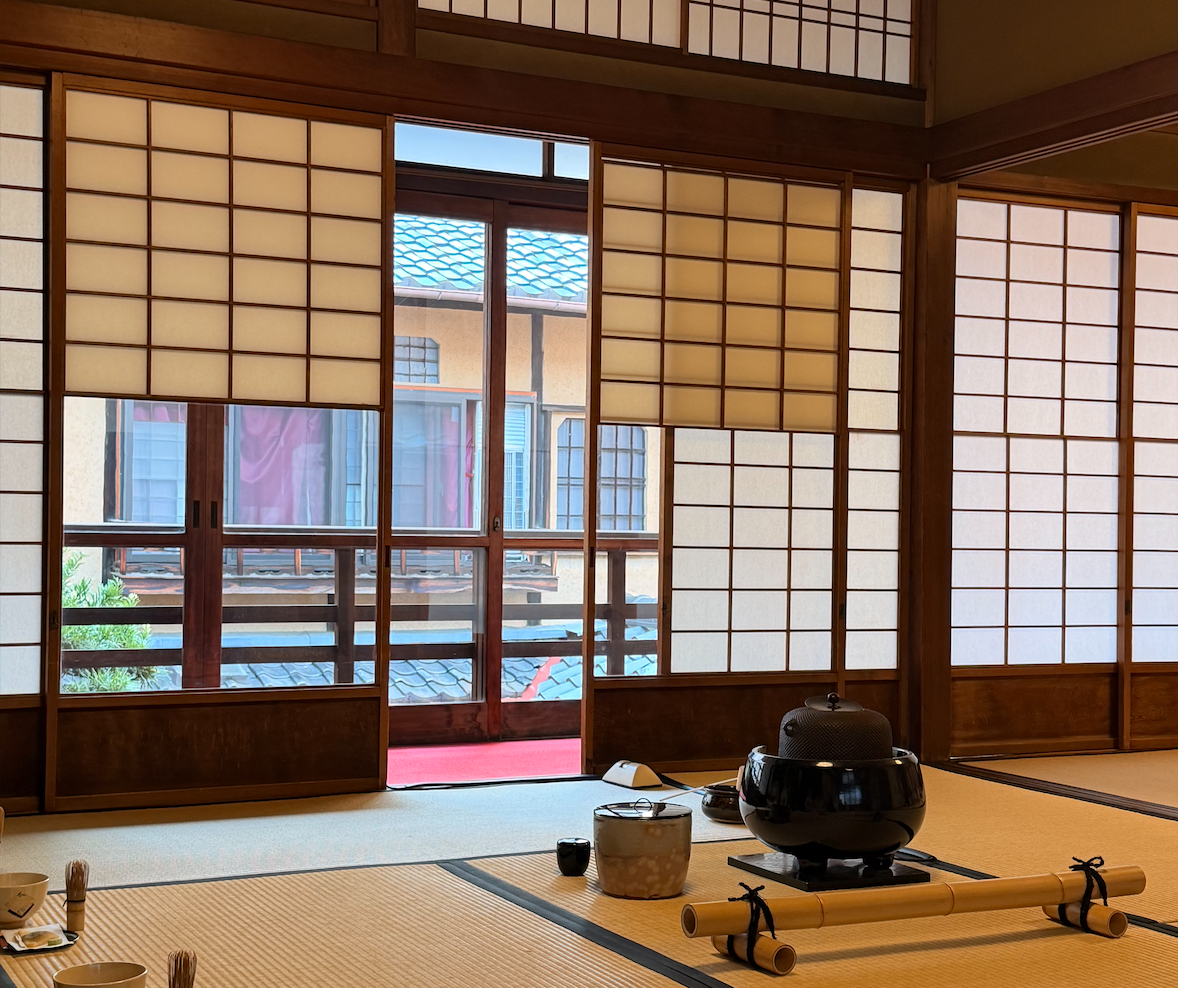
The Japanese concept of Ma is one of the most profound philosophical ideas you can apply to your life. Ma argues value in the space between things, that the gap gives meaning to what surrounds it.
It is seeing the empty space within a room not as “nothing”, but as the living space that makes the building usable and therefore valuable. Ma is the pause that allows us to breathe, reflect, and fully experience the present moment.
Ma in Practice
In terms of digital detox, Ma is a radical concept. It requires people to stop treating silence and pause as a void to be filled and start recognizing it as a source of meaning. In Japanese, the Kanji symbol for Ma combines the characters for “door” and “sun” depicting the crevice through which sunlight seeps in. This perfectly captures the meaning of Ma “opening the door” and “letting the light in”.
Consider visiting one of Japan’s three great gardens, like the Kenroku-en in Kanazawa, for example. It was established during the Edo period and offers seclusion, tranquility, waterways, and beauty.
Here you can wander slowly, sit down, observe the nature around you.
Ma in Tea Ceremonies
The concept of Ma is deeply connected to the Japanese tea ceremony tradition. For more information on the philosophy of Ma in Japan, check out our blog article!
Here at TokudAw, we offer Treasure Sessions that pair traditional crafts with mindful, intentional content. Our tea ceremony treasure session invites you to experience the ritual of sado, not just as a performance to watch, but as a practice to participate in.
Learn more about our tea ceremony treasure session here.
Temple Stays or ‘Shukubo’
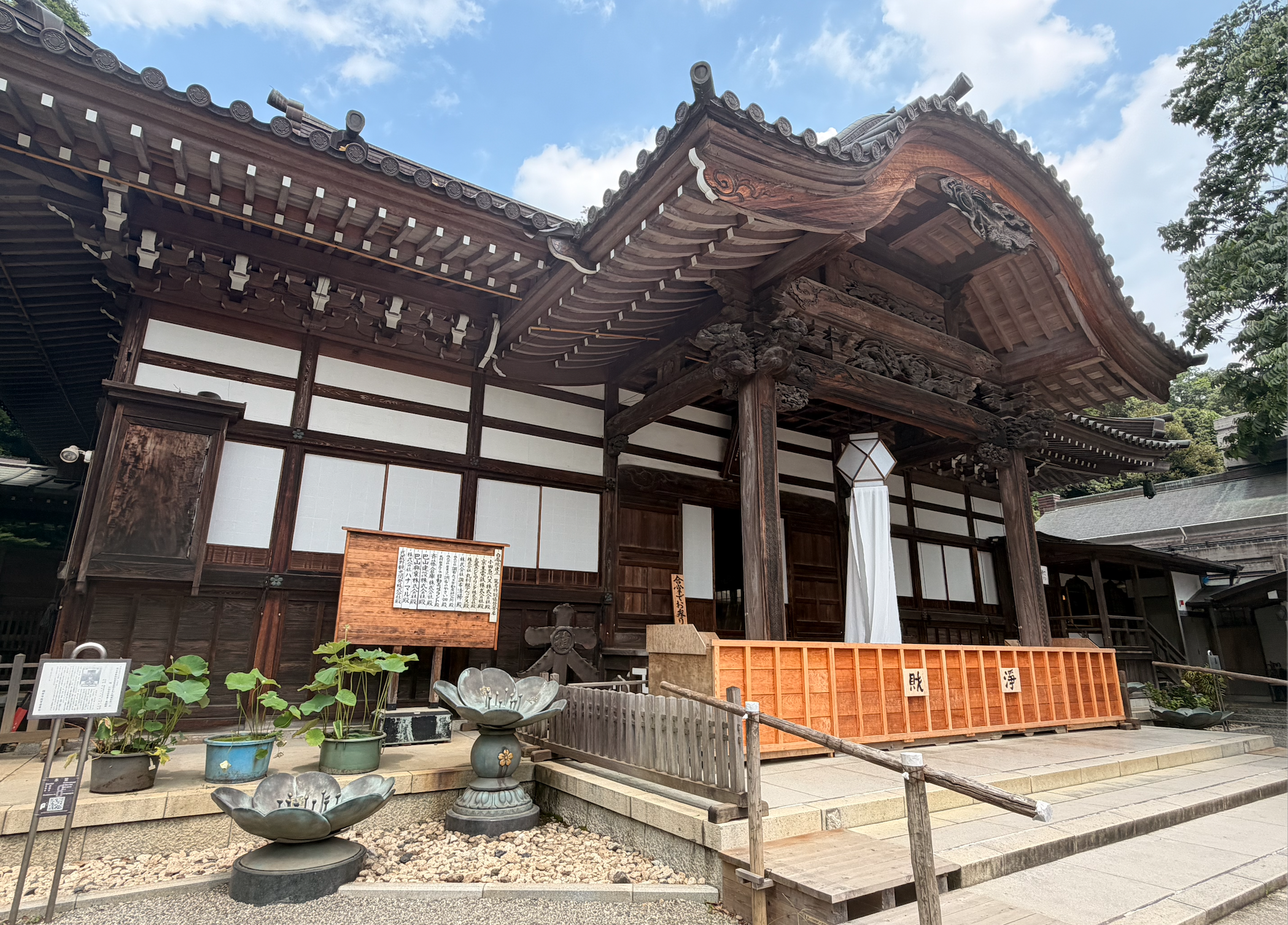
Distance from Technology
Imagine the benefit of surrendering your smartphone for 24 hours, eating vegetarian meals, meditating every day, and the air around you being filled with nothing but silence. When you stay in a Buddhist temple in Japan, you are participating in a 1,200 year old tradition of being welcomed into this space to experience spiritual renewal. Today, these experiences are available to anyone willing to engage in a more mindful way of life.
The Practice
At Shogakuji temple, about two hours from Tokyo, you can participate in authentic Soto Zen practices.
You can:
Meditate: Learn to sit and rest with no objective. Meditating within the natural beauty, you can learn to let the sounds of the wind and earth raise your awareness within existence.
Sutra Copying: Practice transcribing Buddhist scriptures. This meditative practice helps you slow down, focus, and find clarity as well as learning about the rich cultural history of Japanese religion and philosophy.
Harm-free Meals: Enjoy delicious, vegetarian meals that reflect the spirit of mindfulness and awareness of the fact that humans being a part of nature means that we must live more sustainably and selflessly.
Walk with Intention
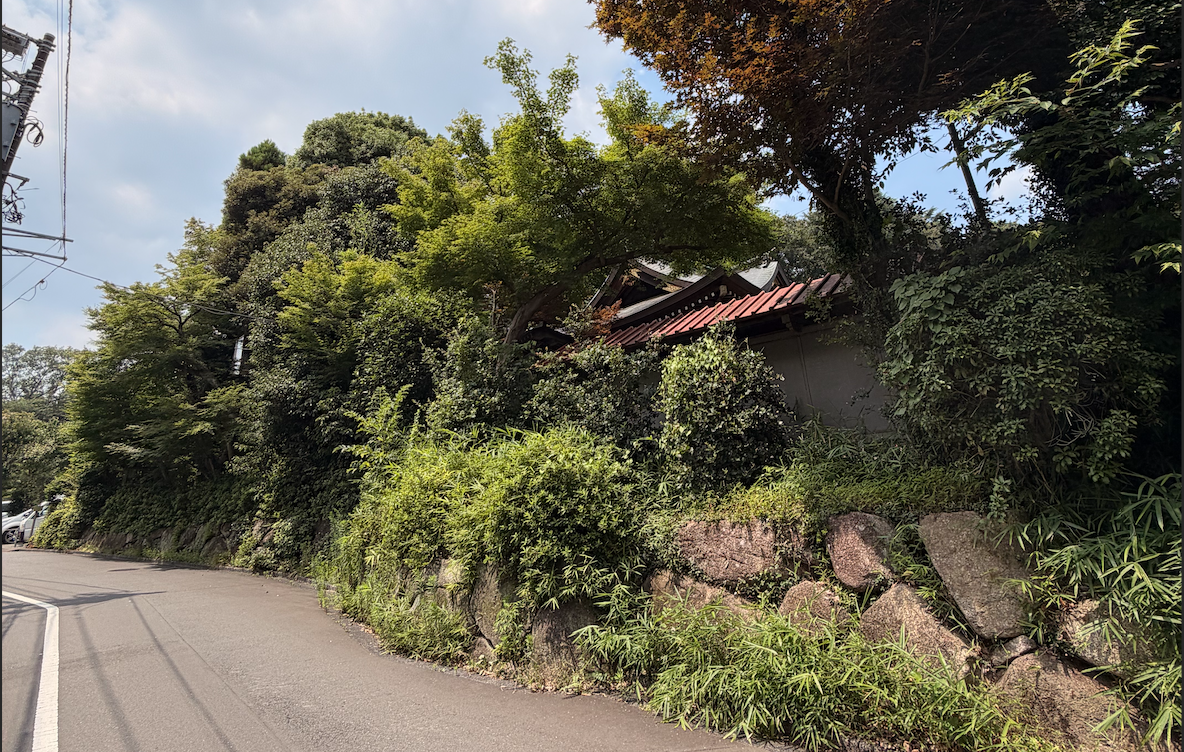
Japan’s pilgrimage routes offer a unique combination of physical activity, spiritual reflection, and connection to nature. These paths, walked for centuries by monks, emperors, and ordinary people seeking renewal are now open to anyone wanting to engage in the practice.
Dewa Sanzan Context
The three sacred mountains of Dewa Sanzan in Yamagata Prefecture each represent a different aspect of time:
Mount Cassan- past
Mount Haguro- present
Mount Yudono- future
Together, they represent the cycle of life and a spiritual space that has welcomed all people seeking connection to their past and hope for their future.
Consider joining a yamabushi (mountain ascetic monk) guided tour, following in the footsteps of worshippers who have carried these traditions for several years. The climb takes several hours and is mostly done in silence. The yamabushi believe in accepting everything as it is, allowing you to really live in the present moment.
Kumano Kodo
The Kumano Kodo is a UNESCO World Heritage pilgrimage route in the Kii Peninsula. It winds through sacred mountains and mossy stone paths, offering eco-lodges and mindfulness focused inns that encourage full digital disconnection.
Chichibu Pilgrimage
If the Kumano Kodo feels too intense, consider the Chichibu Fudasho Pilgrimage in Saitama Prefecture, just 90 minutes from Tokyo. This pilgrimage involves visiting 34 sacred Kannon temples scattered throughout the Chichibu region and can be done in a single day! During the Edo period, many people visited the area as a place of worship. The tour includes hiking through rolling hills, with traditional “shojin ryori” which are Buddhist vegetarian meals.
For those with limited physical capabilities, modern pilgrimages are sometimes done via car, allowing for increased accessibility while experiencing the same spiritual journey.
Changing Your Relationship with Time
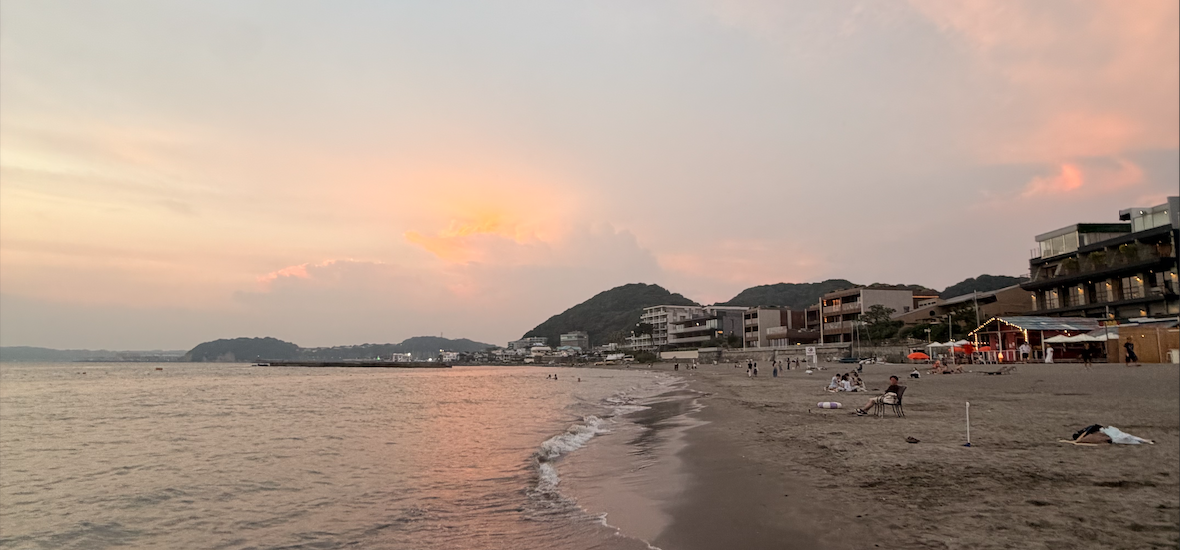
Shimane
On the eastern edge of Shimane Prefecture lies Mihoneseki, a quiet port town deeply connected to the mythology of Izumo Taisha. It has long been known as a spiritual gateway to the Sea of Japan.
Shimane is consistently ranked among the least visited prefectures in all of Japan, making it the perfect destination for those who want to get away from the crowds and experience a different pace in Japan.
The town offers:
Traditional wooden houses lining narrow streets
Miho Shrine, dedicated to Ebisu, the deity of good fortune and the sea
Ao-ishidatami Dori, a stone path that takes on a subtle blue hue on rainy days
Unobstructed ocean views, with Mount Daisen rising across the water
Mount Daisen
Mount Daisen in Tottori Prefecture, known as the “Mount Fuji of the San’in Coast” is the tallest mountain in the Chūgoku region at 1,729 meters. Its conical shape and surrounding landscapes make it a stunning alternative to the crowded views of Mount Fuji. With only about 50,000 hikers a year compared to Fuji’s 300,000+, the trails are clear and the summit is a working hike rather than a queued procession.
The Psychology Behind Slow Travel
The practices described above are not just cultural experiences, they are backed by the science of well being.
Reduces Stress:
Forest bathing has been shown to reduce stress hormones, lower blood pressure, and improve mood. The mechanism involves the endocrino-immune network to modulate serotonin and stress biomarkers leading to a multitude of positive health effects.
Widens Attention Span:
Digital overload depletes our cognitive resources. Nature, on the other hand, restores our capacity for attention and reflection. In a quiet forest, our minds are free to wander to find clarity.
Strengthens Connections:
Slow travel brings us into contact with locals and fellow travelers. These encounters are not transactional, they are genuine. They remind us of the simple joy of human connection.
The Tokudaw Difference
Here at TokudAw, we believe that travel should be a journey of transformation, more than just sightseeing, an actual deep connection with the culture and philosophy of Japan.
Our private, self-paced itineraries allow you to:
Spend as much time as you need absorbing the lessons of slow travel.
Travel with comfort and accessibility in our private vehicles, eliminating the stress of public transit.
Learn from locals with our guides who are ambassadors of Japanese culture and can connect you to authentic experiences
We offer flexible scheduling and personalized guidance to help you find the experiences that will help you press the reset button in ways that you may not have even considered previously.
FAQ: Digital Detox and Slow Travel in Japan
Does forest bathing really work?
Forest bathing is the Japanese practice of spending mindful time in a forest environment and has been proven to work. Scientific studies have shown it reduces stress hormones, lowers blood pressure, boosts immune function and improves mood.
How can I practice Ma in my daily life?
You can practice Ma, the practice of valuing the space between things, by building unscheduled time into your day. Here, you can put away your phone, meditate, or simply let your mind wander with no particular objective.
What should I expect from a temple stay in Japan?
Temple stays typically include simple accommodations, vegetarian meals, and participation in practices like zazen meditation and sutra copying. Many temples even offer a digital detox option where you surrender your devices at check-in.
Are there digital detox options near Tokyo?
Of course! Shogakuji Temple offers an authentic overnight Zen meditation and digital detox experience about two hours from Tokyo, with pickup service included. The Chichibu Fudasho Pilgrimage is also just 90 minutes from Tokyo and can be completed in a single day.
How can I experience a digital detox in just one day?
A one day digital detox is possible! Consider the Chichibu Fudasho Pilgrimage, which visits 34 sacred temples in a single day. Alternatively, TokudAw offers Treasure Sessions, intentionally designed workshops that pair traditional Japanese crafts with mindful, intentional content. Our Kintsugi treasure session invites you to focus on the meditative process of repairing broken pottery with gold, a practice that encourages patience, presence, and acceptance of imperfection. You can disconnect from screens and reconnect with your hands, your breath, and the art of transformation, all in a single day!
How can TokudAw help me plan a slow travel itinerary?
TokudAw offers private, self paced itineraries with comfortable vehicles, local guides, and flexible scheduling. We can design a trip that includes forest bathing, temple stays, pilgrimage walks, or any other mindful experiences you desire.
