
Catching an early-morning Shinkansen is one of the easiest ways to make the most of your day in Japan.
Whether you are heading from Tokyo to Kyoto, Osaka, Nagoya, or another major city, an early train can get you to your destination with plenty of time for sightseeing, business meetings, or connecting travel.
However, catching one of the first Shinkansen services of the day requires a little more planning than taking a train later in the morning. Station entrances, ticket counters, local trains, and even breakfast options may have different opening times.
Here is everything you need to know to catch an early Shinkansen smoothly.
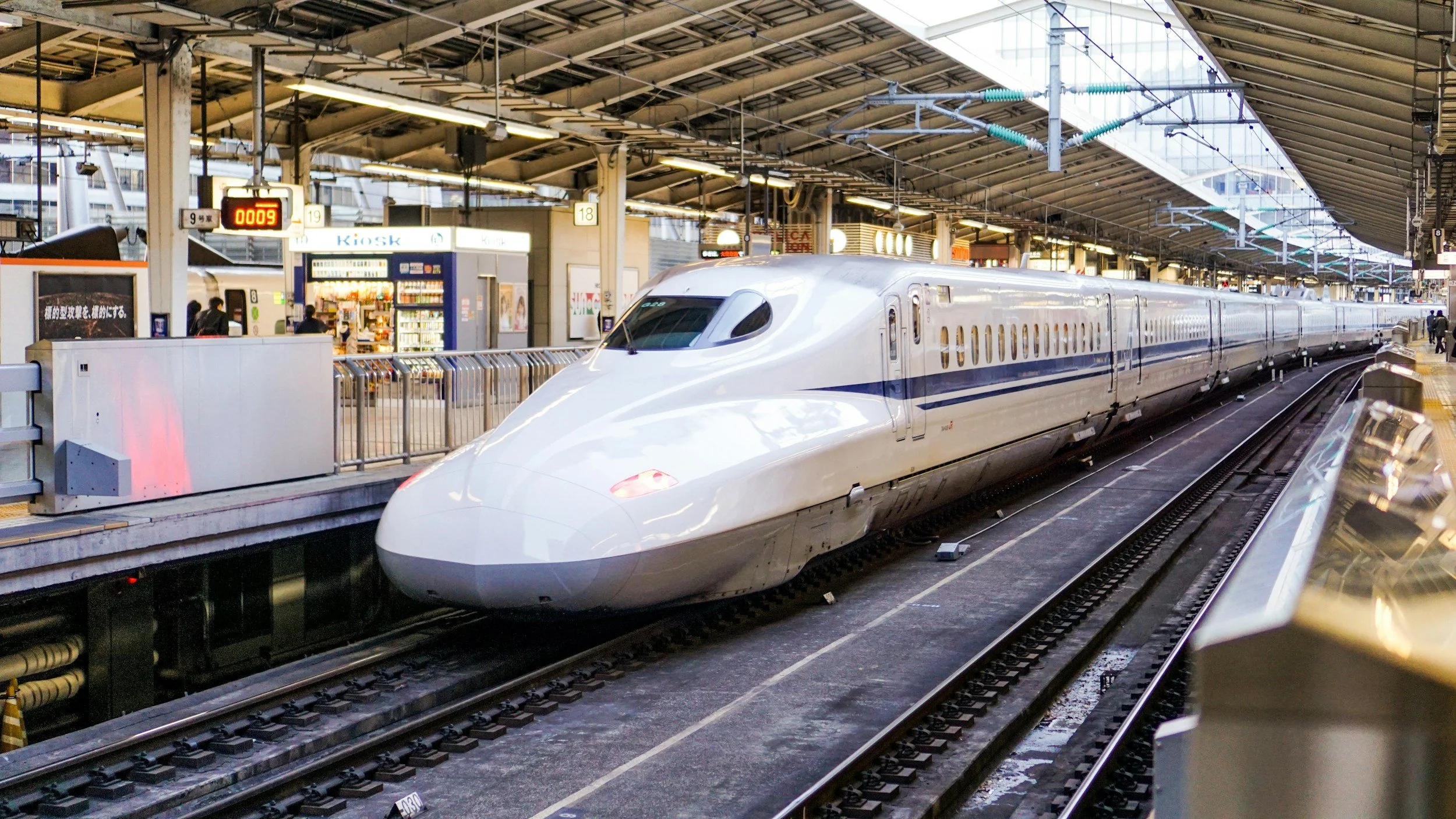
Check the Shinkansen You Need (at least a week before your departure)
The first step is to check exactly which train you need. Check the: date, departure station, destination, train number, departure and arrival time.
Shinkansen schedules vary depending on the route and day. JR Central's Tokaido/Sanyo/Kyushu Shinkansen timetable, for example, lists different services, destinations, train types, and operating days.
The main Shinkansen train types you may encounter include:
Nozomi (のぞみ) – generally the fastest service on the Tokaido/Sanyo Shinkansen
Hikari (ひかり) – makes more stops than Nozomi
Kodama (こだま) – stops at more stations and takes longer
These train types can drastically vary depending on the length of the trip.
Always check the current timetable rather than relying on an old travel guide, as schedules can change. In the case of bad weather such as typhoons, heavy rain, or snow storms, delays may occur.
Save a screenshot of your train details on your phone before your trip. This is especially useful if you are travelling early and don't want to search through emails!
Booking the Right Shinkansen Station
Large cities may have multiple stations where you can board or connect to a Shinkansen.
For example, travellers departing from Tokyo can potentially use Tokyo Station, Shinagawa Station, or Shin-Yokohama Station, depending on their itinerary.
If you are traveling with a non-reserved seat Shinkansen ticket, keep in mind that a seat is not guaranteed, especially if you are boarding at a station that is not the train’s starting station.
Even if you board early in the morning, the train may already have passengers on board, meaning there may not be any seats left when you get on.
This can be particularly common during ski season, Japanese national holidays, and summer weekends when popular fireworks festivals are taking place.
If you are traveling during a busy period, it is generally a good idea to book a reserved seat whenever possible. This can be especially helpful when boarding at busy stations such as Shinagawa, Shin-Yokohama, or Nagano, where trains may already have many passengers.
During particularly busy holiday periods, some trains may operate with reserved seats only, meaning non-reserved tickets may not be available at all.
If the non-reserved section is full, you may still be able to stand in the designated non-reserved area rather than having to wait for another train. However, standing for the duration of a Shinkansen journey can be uncomfortable, especially on longer trips.
Don't automatically choose the station closest to a tourist attraction. For an early departure, the station that is easiest to reach from your accommodation may be the better option.
For example, if you are staying near Shinagawa Station and taking an early train to Kyoto, departing from Shinagawa may be much easier than traveling to Tokyo Station. This can save you time and make navigating with luggage less stressful, especially when public transportation is limited early in the morning.
Get to Know Your Tickets and How To Use Them
If you already know which early train you want, booking your ticket ahead of time can make your trip much easier.
Depending on your route, you may be able to purchase your Shinkansen ticket online, use a ticketless service, or buy a physical ticket from a ticket machine or ticket office.
JR East lists options including its online reservation services, Shinkansen e-ticket services, and ticket machines.
Booking ahead also means that you don’t have to stress over figuring out how to purchase a ticket.
For traditional paper tickets, traveling on a Shinkansen generally involves a basic fare ticket and a Shinkansen limited express ticket. At the ticket gate, insert both tickets together into the machine.
The machine will take the tickets and then return them to you. Be sure to collect them! You may need the tickets again when exiting the Shinkansen gates at your destination.
If you are using a ticketless service, make sure you understand exactly how your reservation works before leaving your accommodation as it will be connected to your transportation card.
The fees for the paper ticket and ticketless service is also the same.
If you arrive at Tokyo Station using a JR train and need to transfer to the Shinkansen, the process is slightly different when you have a paper Shinkansen ticket.
At the transfer gate:
Insert your paper Shinkansen tickets into the ticket machine.
Tap your IC transportation card (such as Suica or PASMO).
Collect your paper tickets before continuing to the Shinkansen area.
If you are arriving at Tokyo Station by car, there is another option that can make things a little simpler.
There are Shinkansen entrances outside the main JR ticketed area, so you do not need to enter the JR area with your IC card first. If you are heading to Kyoto or other destinations to the west, the Yaesu South side of Tokyo Station can be a convenient place to enter, especially when arriving by car.
Tokyo Station has two different Shinkansen areas, and it is important to make sure you are heading to the correct one. Although both are operated by JR companies, they are operated by different JR companies and use separate entrances.
🔵 Blue = JR Central — Shinkansen trains heading south and west, including Kyoto, Osaka, Nagoya, and Hiroshima.
🟢 Green = JR East — Shinkansen trains heading north and northeast, including destinations such as Sendai, Nagano, and Niigata.
Always check your train and destination before heading through the gates. The different Shinkansen entrances can be confusing, especially if it is your first time navigating Tokyo Station.
Shinkansen tickets also vary in terms of non-reserved and reserved tickets. When traveling during a Japan holiday, reserved tickets are extremely important to ensure that you have a seat on the train.
Work Out How You’ll Get to the Station to Catch Your Early Train
If your Shinkansen leaves at 6:30 AM, for example, you don't want to discover at 6:05 AM that the local train you planned to take doesn't run that early.
Check your entire journey the night before.
Look at:
Your hotel departure time
The first local train
Walking time to the station
Which station entrance you need
Which Shinkansen gate to use
The location of your platform
Your train's departure time
Give yourself some extra time for navigating the station, particularly if it is your first visit.
If you need to catch a 6 AM train, finding a taxi at 5 AM may not always be easy, so it is important to plan your transportation in advance. Booking a ride to the station before your trip means you can start your morning without the stress of searching for transportation at the last minute. Taxi and private transportation services can often be arranged through your hotel, and TokudAw Lite also offers private transportation options.
Arrive at the Station Early
For an early Shinkansen, try to aim to arrive at the station at least 20–30 minutes before departure.
You may want even more time if:
You have luggage
You need to collect physical tickets
You are unfamiliar with the station
You are travelling with children
You need breakfast or supplies
You have a tight connection to another train
Tokyo Station can be particularly overwhelming for first-time visitors because of its size and the number of different railway lines. For guests using TokudAw services, we will drop you off at the entrance closest to the train you are taking. For an extra free we are happy to escort you all the way to the platform.
Check Your Platform and Train Number
Once you are inside the Shinkansen area, check the departure boards.
Look for:
Train name
Train number
Destination
Departure time
Platform number
Car number
Don't rely solely on the destination. There may be multiple trains heading in broadly the same direction but stopping at different stations. It is especially important to double check in the event of an emergency, such as a typhoon, when train schedules may be off.
JR Central's departure-order information provides train names and numbers, departure times, platforms, destinations, and stopping stations.
Your train number is your friend. If your ticket says something like Nozomi 201, look for Nozomi 201, rather than simply looking for "Kyoto" or "Osaka." This is because there are different types of trains to certain destinations,
If you are having trouble finding the platform that your Shinkansen will depart from, always look for station staff or an information counter rather than guessing.
What to Do If You Miss Your Shinkansen
Don't panic!
If you miss your train, your options depend on the type of ticket you purchased and whether it was a reserved or non-reserved ticket.
If you have a reserved seat and miss the train, speak with station staff as soon as possible. They can explain what options are available for your particular ticket.
And if you are travelling for an important appointment, schedule your Shinkansen to arrive at least more than an hour for a buffer.
TokudAw also offers the service of walking the guests to the platform that they need to be in with certain expectations and at an additional cost.
What to Do If You Get on the Wrong Train
In this case, find the conductor compartment, which is often in car 8.
If someone is unsure what car number they boarded, the car number can be found on either end of the car near the door. The conductor can help advise you on what to do next.
If you are a TokudAw guest, don't forget to inform us on the mishap so that we can further assist your itinerary.
FAQs
Can I catch an early Shinkansen?
Yes! Shinkansen services begin early in the morning, with some routes offering departures from around 6 AM. However, the first available train depends on your departure station, destination, travel date, and Shinkansen line. Check the official timetable in advance and plan how you will get to the station early enough to board comfortably.
Can I buy breakfast at the station?
Possibly, but don't rely on it for a very early departure. Some shops and restaurants may not yet be open but you can always buy breakfast from the convenience store. Another alternative could be buying breakfast the night before. On the platforms, convenience stores open at 5.30 AM. Inside the station, past the JR turn stiles, the newsday in the central Yaesu area opens at 5:30 AM as well. The Belmart, the best option for vegans and vegetarians outside the turn styles on the Yaesu side, is not open until 6:30 AM. However, the nearby McDonalds is open at 5:30 AM.
Plan an Accommodating Trip with TokudAw LITE
At TokudAw Lite, booking your transportation is straightforward, but that doesn’t mean the service stops there. We provide direct transportation to Tokyo Station, with vehicle options that can be selected to fit your needs.
We ask guests to book at least 3 days in advance so we can secure the right vehicle and arrange additional needs, such as car seats or accessible vehicles. We also keep an eye on unexpected changes, such as weather or train delays. When official weather forecasts or JR delay information indicate that your schedule may be affected, we can adjust your transportation timing at no additional cost.
With TokudAw Lite, you get the simplicity of a straightforward booking process with the reassurance that there is still a team looking out for the details.