
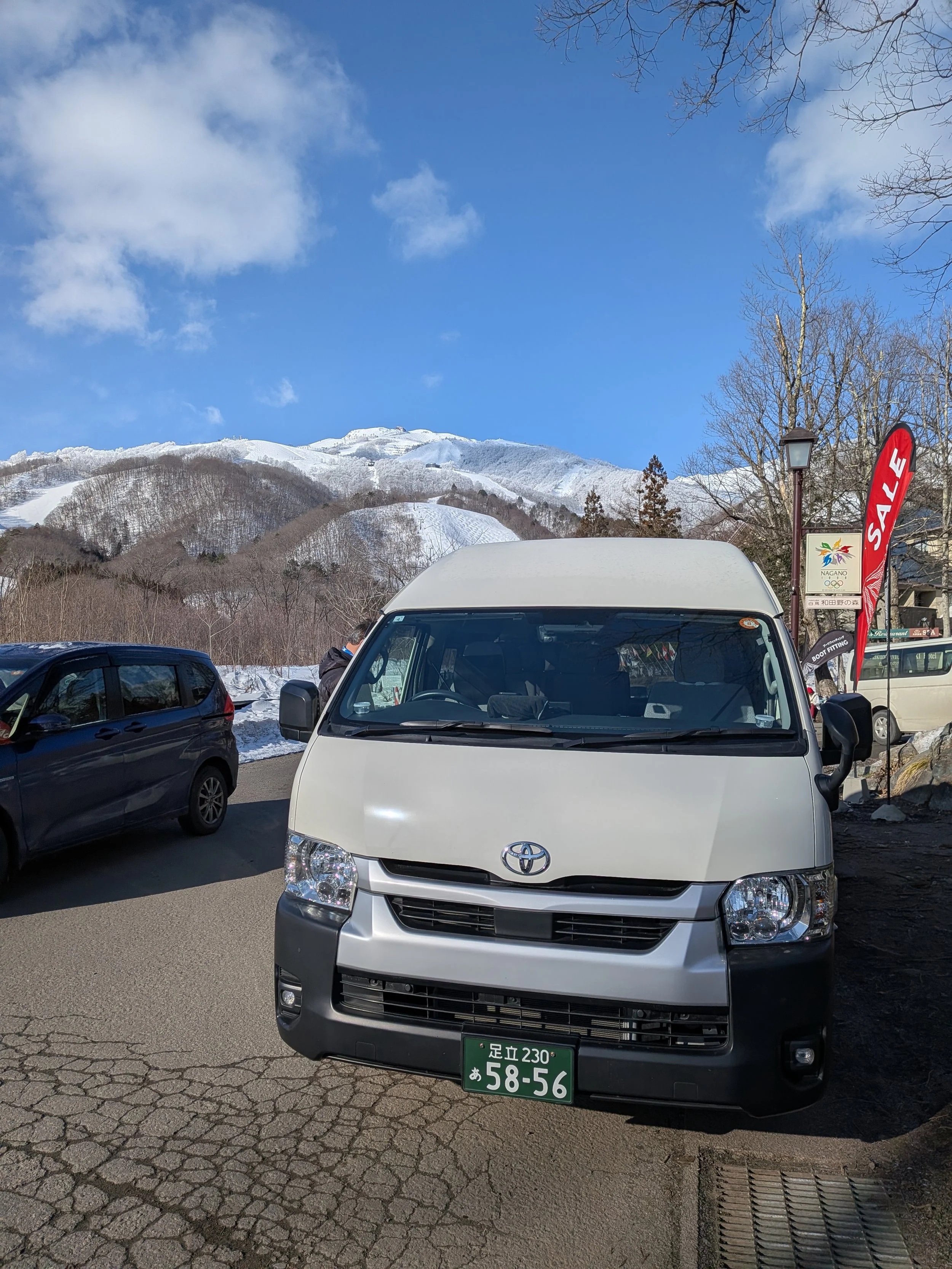
Our TokudAw vehicle in Nagano!
TLDR; A private vehicle in Japan is worth considering when you are traveling with elderly parents, young children, have wheelchair or mobility concerns, a large number of suitcases and ski equipment, or when you have a large group in general. A private car with a driver provides you with door-to-door transportation with no train transfers, giving you the flexibility to include rural areas or several locations in your itinerary.
Top reasons for using a private vehicle relating to Family & Accessibility
Considerations for traveling with the elderly:
Commuting via public transportation can be troublesome, especially for first-time visitors traveling with the elderly, such as parents or grandparents. Japan’s rail network consists of multiple operators, with major stations acting as an interchange hub for several lines and operators simultaneously. Many of these stations only have escalators and elevators at certain exits. This means long walks between crowded platforms and stairs, alongside numerous platforms, ticket gates, and exits. For example, Otemachi Station is served by five different subway lines, alongside 50 different numbered exits.
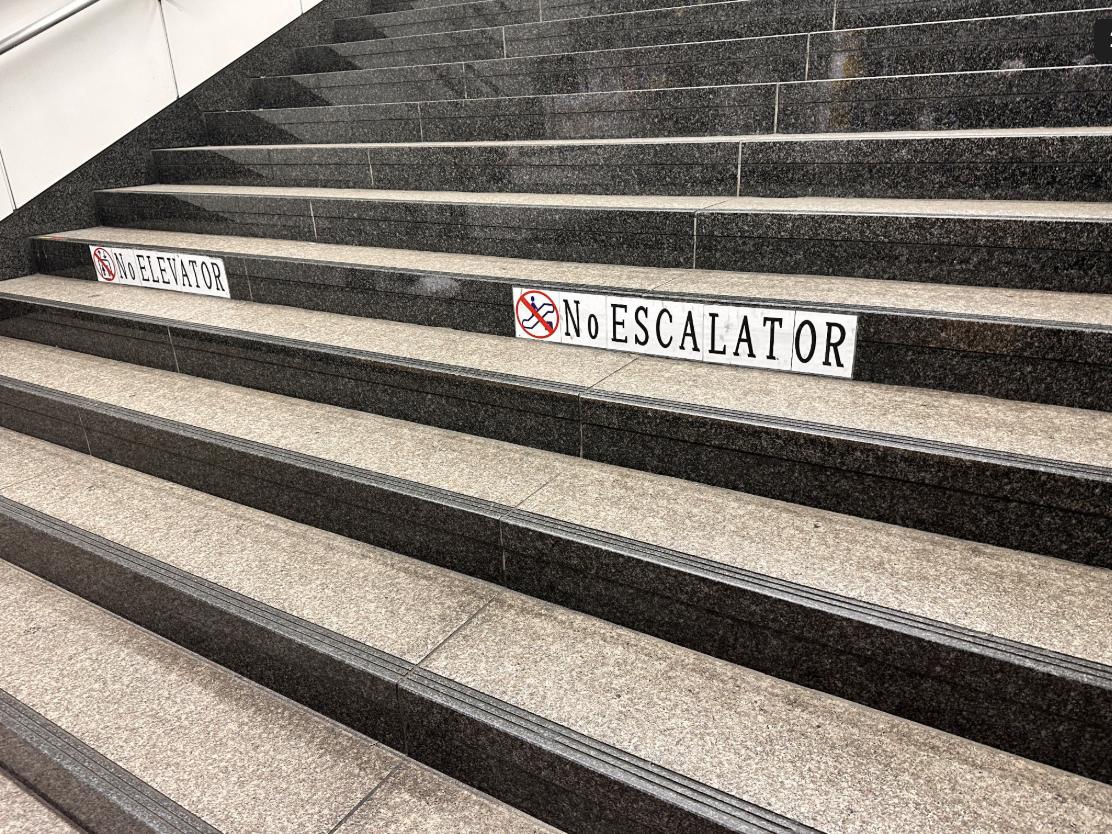
“No Escalator” signage at one of Tokyo’s train stations.
Furthermore, Japan’s rail network consists of rapid and express service trains, with certain stations only accessible via the local service train, even if they’re on the same line. Some trains are also reserved seating only, meaning separate seat reservations are required in addition to your boarding ticket purchases. Boarding the wrong train or missing the train can add extra transfers or take you past your stop, which means longer commuting time than originally expected.
Seats are also not guaranteed, meaning that travelers may have to stand for the entire train ride. While priority seats exist in every car at the ends of each car, they’re not always easily available especially during rush hours and the weekends. The seats may also be difficult to get to if the trains are crowded and you are navigating with luggage. You’ll end up draining all your energy from standing throughout the commute, even before arriving at the first sightseeing stop.
A private car with a driver changes the equation. The driver picks you up at your hotel, dropping you off as close to the destination as the road allows. No more navigating complicated train stations, climbing stairs with bags, or reading the route map. Rest while traveling between sites, arriving ready and energised to enjoy the visit. At TokudAw, our drivers and tour guides are also flexible, allowing you to adjust the day’s itinerary and pacing depending on your family’s energy levels. This makes a private vehicle a comfortable choice for multigenerational travel in Japan, with later starts, long lunches, and rest breaks built into the plan.
Consideration for traveling with young children:
Traveling with young children in Japan means bringing strollers, snacks, spare clothes, and diaper bags. You’ll also need to keep everyone together while navigating Japan’s complicated public transportation infrastructure, which can be a hassle during rush hours. Not to mention, crowded trains have little space for strollers, while stairs and long walks can easily tire the group out between transfers.
Temperature is another thing that parents often don’t expect. Japan’s summers are hot and humid, so train carriages are often cooled to a much lower temperature. It’s the opposite in winter, with heated carriages compared to cold air outdoors. Your family will need to alternate between these conditions multiple times a day, with every transfer implying the need to dress or undress your child.
In addition to temperature, rain is another important consideration. June and July are the official rainy season months, however during peak cherry blossom season, end of March and April, rain is common. In addition, August and September is the peak for typhoons, which can bring consecutive days of rain. Unlike some parts of the world, the rain may last all day and may vary by strom from light drizzle to heavy downpour.
In a private vehicle, the temperature stays steady and bodies stay dry, with our drivers adjusting the air conditioning or heating for you before you board and ensuring everyone has an umbrella when exiting. It’s also possible to adjust the temperature and wind settings according to your family’s preferences, depending on how your child is feeling. As you’ll be dropped off from point to point, there are also fewer sudden temperature changes during the day, thus eliminating the need to add or remove layers.
With a private vehicle, naps are also easier for babies and toddlers. Simply let us know that you’ll be traveling with young children during your booking, along with their ages, and we’ll prepare the appropriate car seat for your child. Japanese law requires child restraints for young children, so this helps us have the right seat ready during pickup. Your child can take a peaceful nap during the commute, without fears of being woken up by sudden announcements or crowd movements. We can even plan the route around your child’s nap time, such as leaving for a longer drive during your child’s scheduled naptime.
You’ll also be able to travel between sightseeing locations hands-free, with the vehicle providing you a space to store your bags, snacks, strollers, and spare clothes. There’s less for you to carry at each stop, thus allowing you to concentrate your energy on sightseeing and enjoying the holiday, instead of worrying about figuring out the logistics. This hassle-free logistics setup is one of the main reasons why families choose a private car when traveling in Japan.
Worried about your child getting bored during the commute? TokudAw can also help arrange for in-car activities, such as colouring worksheets and origami activities, to entertain your child during the commute.
For those with a wheelchair or mobility needs:
While Japan’s train stations have seen improvements in addressing accessibility needs, the experience remains varied. Some older and smaller stations only have stairs, with elevators being located at the platform’s far ends. You’ll need to check the train maps beforehand, planning in advance to confirm the accessible route at each station.
There’s also a gap between the platform and the train carriage, which makes it difficult for wheelchair users to board the train smoothly. It is possible to arrange for a ramp, though this would entail communicating with the station staff beforehand. Boarding times are also relatively short, which can make the process extremely stressful.
TokudAw’s accessible private vehicles eliminate these barriers. Our driver picks your family up at the hotel entrance, dropping you off near the attraction. With TokudAw’s custom itineraries, you’ll be able to enjoy a day catered to your preferences and interests. Our itinerary planners ensure that all locations are wheelchair-friendly, providing you with the wheelchair-accessible routes and maps beforehand ensuring the most optimal drop-offs to minimize distance traveling.
With a private vehicle, you’ll also be able to visit locations that would have been difficult to access by public transport or would take significantly longer to visit. Let us know your wheelchair type and the number of passengers during booking, and we’ll match the right vehicle to your group.
Top reasons for using a private vehicle relating to Luggage and equipment
Consideration for traveling with large amounts of luggage in Japan:
Japan’s public transport infrastructure is not designed for large suitcases. Station stairs, narrow gates, and crowded platforms make it difficult to navigate the station with luggage. If you’re traveling on the Tokaido, Sanyo, and Kyushu Shinkansen, advance reservations are also required for suitcases with total dimensions between 160 cm to 250 cm. If you’re traveling on local trains and subways, there are no dedicated luggage spaces at all.
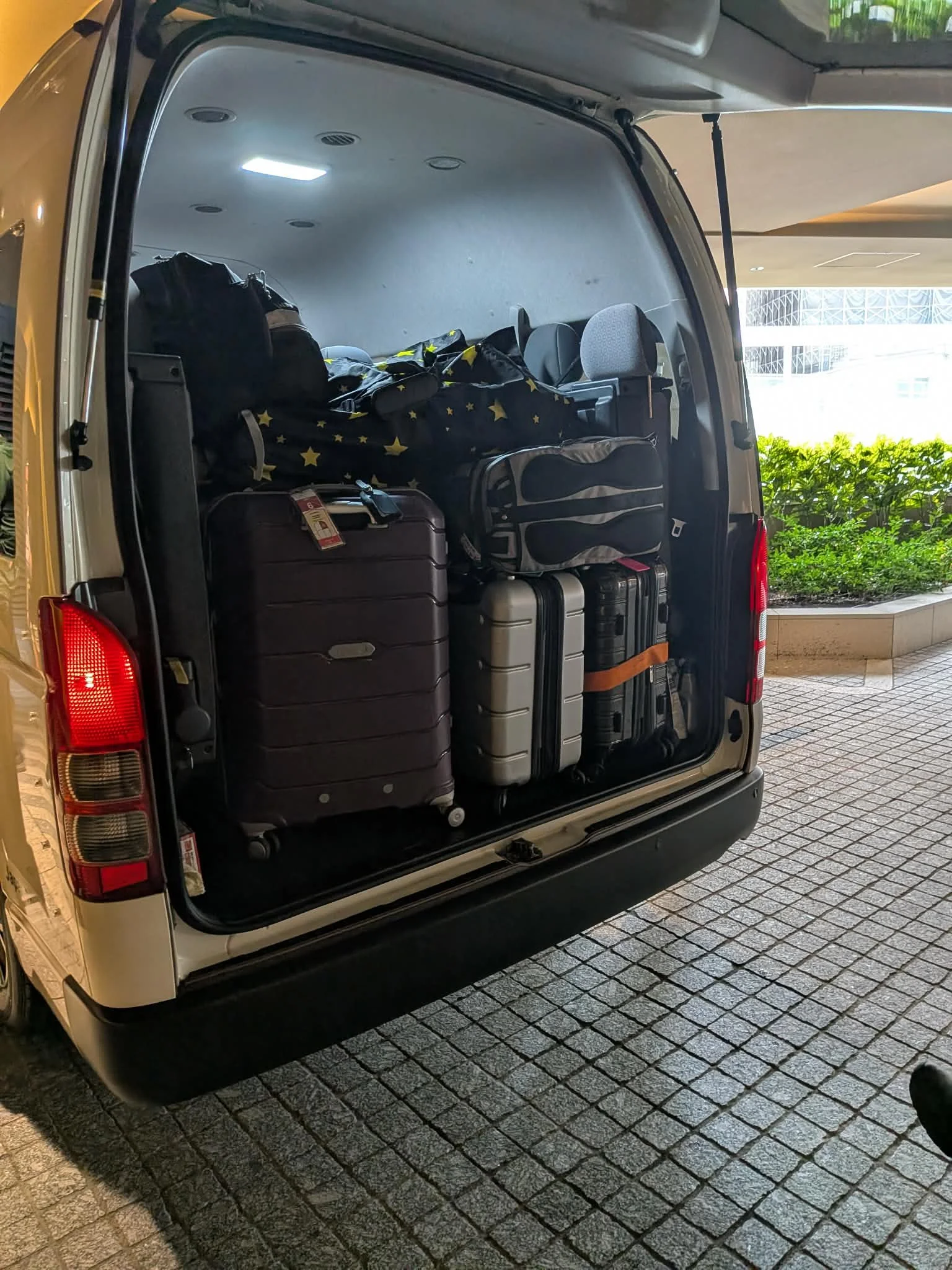
Our TokudAw vehicles have plenty of space for your suitcases and bags.
Hotel transfers require even more effort, with most hotels located far away from the station. Travelers often end up taking a taxi from the train station, but regular taxis have limited trunk space for luggage. You’ll need to pre-book a taxi with sufficient luggage space, or simply split the group into two different cars, which imply additional costs. Travelers covering multiple cities in a single trip will also need to worry about the logistics of luggage storage, with most hotels only allowing check-in during the afternoon.
While some people send their luggage ahead, utilizing a postal service called Takkyubin or the Kuroneko Yamato, this requires significant logistical planning, as it can take an extra day or two for luggage to reach your destination. A private vehicle carries your luggage from door to door, with the driver picking up and dropping off the bags at your hotel’s closest exits. There’s no need to worry about carrying the bags up flights of stairs or trying to find the shortest path to your hotel. The suitcases can also remain in the car while you do your sightseeing, thus eliminating the need to hunt for coin lockers or luggage storage areas.
This is especially useful if you arrive in Japan in the morning and wish to start sightseeing straight away. Our driver meets you at the arrival halls and takes you directly to the first site of the day. Your suitcases and bags stay in the car throughout, so you’ll be able to explore the sites and attractions hands-free. At the end of the day, your driver drops you off at your hotel for check-in, with your bags unloaded at the entrance.
Traveling with ski and sports equipment in Japa:
Most of Japan’s ski areas, such as Hakuba, are located far away from train stations. A trip to the ski resort requires multiple transfers, switching from the Shinkansen to a local bus. If you’re carrying skis, snowboards, boots, and helmets, it creates additional logistical pressure. You’ll need to reserve the oversized baggage area on the Shinkansen beforehand, while crowded local buses make it difficult to bring ski gear with you. If you’re visiting multiple ski resorts in the same trip, this process has to be repeated.
Winter conditions can also pose problems, with buses and trains being delayed due to the cold. Waiting at an outdoor stop with your ski gear can be extremely uncomfortable, while sudden temperature drops in train carriages and buses can get inconvenient.
TokudAw’s private vehicles bring you directly to the ski resort, making a private ski transfer to Hakuba, Yuzawa, Shiga Koden, or Niseko simple and hassle-free. Your ski bags, equipment, and luggage stay in the vehicle throughout, even as you make a quick lunch or onsen stop. Our drivers are also very familiar with the area, with high responsiveness to changes in weather conditions. They will adjust the route accordingly, so you don’t have to worry about anything during the commute.
Top reasons for using a private vehicle relating to getting around Japan
Considerations if you’re planning to visit rural Japan:
If you’re visiting rural Japan, many of the places are not accessible via the main rail lines. Hidden gems like craft villages, onsen towns, old post towns, and mountain scenery can take over an hour, even from the nearest train station. In these neighbourhoods, local buses may only run a few times a day. Missing your transfer would mean waiting hours for the next bus, while some areas are completely inaccessible by public transportation. Building the day’s itinerary would require careful and extensive planning, built around bus timetables and train schedules.
While taxis are an option, they are not always available in small towns and can be long waits in ski towns. They also do not wait while you explore the neighbourhood, meaning that you’ll need to make alternative arrangements for the commute back. This can be troublesome, especially if there are limited taxis in the area to begin with. Cell phone reception to call for a taxi or request a taxi via a ride sharing app is also a challenge. Not only are many rural town taxis are not on ride-sharing apps, you may find yourself visiting an area with limited reception. Assuming you are able to reach a taxi service, in rural areas of Japan a significant language barrier is often faced when trying to arrange a taxi over the phone, as it is less likely people speak English.
Things are different with a private vehicle. Rural areas are completely accessible, with our drivers dropping you off directly at your preferred location. Our drivers will also wait on-site, so you don’t need to worry about settling the logistics of returning back to your hotels. It would also make one-way routes possible, picking your group up after a cable-car or chairlift ride.
Considerations for those with limited time or will be visiting several locations in a day:
Visiting several locations within a single day can be difficult via public transportation, especially when they’re spread out across different regions. You’ll need to transfer between trains and buses, which can be difficult and confusing to navigate. Furthermore, traveling and waiting times can occupy a substantial part of the day, thus significantly reducing your sightseeing times. Your plan may look possible on paper, but they may end up rushed and tight once you factor in the transfer times, waiting times, and queues.
Opening hours also add pressure to your day’s itinerary. Many temples, gardens, and museums close in the evening, with shorter opening hours during winter. The same applies for local buses, with some lines running on seasonal timetables with fewer trips. An unexpected delay at one stop can mean missing out on the next stop entirely.
With a private vehicle, you’ll get to move between stops directly, skipping all the hassle with transfers and waiting times. Traveling from Arashiyama Bamboo Forest to Kiyomizu-dera takes over an hour by public transportation. A private vehicle only takes 30 minutes, which is only half the time needed.
At TokudAw, we also plan the itinerary according to your interests and our experience, suggesting the best timings to avoid the crowd for your visit. With our drivers handling the navigation and parking, you’ll be able to re-direct your energy and concentrate solely on enjoying the moment, rather than figuring out the logistics. Our drivers are also flexible, meaning that you can adjust the itinerary on the day itself. There’s no need to keep to a strict schedule in order to catch the bus or train.
Top reasons for using a private vehicle relating to group travel
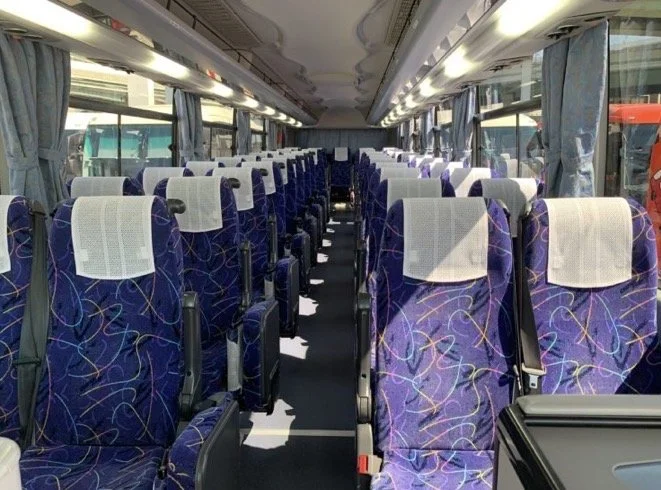
TokudAw also has microbuses, which are perfect for large corporate or school groups.
Considerations for traveling as a corporate group:
Corporate groups have a different set of needs: arriving together, on schedule, with equipment and materials. Commuting via public transport would mean splitting the group up across train carriages and difficulties in carrying materials. Any unexpected train or bus delays would also affect the day’s schedule, which is not ideal especially if you’re heading to meetings with external partners. Punctuality is of utmost importance in Japan’s business culture, with late arrivals being negatively perceived.
Offsites and team-building trips also often occur in areas outside the main city areas, such as Hakone and Karuizawa, where public transport is limited. This exacerbates the logistical issue of traveling between locations within these neighbourhoods, especially as a relatively large group. A single vehicle allows the team to travel between sites as a whole group, with one point of contact.
TokudAw’s private vehicles keep the team together and on schedule. We’ll take care of airport pickups, equipment transfers, with departure timings settled upon in advance, according to your day’s schedule and needs. Travel time can also be used for discussion or rest, allowing the group to arrive energised and prepared for the next segment of the day. A private vehicle also provides your group with the space and privacy needed for conversations, which matters when the group is discussing business.
Business dinners and post-dinner entertainment are also easier. There is no need to keep track of the last train or arrange for alternative transportation arrangements, especially after being drained out from a long day of meetings.
Tell us your group size, the equipment you’re bringing, and your meeting schedules during your booking, so that we can arrange the appropriate vehicle for your team.
Considerations for an educational group:
School and university groups need to move many people safely and on time, often with young travelers and teachers who are responsible for them. Public transport in Japan can get crowded, especially during peak hours, making it difficult to monitor the group every minute. It is also difficult to keep a group together through train stations, platform transfers, and ticket gates. Navigating the various logistical hassle can also take attention away from the educational purpose of the trip, with teachers worrying about head counts, ticket purchases, and missed transfers.
Safety is also often the biggest concern for teachers and parents. While Japan is a relatively safe country, it also has its own risks, especially for large groups of students. Short boarding times also mean that doors close very quickly, so a group can be easily split between carriages or left behind. In major interchange hubs like Tokyo, Shinjuku, and Osaka, falling behind would mean navigating hundreds of exits and unfamiliar signs in foreign languages. With the language barrier, it would also mean greater difficulties in asking for help or reading announcements, which can get very anxiety-inducing for young students.
At TokudAw, we prioritise the safety of our travelers. Our private vehicles allow the group to travel safely together, without worrying about the logistical and navigational issues of commuting. Everyone boards and alights at the same place, so that teachers can conduct head counts at pickup and drop off easily. Students also stay seated with their seat belts on in the vehicle while the driver handles the road, so teachers do not need to worry about students getting lost in the crowd while commuting. If a student feels unwell or tired, the group can also adjust the plan accordingly, heading straight to the hotel without worrying about making alternative transportation arrangements.
Teachers can also focus their attention on both the students and the educational part of the tour. Travel time between sites can be used for pre-venue briefings, lessons, and post-visit reflections, without worrying about disturbing other passengers. A private vehicle also makes it easier to fit visit times around the school’s schedule, without being tied down by train and bus departure timings.
Share your group size, ages, and supervision requirements when booking, and we will arrange the appropriate vehicle size and schedule for your study trip.
Plan your Japan Holiday with TokudAw
TokudAw arranges private-vehicle itineraries across Japan, with custom daily pacing and hassle-free logistics handled for you. This includes airport pickups and drop-offs, equipment and luggage transfers, accessible and group options, as well as optimal route planning.