
What the Japanese Art of Kintsugi Teaches Us About Embracing a Culture of Mistakes
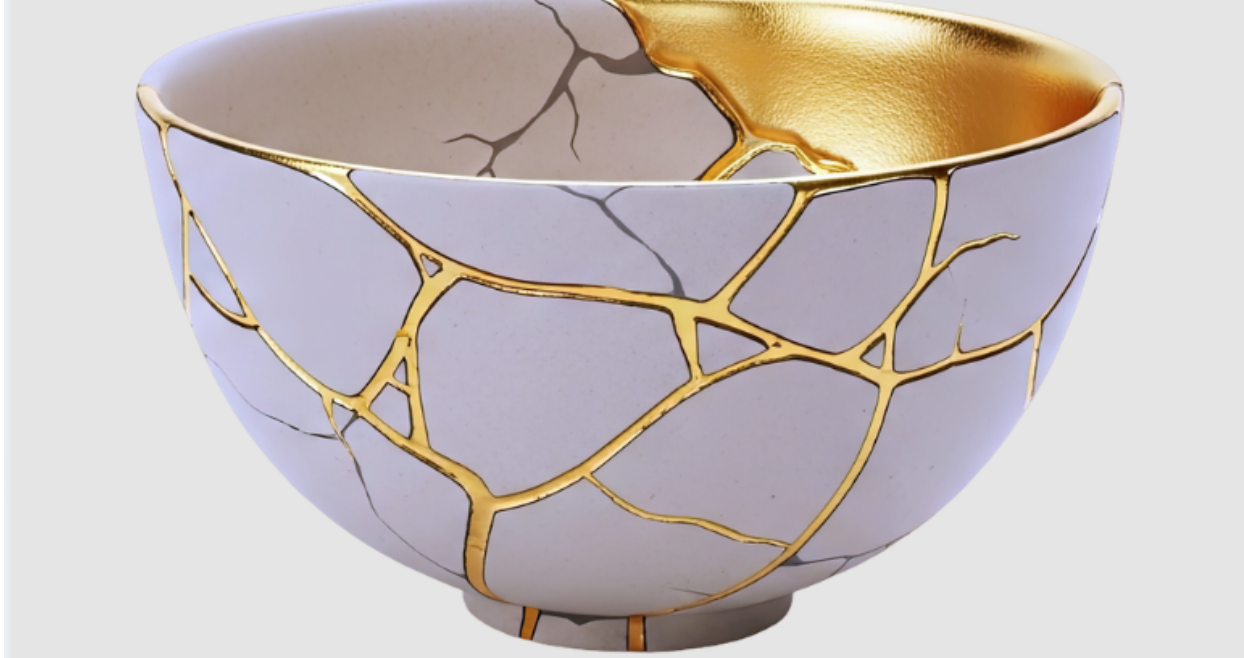
Image Source: Canva
Picture this.
You have two vases before you in a store. One is perfectly intact and flawless. The other has clearly been cracked, but has been repaired with rivers of liquid gold flowing through the cracks. Would you consider the question of which one was more beautiful or which one tells a story worth remembering? Which one would you buy?
In today’s world, we are conditioned to treat our mistakes as something to hide. We seal our “cracks”, doing everything we can do to conceal our failures from the world. When something is broken, we throw it away or buy something new. Our possessions are to reflect our lives: flawless, pristine, and ready to present.
But what if there was a point of view that we haven’t previously considered? What if our mistakes and failures are not things to be ashamed of but are the very things that make us valuable and beautiful?
This is the philosophy of the Japanese art of kintsugi, this ancient art form involves repairing broken pottery with gold and it is a lesson that can transform not just how we travel, but how we live.
At a Glance: Kintsugi, Mistakes, and Growth
Before we explore this philosophy and its practical applications in depth, here are the key lessons kintsugi offers for embracing a culture of mistakes.
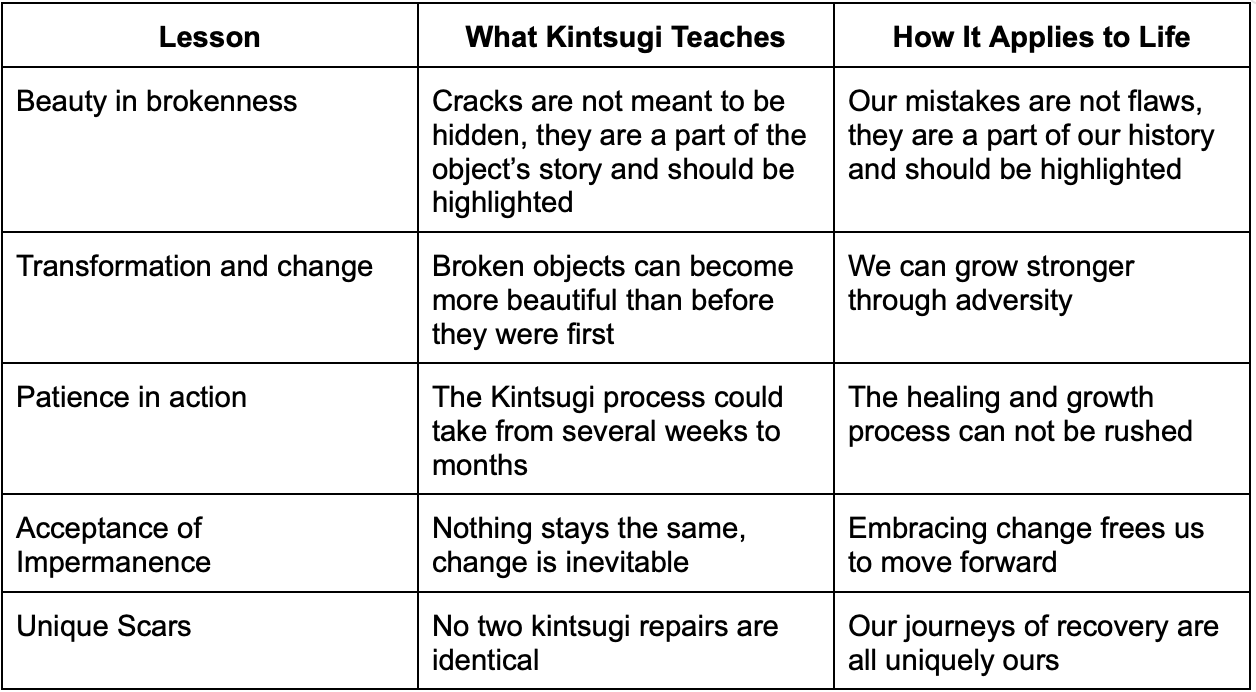
We will explore each of these lessons in depth, showing you how the philosophy of kintsugi can transform your mindset and how experiencing kintsugi in Japan can be a life changing journey.
Understanding Kintsugi
Kintsugi means “golden joinery”, the Japanese art of repairing broken pottery by mending the areas of breakage with Japanese lacquer dusted or mixed with powdered gold, silver, or platinum. Kintsugi does not aim to hide or disguise the damage as if it never happened, it makes the damage the highlight of the object; the fractures become art.
The technique was born in the late 15th century in Japan. According to legend, Shogun Ashikaga Yoshimasa sent his favorite Chinese tea bowl back to China for repairs. When it returned with metal staples that he did not care for, he then asked Japanese craftsmen to find a more visually appealing solution. The way his bowl returned changed history. It returned with the cracks illuminated with golden filling. Many people haven’t seen craftsmanship like this before and were enamored by it. Collectors began deliberately breaking pottery just to have it repaired with kintsugi.
For five decades, Tsukamoto has been restoring Japanese pottery in his studio, welcoming hundreds of international travelers to deepen their understanding of the art. Therefore, from its origins, kintsugi has been touching Japanese traveler’s lives and teaching them important lessons they can carry for the rest of their lives.
The Philosophy of Kintsugi
Image Source: Canva
Kintsugi is more than a visual art form, it represents a philosophical system rooted in and connected to several key Japanese concepts.
Wabi-Sabi: Beauty in Imperfection
Kintsugi is closely associated with the idea of wabi-sabi. Wabi-Sabi is the Japanese philosophy of embracing the flawed, imperfect, and impermanent as a beautiful part of life rather than a drawback. In a world obsessed with perfection, wabi-sabi teaches us to appreciate the beauty of things that are worn, weathered, and broken. A repaired piece is not just “fixed” and usable now, but it is now an entirely new object, considered even more valuable than it was originally.
Mushin: Surrendering Acceptance
Mushin translates to “no mind”. Mushin is the Zen Buddhist concept of accepting change and fate without resistance. Rather than mourning what is broken and not trying to save it, kintsugi teaches us to honor and integrate damage into something new and beautiful.
As one scholar explains, “The vicissitudes of existence over time, to which all humans are susceptible, could not be clearer than in the breaks, the knocks, and the shattering to which ceramic ware too is subject.”
Mistakes are going to happen, things are going to break, life will not go according to plan. Kintsugi teaches us to pick up the pieces we have broken, as they are still a part of us, and make something new from them. The message is clear: we can not stop moving forward.
Mottainai: Dealing with Regret
The idea of mottainai builds off of this. Mottainai expresses regret over waste and the importance of not discarding things that still have value. Japan’s anti-waste philosophy is embodied in the art of kintsugi. Kintsugi embodies this by giving new life to objects that are broken, transforming what is considered to be “trash” into something that should be treasured. This is especially an important mindset in our global environment in an era of mass production and over consumption of disposable goods.
What does Kintsugi Teach Us About Mistakes?

Image Source: Canva
1) Mistakes are Not Shameful Flaws, They Are Stories to Celebrate
In Western cultures, the aim of repair is to make the broken item “as good as new.” Value tends to be calculable by how new and flawless items and people are. Kintsugi philosophy goes against this, leaving an obvious repair that never hides the story of the damage, trauma, and feelings.
When we make a mistake, we are conditioned to want to erase it or do anything to pretend that it never happened, with the ultimate goal of it not being perceived by other people or being associated with a specific behavior. Kintsugi teaches us that our mistakes are part of our history and history is honored.
The golden thread of our past failures illuminate who we are becoming.
2) Recovery Makes Us Stronger
A kintsugi repair is not just to make objects more “beautiful” or cosmetically more appealing. It makes the piece being restored physically stronger. Similarly, when we work through our mistakes and failures, we emerge more resilient. Our “cracks” are filled with new mindsets, new wisdom, knowledge, and strength.
Kintsugi serves as such a powerful metaphor for that very reason. Therapists and counselors use it to help people embrace their vulnerabilities and find strength in their struggles. Just as the broken pieces of pottery are transformed into something unique and valuable, so can our own difficult traumas and experiences become the foundation of our growth.
3) Healing and Growing takes Time
The traditional kintsugi process can take weeks to months to accomplish. The urushi lacquer requires specific conditions to cure properly, resulting in a naturally lengthy healing process. Each step demands patience and precision where any rushing of the process will lead to failure. This, too, is a metaphor that can be applicable to anyone’s life.
In our instant gratification culture, we are conditioned to expect ourselves and each other to “get over” failures quickly. With this idea, kintsugi reminds us that real healing takes time. You do not drop a piece of pottery, glue it back together, and it is immediately whole again. When you drop a piece of pottery, you gather every single piece, and go through the kintsugi process with care and patience. The “slowness” of kintsugi is not a weakness of the process, it is actually a strength.
The process itself is a form of mindfulness.
4) Accepting Imperfection Begets Freedom
The philosophy of kintsugi teaches us that perfection is an illusion, impossible to truly achieve. When we accept that we will make mistakes, we free ourselves from the paralyzing fear of failure. We can take risks, try new things and embrace life knowing that failure is probable because we know that if we do fail, we can pick up the pieces and create something new and beautiful.
Our scars are proof that we have lived and learned, kintsugi philosophy teaches us to treat ourselves with the love that we treat the pottery.
5) Our Scars Are Who We Are
An object that has been through the kintsugi process can never break in the same way twice. The cracks are always different, allowing for opportunity for a new pattern of golden paint. This is a beautiful metaphor for life. No two people experience failure in the same way, and no two journeys of recovery are identical.
This is why they must be celebrated, adored, and cherished, the gold in our lives.
Kintsugi Lessons in Growth for Leaders and Managers
We hope that it is not lost on those in businesses and managerial positions that kintsugi also offers a powerful framework for leadership. In today’s global corporate world, the instinct is often to “damage control” as quickly as possible and move forward when things go wrong. However, in Japan, Kintsugi invites a different approach, allowing space for patience and reflection. When something “cracks”, like a bad quarterly performance for example, Kintsugi reminds us to have patience in our response, something often missing in high-pressure environments.
For example: Kintsugi teaches us to reject “one-size-fits all management” and recognize each team member’s unique journey to provide a more equitable work experience.
When a team member makes a major mistake, a manager who adapts kintsugi doesn’t rush to cover it up or seek to punish/fire the individual. Instead, they see the “crack” as an opportunity for repair and growth, focusing on how the team can become stronger because of the experience. This alternative approach builds resilience in a rising culture of people-focused work environments.
Kintsugi and Family Travel
Family trips are never ‘perfect’, but for families traveling together, kintsugi offers profound lessons that can strengthen your connections and experiences as a collective. This philosophy teaches families to not get discouraged by lost belongings, weather changes, and fussy children, but instead seeing these “cracks” in your travel experiences as opportunities for connection and memorable stories rather than as failures and annoyances.
For example: Kintsugi teaches us that when plans change unexpectedly or when a family member gets frustrated that it is more beneficial to adapt and find joy in the detours rather than losing patience with each other.
When you experience kintsugi in Japan as a family, you are not just learning an ancient craft, you are learning a philosophy that can help you navigate the inevitable challenges of travel with patience and resilience.
TokudAw’s Treasure Sessions
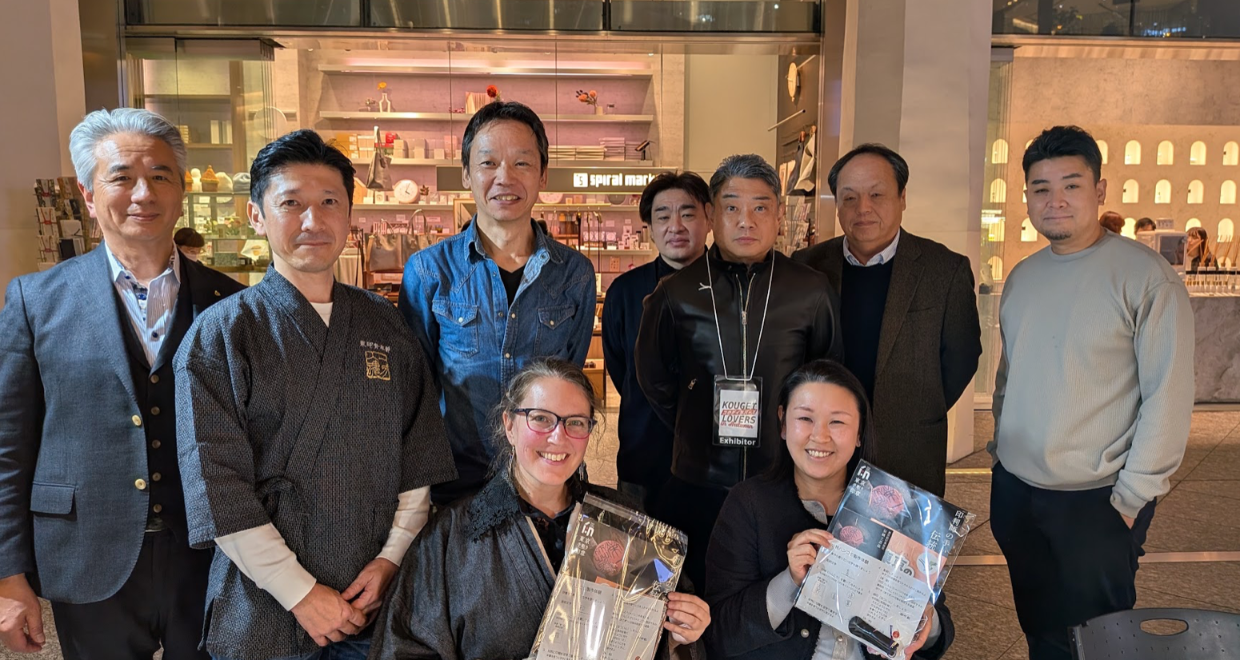
TokudAw Hanko Stamp Making Treasure Session
At TokudAw, we believe in creating meaningful connections through authentic cultural experiences. That’s why we have developed what we call Treasure Sessions which are intentionally designed workshops that pair traditional Japanese crafts with mindful, intentional content. These are more than hands-on activities, they are opportunities for genuine exchange and learning. These experiences are not limited to families seeking memorable group activities, they also extend to corporate teams looking for a unique bonding experience that also connects you to the heart of Japanese culture.
Imagine spending a morning with a master artisan in a quiet Tokyo studio and under the patient guidance of your instructor, you learn the ancient techniques and process of kintsugi. As you work, you are invited to reflect on the “cracks” in your own personal and professional life. How can you transform your own “broken” experiences into something beautiful and valuable?
When you finish, you can admire the result as not just a piece of repaired pottery, but as a tangible reminder of the philosophy of kintsugi, a memento of your journey, and a symbol of your own resilience.
Experiencing Kintsugi Philosophy in Japan
If you are a traveler seeking to connect with this profound philosophy and art form first hand beyond seeing it in museums, Japan offers authentic kintsugi experiences.
Showzi Tsukamoto offers day workshops for travelers in his Tokyo studio, as well as more extended master classes. He has worked with prominent overseas brands as well as international museums.
POJ Studio in Kyoto offers an intensive two-month kintsugi apprenticeship teaching the golden art of tableware repair, as well as shorter classes for travelers.
Tokyo Kintsugi Workshop offers classes near Shin Koenji where you can learn from experienced artisans in an intimate setting.
Practical Applications of Kintsugi to Your Life
1) Reframe Your Mindset
Don’t ask: “What did I do wrong?”
Ask: “What can I learn from this?”
Every failure begets wisdom.
2) Be Patient with Yourself
Don’t: Rush the recovery from a professional or personal setback
Do: Give yourself time and allow yourself to heal
Healing takes time.
3)Celebrate Your Scars
Don’t: Hide your past failures
Do: Let your past illuminate who you have become
Your story is worth telling.
4)Share Your Story Proudly
Don’t: Keep your story to yourself
Do: Share what you have learned with others
Your experience may help someone else on their journey.
5) Embrace the Unique
Don’t: Compare your recovery to anyone else’s
Do: Realize that your path is unique
Wear your gold with pride.
The Tokudaw Difference
Here at TokudAw, we believe that travel should be a journey of transformation, not just sightseeing, but a deep connection with the culture and philosophy of Japan, just like we have described here.
Our private, self-paced itineraries allow you to:
Spend as much time as you need absorbing the lessons of kintsugi
Travel with comfort and accessibility in our private vehicles that feature low steps, wheelchair ramps, and generous space for everyone
Learn from locals with our guides who are ambassadors of Japanese culture who can connect you to authentic Japanese experiences
For business travelers, our Japan Corporate Travel arm provides seamless logistics and cultural alignment for corporate delegations. We can integrate Treasure Sessions like kintsugi workshops into your business itinerary, offering your team a unique opportunity for reflection and growth.
We offer flexible scheduling and personalized guidance to help you find the experiences that will transform your relationship with failure, imperfection, and resilience.
FAQ: Kintsugi and Embracing Mistakes
What is kintsugi and why is it important?
Kintsugi is the Japanese art of repairing broken pottery with gold, transforming fractures into art. It is important because it embodies a profound philosophy: that our mistakes and imperfections are not flaws to hide, but stories to celebrate.
How can kintsugi connect to mental health and healing?
Therapists use kintsugi as a metaphor for healing trauma and finding strength in vulnerability. The process of repairing broken pottery mirrors personal recovery and growth, acknowledging damage and working through it with patience, emerging more beautiful and resilient.
What is wabi-sabi and how does it relate to kintsugi?
Wabi-sabi is the Japanese philosophy of embracing imperfection and impermanence. Kintsugi is a physical expression of wabi-sabi. It finds beauty in the cracks and repairs, celebrating the object’s unique history rather than pretending the mistake never happened.
How can I apply kintsugi philosophy to my own life?
Reframe your mistakes as opportunities for growth, be patient with your healing process, celebrate your scars as part of your story, and accept that your journey is unique to you.
How can I experience kintsugi in Japan?
Authentic kintsugi workshops are available in Tokyo and Kyoto, ranging from day classes for beginners to master classes for dedicated craftsmen. With an experience like this in your itinerary, you can certainly experience the profound philosophical lessons Japan has to offer!
