
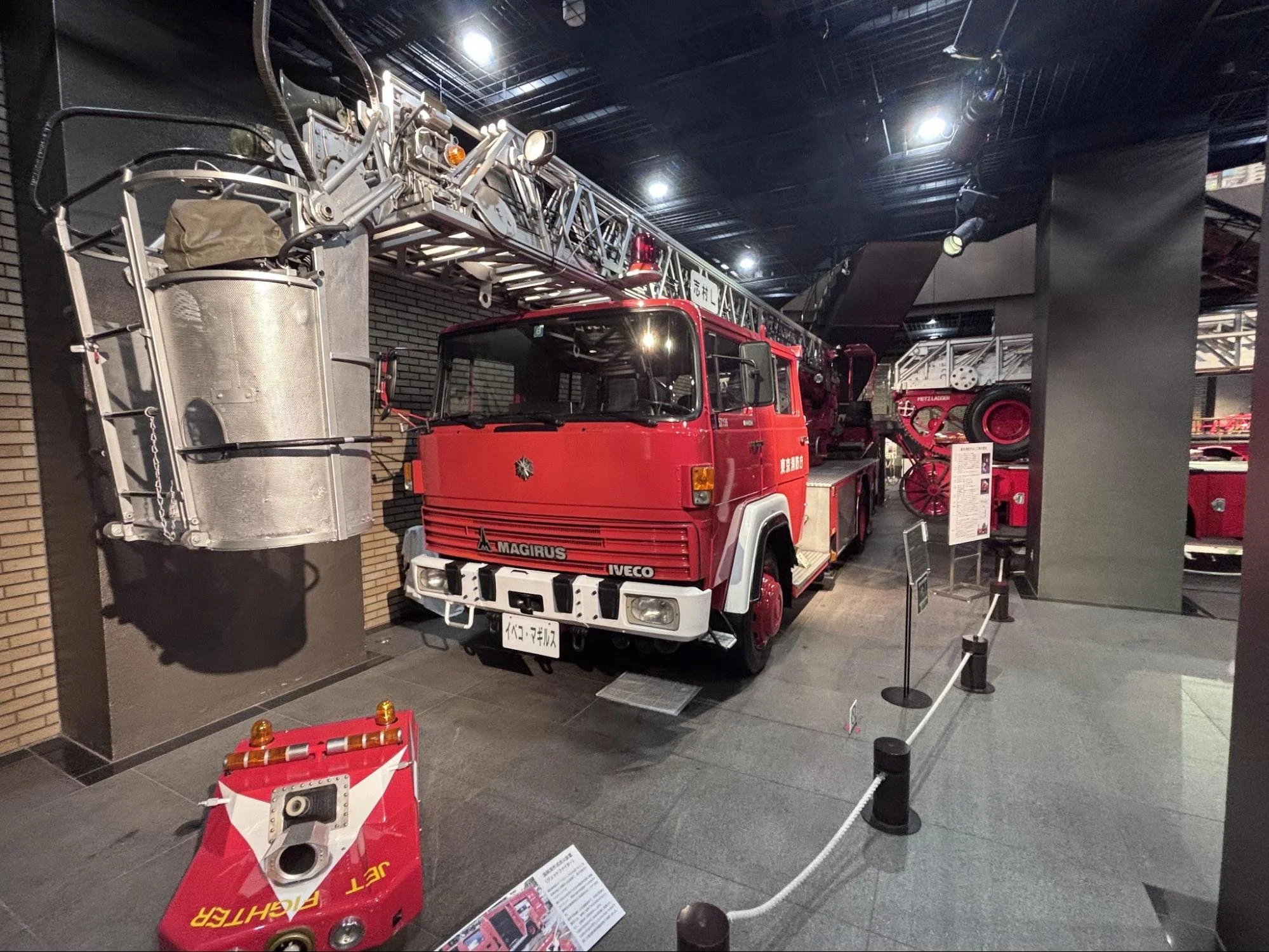
Retired fire engines on display at the Fire Museum
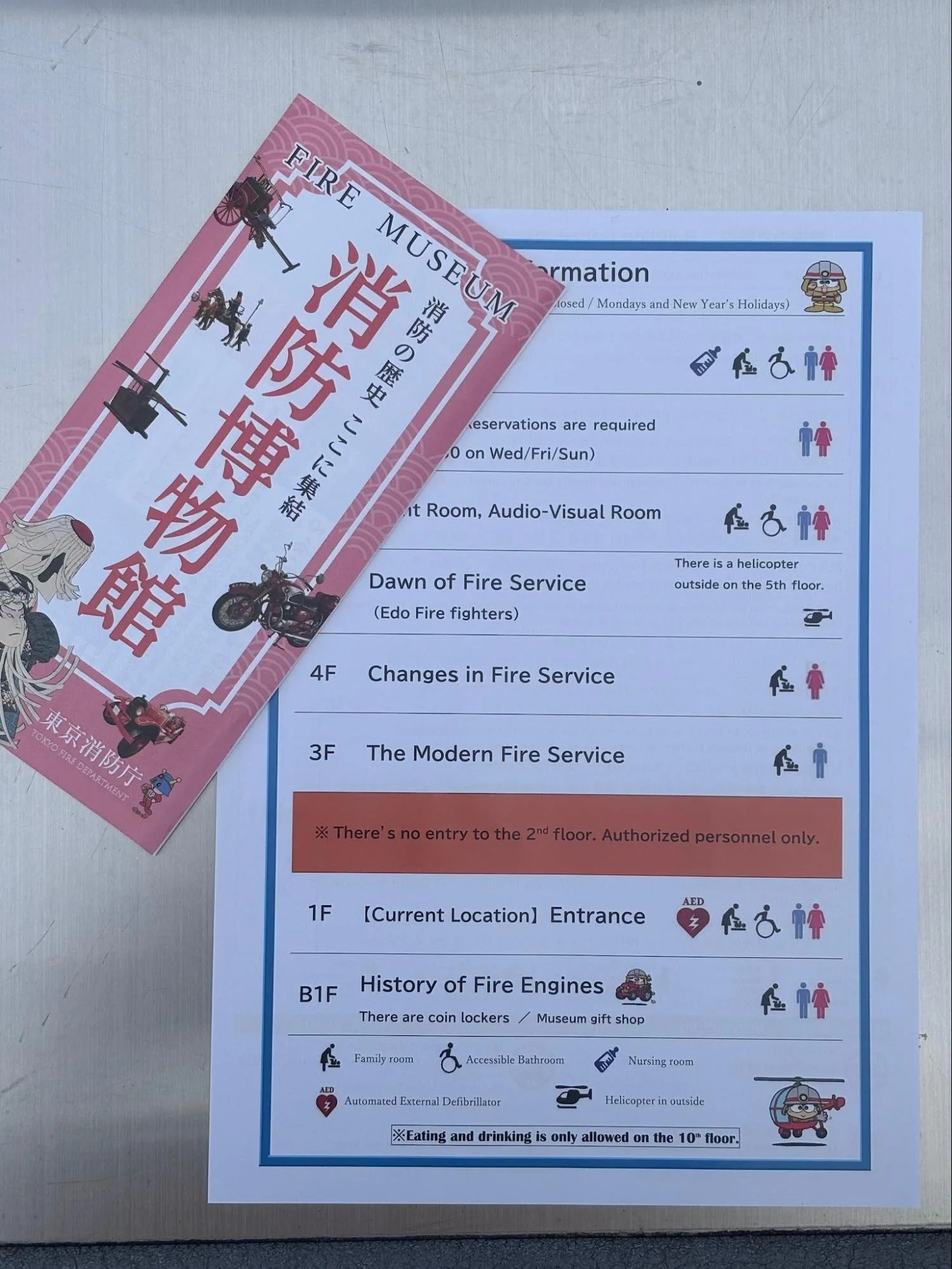
English support is available at the Museum in the form of pamphlets.
The fire museum opened December 3rd 1992 and in Shinjuku showcases the history, technology and evolution of firefighting in Tokyo from the Edo period to the present day. The fire museum is located in Shinjuku, Tokyo, meaning that this is a great location to visit if you want to experience something that allows you to dive deep into the history of the fire department of Japan. The museum consists of 5 main floors which include the following:
Basement (B1) & 1st Floor:
Features vintage 1920s foreign fire engines as well as classic trucks throughout history.
3rd Floor (Modern Firefighting & Interactive Zone):
Offers interactive displays, emergency response dioramas with lights and sounds and other displays designed more for younger audiences.
4th Floor (Meiji to Showa Eras):
Displays the transition to Western-style firefighting equipment, steam-powered pumps, and displays dedicated to major disasters like the 1923 Great Kanto Earthquake.
5th Floor (Edo Period Origins):
Explores historical fire-fighting samurai (hikeshi), traditional banners, and old hand-pulled pumps. This floor also includes a rooftop to a retired Tokyo fire department helicopter.
10th Floor (Disaster Prevention Lounge):
Features an observation deck with panoramic views of Shinjuku and Mt. Fuji on clear days.
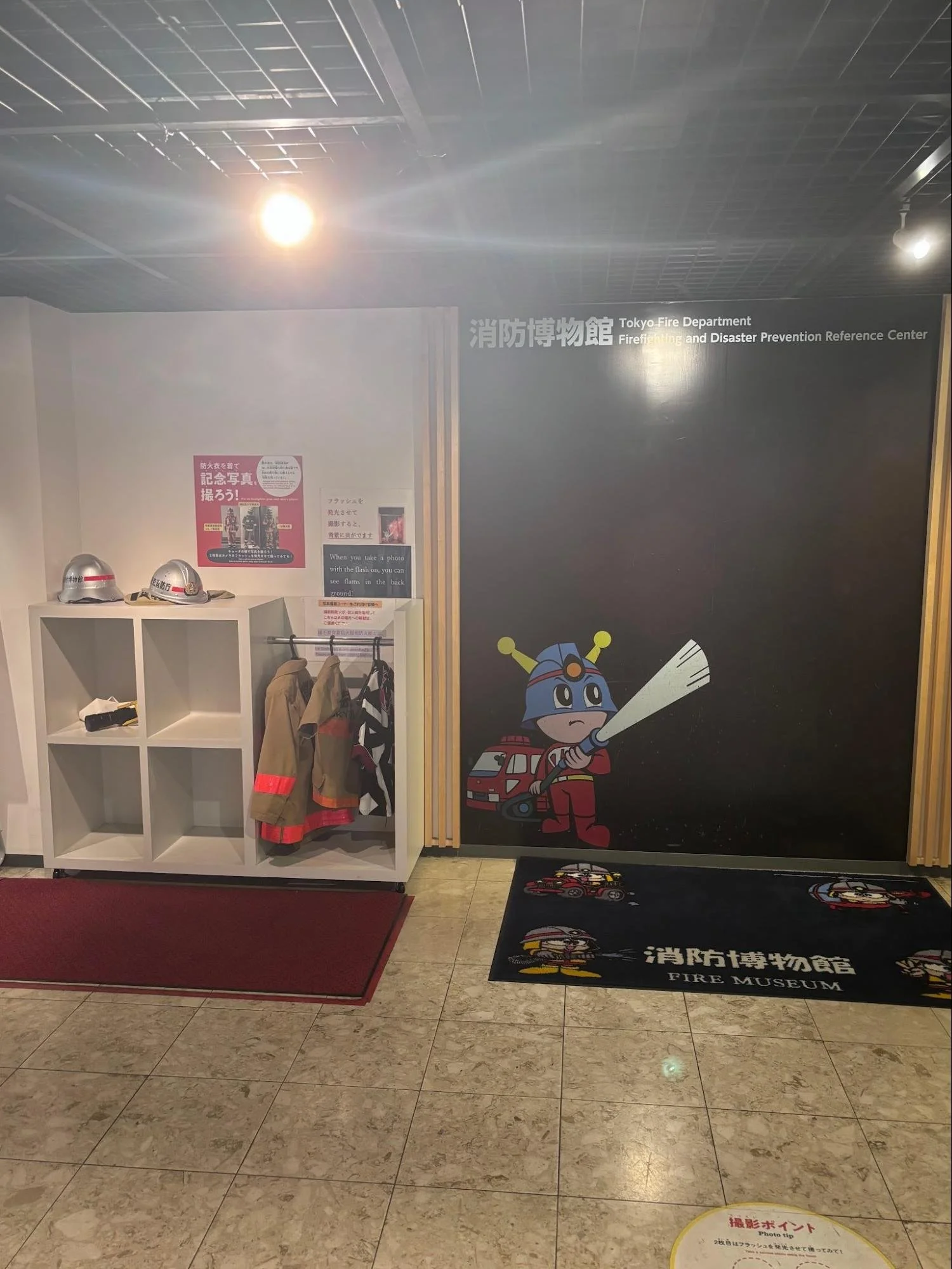
Dress-up and photo section, where young visitors can dress up in uniforms and helmets.
Are there any interactive displays at the fire museum?
The fire museum does offer a floor dedicated to more interactive displays and they are diverse in how interactive they are. This floor is more purposefully built towards younger audiences with certain exhibits. For example, there is a dress up and photo section where visitors can dress up in fire departments coats and helmets. Visitors, especially children, can sit in the front section of a real fire truck and press buttons to activate simulated sirens and lights. This type of interactive display can also be seen when it comes to the helicopter on the h floor when visitors can climb up onto a platform and sit in 1 of 4 seats within the chopper. The 3rd floor features a video game-style interactive display where visitors can drive a fire truck to an emergency scene and practice putting out a fire. Also on the 3rd floor is a large diorama model with lights, sound effects and moving parts. This shows how the Tokyo Fire Department coordinates and responds to major emergencies.
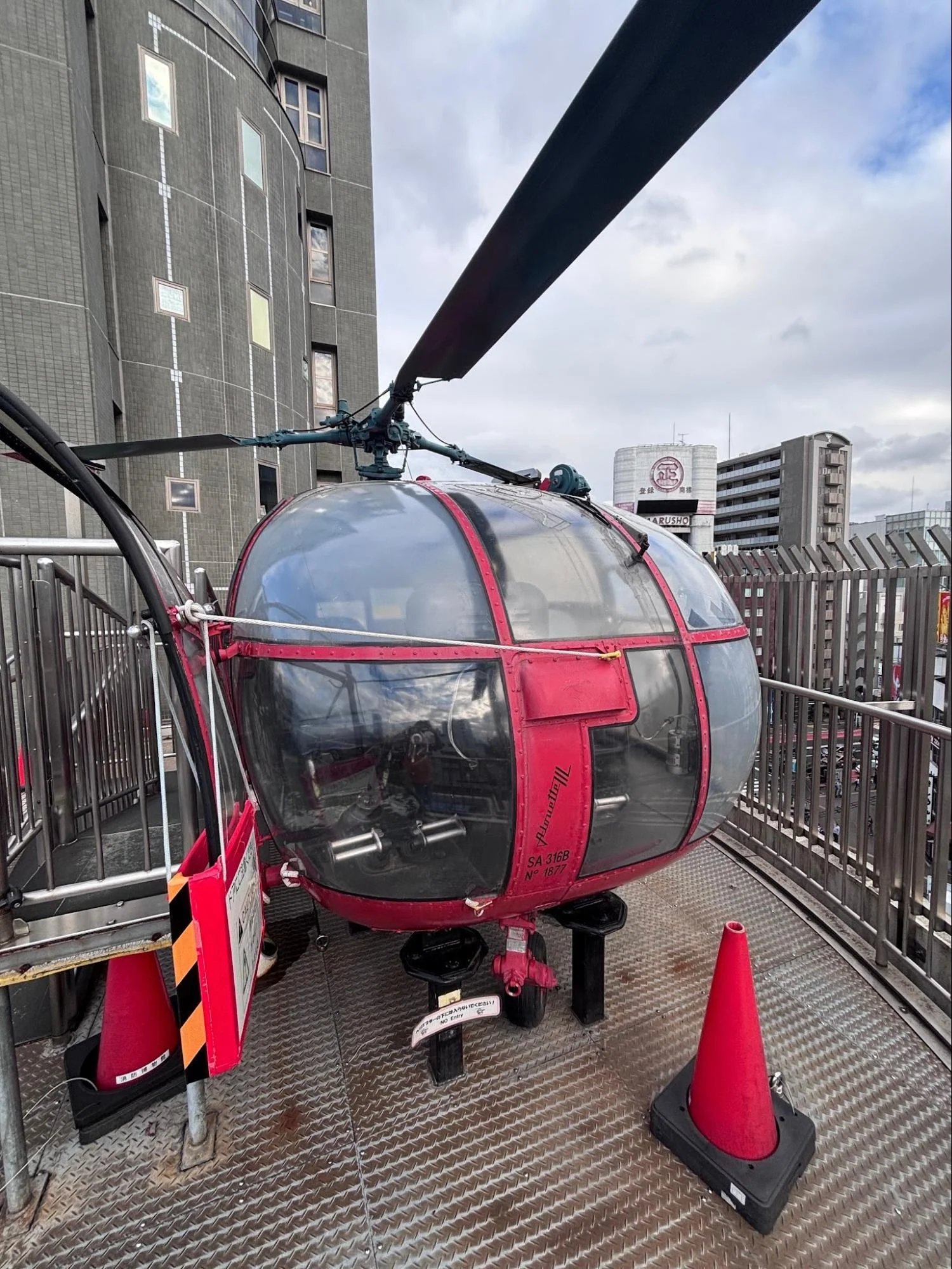
There is also a helicopter on display, which visitors can enter.
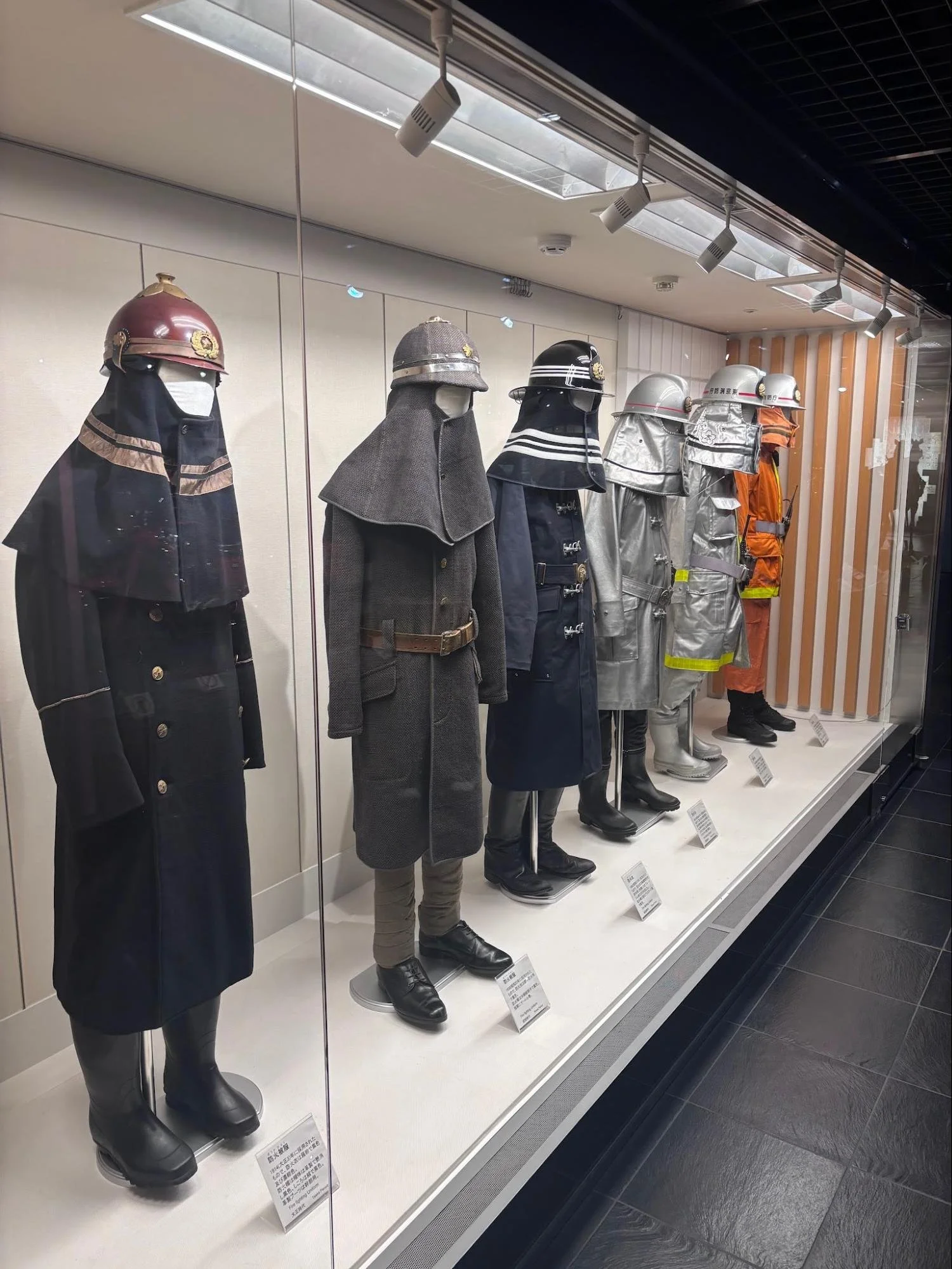
Display showing how Japan’s fire department uniforms evolved over the years.
Most interesting Display at the museum?
We would have to say the most interesting exhibit would have been from the basement floors of the rare old school fire engines. Being able to see fire engines through recent times is an eye opener for everyone. From the simplicity of the design of them to how they function as a pivotable part of the service. There are 7 historic fire engines on display from the Taisho period (1912-1926) through the Heisei period (1989-2019).
Following up by looking at the fire engines, on the 5th and 4th floor there are displays showing you the history of the fire departments uniforms. This, like the fire engines, shows massive advancements in the industry as well as the advancement in technology in the gear that they would use.
What type of people do we think would enjoy this museum the most?
We believe that the Fire Museum would be a big hit for families with young children. Especially for the interactive displays mentioned earlier. As well as being able to sit in a now retired old fire helicopter. With the 3rd floor being designed more for younger audiences, it's a great place for them to be able to get into the displays on show and hopefully learn more about the fire department and the history that Japan has in this area of services. Secondly we think that engineers would really enjoy this museum. Mainly towards the helicopter on the outside of 5th floor and also due to throughout the museum it really shows visitors the evolution of methods and technology that the fire department went through that led to modern day machines. This also ties in with natural history enjoyers as the museum is filled with rich extensive knowledge of the history of Japan with the fire department. Going back to where it all began and being able to see on display the fire-fighting samurai (hikeshi). Those interested in Japanese textiles might also appreciate the uniforms exhibit, as visitors can see the thickness of the Japanese firefighter uniform upclose. Overall we think that visiting is a great way for visitors not only to the museum but also to Japan can get closer to understanding more about Japan.
What language support does the museum offer, including for visually impaired?
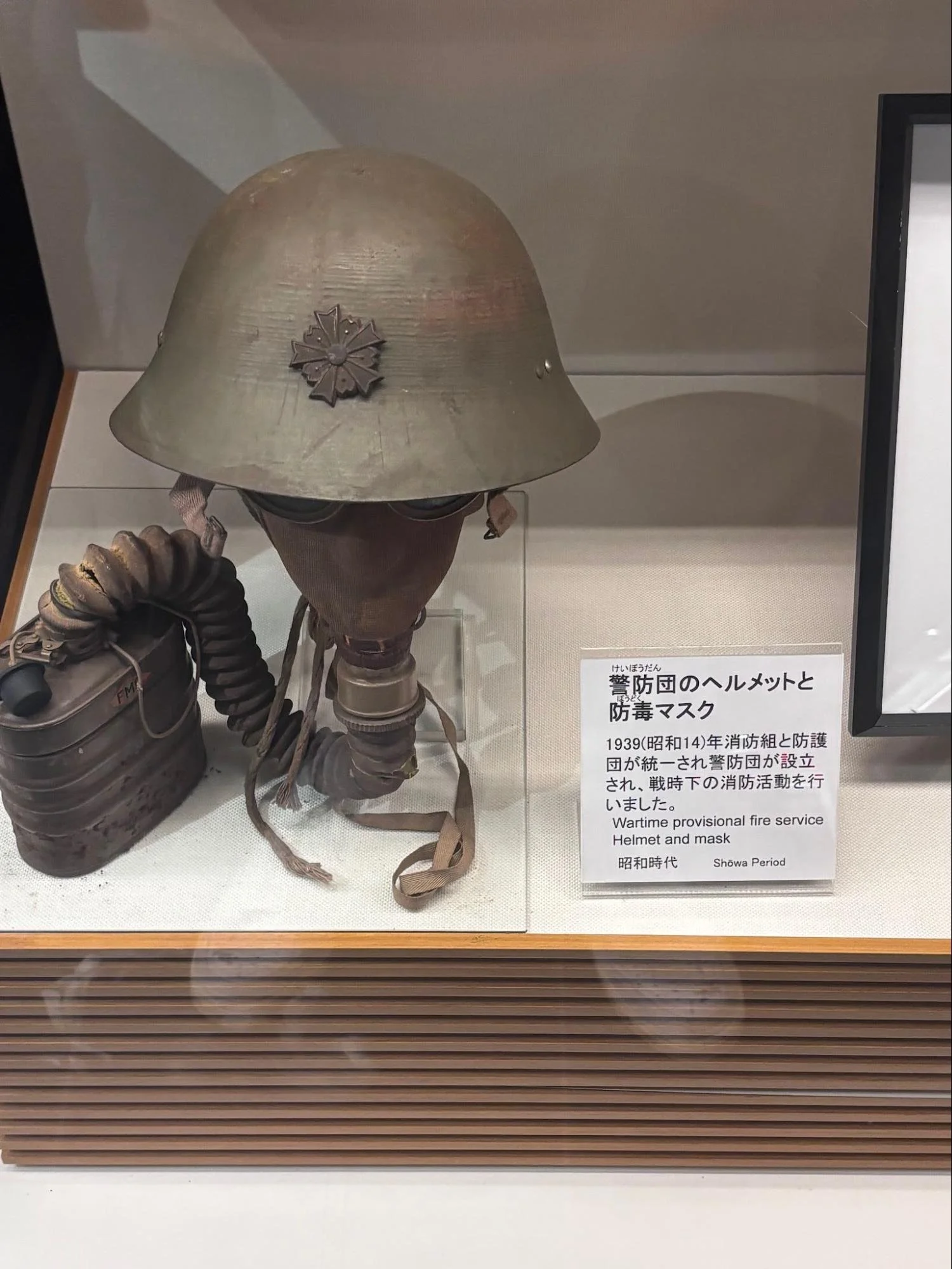
English support is also available in the explanation write-ups for each exhibition.
The fire museum offers a range of language support for multiple foreign languages including the likes of Japanese, English, Simplified Chinese, and Korean. The way they show the different use of languages is from different forms of media. The majority of Exhibits and displays are in Japanese with major displays also having an English translation on the display.
Physical guides like pamphlets are provided on entry with both Japanese and English translation on them with there being limited translation for Chinese and Korean. Although the museum does not specifically have support for visitors that are visually impaired, they do offer in some situations an audio tour if requested at the front desk for free. This audio tour comes in English, Japanese, Korean, and Chinese.
What are the facilities like within the fire museum
In terms of where the locations are for the bathroom facilities, the museum has bathrooms on almost every floor. The only floor that doesn't have a bathroom on it is the 5th floor. The type of bathroom is different depending on the floor. The table below shows you what floor has what bathrooms on it.
Bathroom Facilities by Floor
| Floor | Available Facilities |
|---|---|
| 10F | Men Women Baby Care Accessible |
| 7F | Men Women |
| 6F | Men Women Baby Care Accessible |
| 5F | Not Available |
| 4F | Women Baby Care |
| 3F | Men Baby Care |
| 1F | Men Women Baby Care Accessible |
| B1F | Men Women Baby Care |
The museum also comes with 2 Elevators as well as stairs. This benefits visitors for struggling with mobility and a much easier time when planning on what they want to see. The layout of the displays as well are nicely separated with plenty of room for wheelchairs to be able to get around and turn as well as those in crutches etc. to be able to move around, even on busy days. In addition to this, the museum also allows service dogs into the building providing that they are a certified service dog. The flooring of the museum as well is suited for guide dogs and they should not have any problems moving around the venue.
What options does the museum have for food and drinks for visitors?
The 10th floor may be a location where visitors can sit down and relax but it does come with some restrictions. Firstly, you can eat food in the lounge area as well as drink but you cannot buy food. Only able to purchase drinks from the vending machine. So we advise you to bring your own food or snacks if you are having a very busy day. There are plenty of convenience stores around the area where you can purchase what you need from. The lounge area also has a capped time length of ideally 1 hour stay. So if you are planning on eating lunch in the lounge on your tour of the museum, its better to bring lighter food. Due to the area of the fire museum being in there are also food spots dotted around if you fancy a more filling meal. If you fancy crispy-fried beef cutlet (gyukatsu) sets where you can sear the beef to your liking on a small personal grill then look towards a food place called Gyukatsu Kyoto Katsugyu. Or if you are more into burgers then there is a food place known locally for juicy burger patties called Burger Kitchen Chatty Chatty.
FAQ
What are the prices for tickets? The entry is completely free for visitors, however on entry you must go to the desk so they can give you a lanyard to let workers know you are there for the museum.
What are the opening hours? Open from 9:30 AM to 5:00 PM (last entry at 4:30 PM).
When is it closed? Closed on Mondays (or the following Tuesday if Monday is a national holiday) and during the New Year holidays (December 29 – January 3).
How long does a visit take? Most visitors spend about 1 to 1.5 hours exploring the floors.