
Quick Food for People with Dietary Restrictions at Tokyo Station
The easiest grab-n-go foods for the Shinkansen
Tokyo Station is one of Japan’s busiest transportation hubs, and finding a quick meal can feel overwhelming when you have dietary restrictions. Whether you are vegan, vegetarian, gluten-free, avoiding nuts, or simply looking for something light before boarding a train, there are convenient options around the station.
The key is knowing where to look before passing through the JR and Shinkansen ticket gates. Several convenience-style food shops around the Yaesu side of Tokyo Station sell onigiri, fruit, soy milk, nuts, salads, sweets, and other easy-to-carry foods.
However, dietary labels in Japan do not always match Western expectations. For example, soba noodles may contain wheat, while the broth can contain fish-based ingredients. Similarly, vegetable onigiri may still contain ingredients that are unsuitable for a strict vegan or gluten-free diet.
This guide focuses on quick food options available before the JR and Shinkansen gates, making it useful if you need to grab something quick to eat before your train for eating on the train.
For a quick map of Tokyo Station to reference, please visit this link. The south side of Tokyo Station is the side closer to Ginza, the North is the side furthest away. The Shinkansen trains are more easily accessible on the Yaseu side of the station (east side), or the side furthest from the Imperial Gardens.
Important note about our advice below: Ingredients and availability can change. Always check the package label and, when necessary, confirm ingredients with staff before purchasing food if you have a serious allergy or medical dietary restriction.
| Dietary need | Foods to look for | Foods to check carefully |
|---|---|---|
| Vegan | Fruit, some seaweed snacks, some nuts, some vegetable onigiri, some soy milk | Salads—especially those from the convenience stores, soup, soba, udon, bread, sweets |
| Vegtarian | Vegetable onigiri, fruit, salads, yogurt, mochi, nuts | Soba/udon broth, soups, prepared foods |
| Gluten-free | Fruit, some mochi, nuts, some seaweed snacks, some soy milk | Soba, udon, bread, rice crackers, onigiri, dried products |
| Diary-free | Fruit, seaweed, nuts, vegetable onigiri, soy milk | Yogurt, cream sandwiches, bread, desserts |
| Nut-free | Fruit, vegetable onigiri, salads, soy milk, fruit drinks | Nuts, seaweed-and-nut snacks, packaged sweets and breads |
| Egg-free | Fruit, some vegetable onigiri, seaweed, nuts, soy milk | Salads, sandwiches, breads, sandwiches, desserts, prepared foods |
1. South Yaesu Exit: Quick Options for Vegan and Restricted Diets
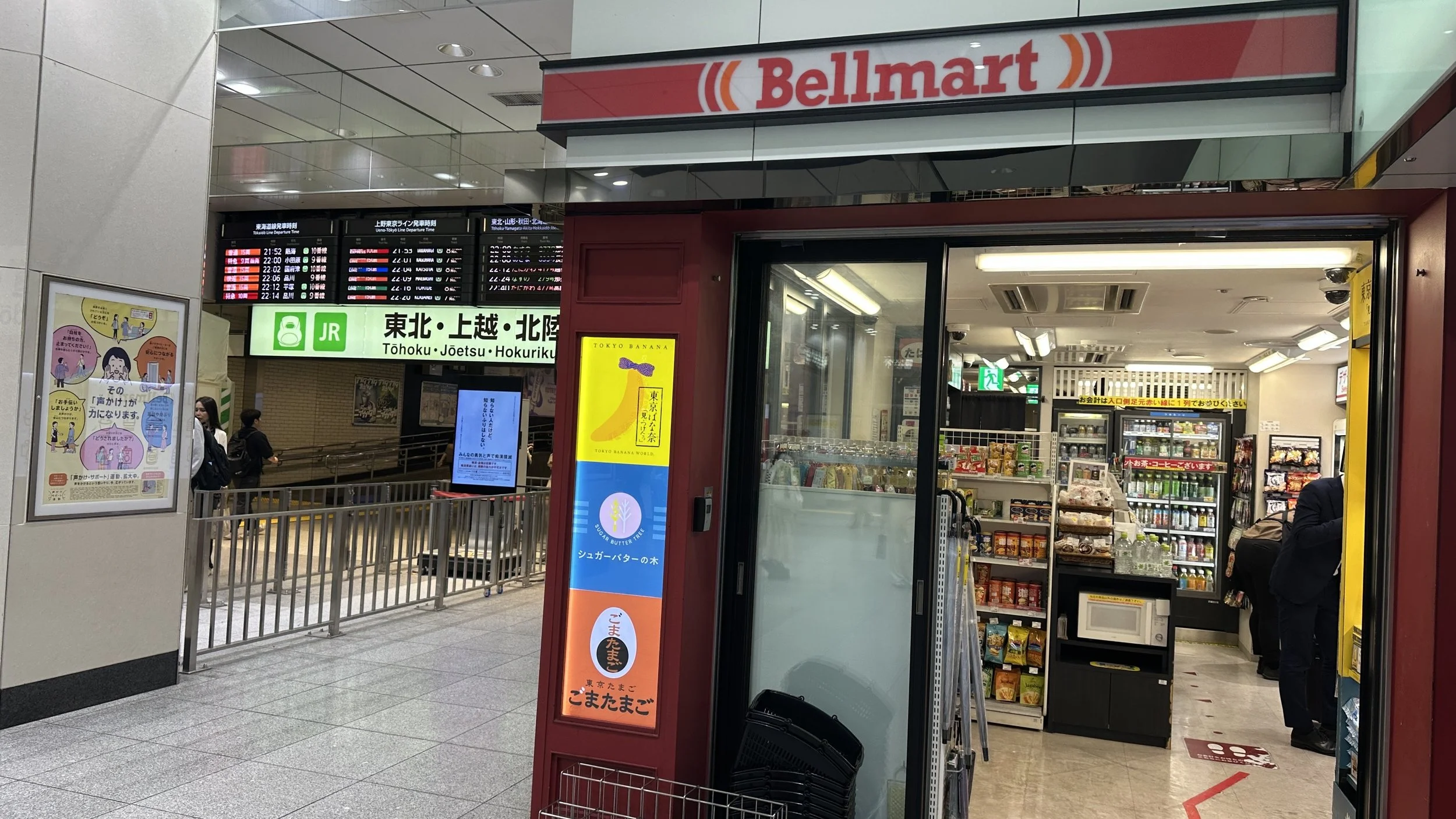
If you are entering Tokyo Station from the South Yaesu Exit, on the side closest to Ginza, walk toward the South Central entrance. This is the most accessible entrance to Tokyo Station for the Shinkansen trains.
Near the Tohoku Shinkansen entrance, recognizable by the green Shinkansen signs, you will find a Bellmart shop. It is a convenient place to pick up a small snack or something to eat before your train.
The shop is relatively narrow, however, so navigating it with a wheelchair or large luggage may be difficult, particularly when the station is busy.
Depending on availability, Bellmart may have:
Nuts
Wakame (seaweed) snacks, which are often vegan
Soba noodles
Salads
Vegetable onigiri
Eggs
Red bean and other sweet breads
Fruit drinks
For travelers following a vegan diet, wakame (seaweed) snacks, some nuts, salads, and certain vegetable onigiri may provide convenient options. However, always check the ingredients rather than assuming a food is vegan.
Soba can be particularly confusing for travelers with dietary restrictions. Although soba is made primarily from buckwheat, many commercially prepared soba noodles contain wheat, and the accompanying broth commonly contains fish-based ingredients. This means soba should not automatically be considered vegan or gluten-free.
The same applies to sweet breads: red bean filling itself can be suitable for some diets, but the bread generally contains wheat and may contain eggs or dairy.
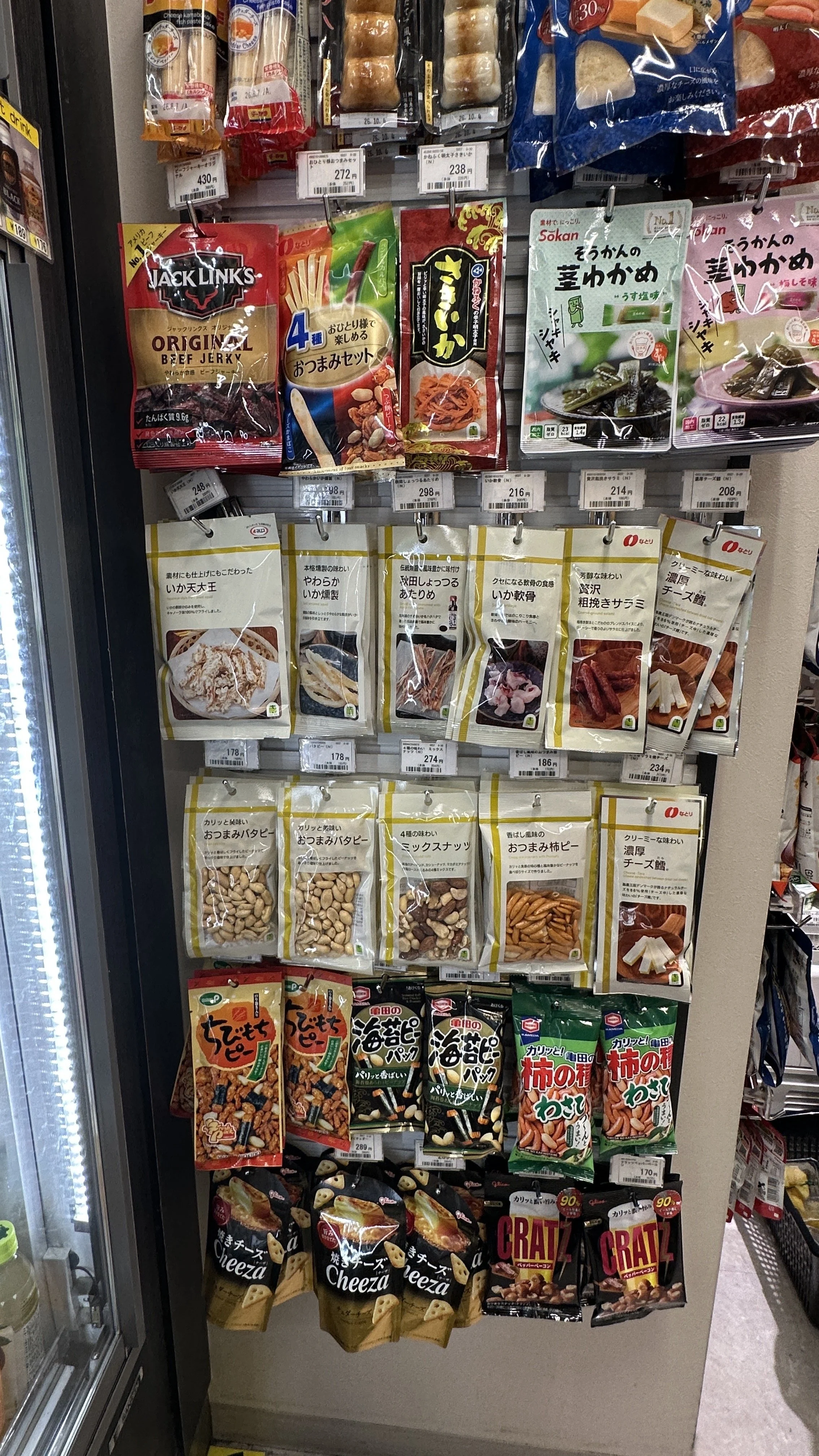
Nuts, seaweed, and dried meats and seafood snack panel at Bellmart in Tokyo Station.
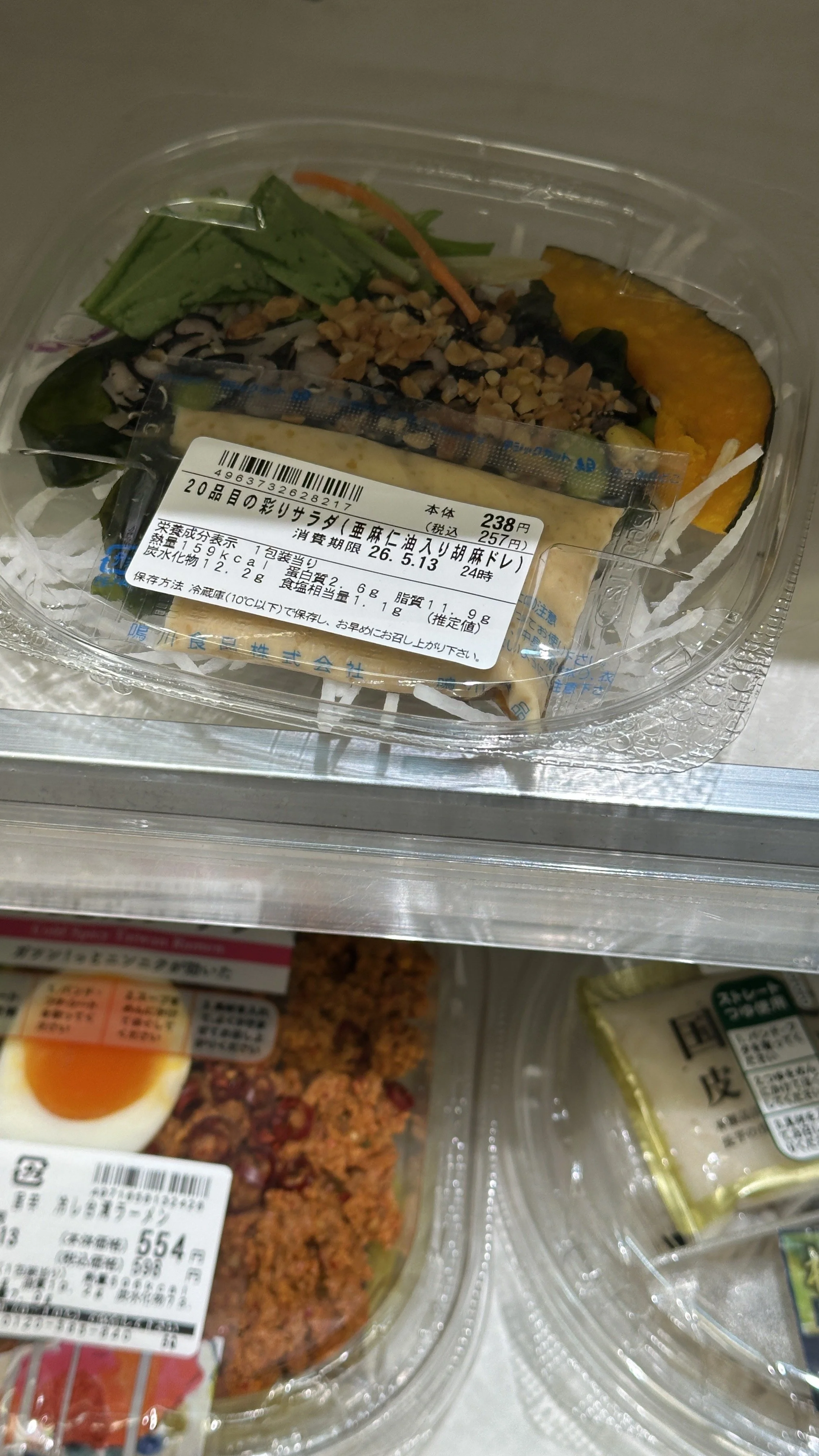
Vegetarian salad at Bellmart in Tokyo Station.
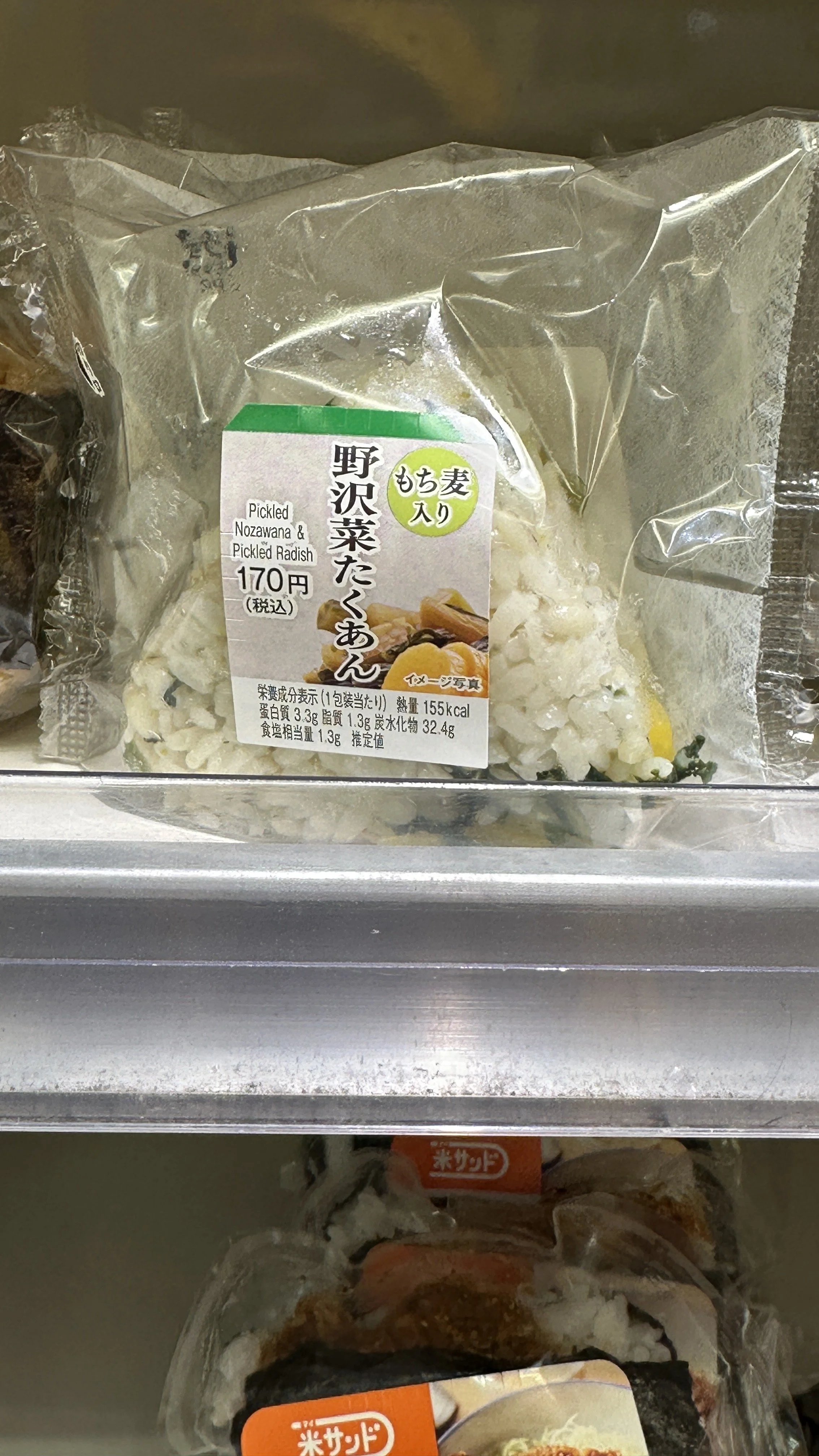
Vegan onigiri option of greens and radishes at Bellmart.
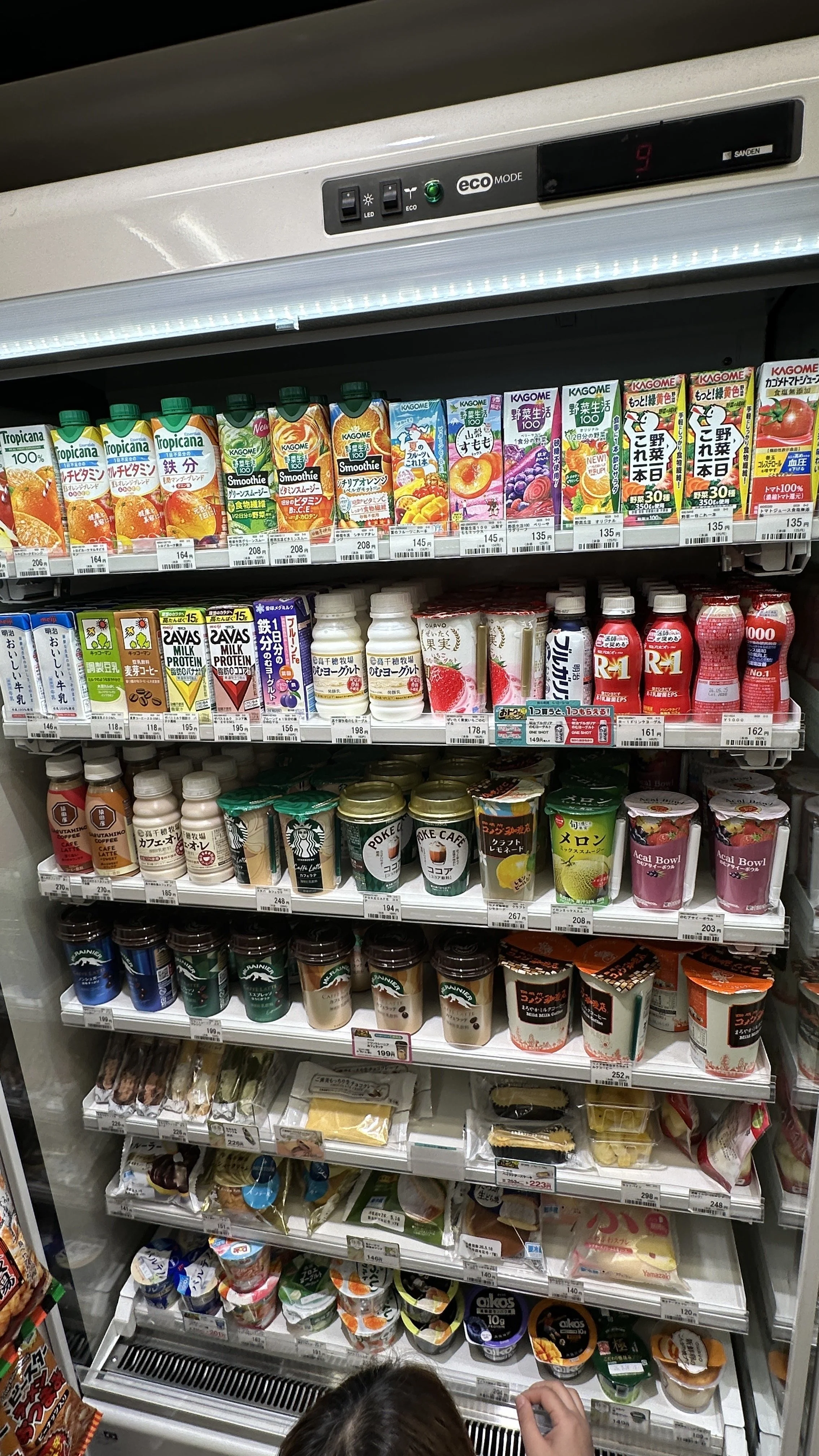
Cold items including smoothies, yogurt drinks, apple and pineapple slides, soy milk and coffees.
2. Yaesu Central: Plusta
Another convenient option is located around the Yaesu Central area.
To the right of the Tokaido-Sanyo Shinkansen Central entrance before the JR turn stiles is a food and souvenir shop called Pulsta. This is a useful stop if you want to stock up on portable snacks for your train journey.
At Pulsta, depending on the time of day and current stock, you may find:
Yogurt
Soy milk
Mochi sweets
Nuts
Nuts with seaweed
Rice crackers
Dried seaweed
Dried sweet potatoes
Dried lotus roots
Gelatinous seaweed products
Chestnuts
Vegetable onigiri
Apples
Pineapples
Bananas
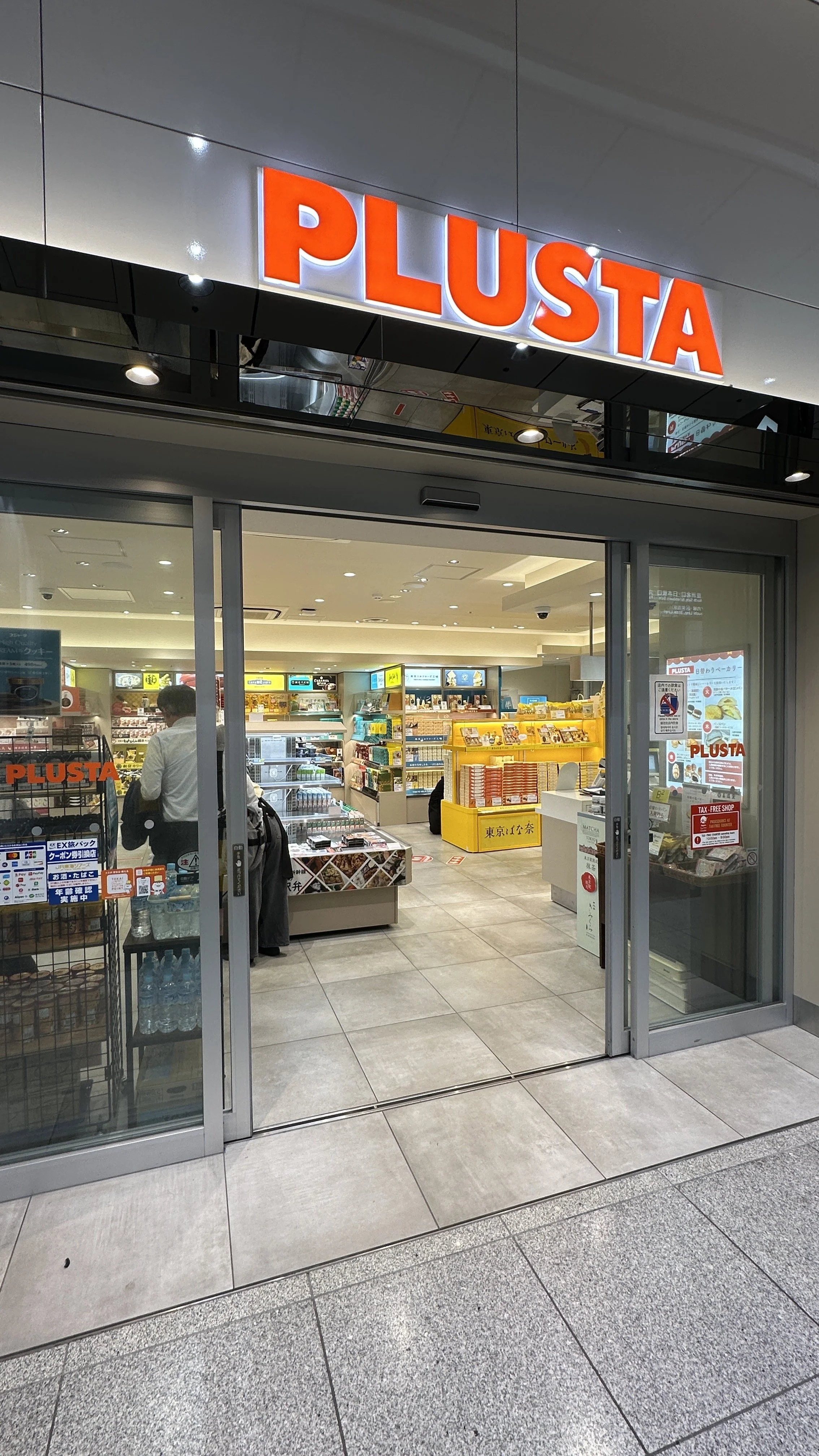
Pulsta store entrance showing food and souvenirs, taken at the end of the day so the food stocks are lower.
Many of these foods are naturally simple and portable, making them particularly useful for travelers who need to eat on the go.
Mochi can be a useful option for some gluten-free travelers because traditional mochi is made from glutinous rice rather than wheat. However, fillings and flavorings vary, so check the ingredients of packaged products.
Dried fruits and vegetables, such as sweet potatoes, chestnuts, and fruit, can also make easy snacks for a long train ride.
Pulsta's selection can change throughout the day. Some popular products may be sold out later in the afternoon or evening, so if you see something suitable for your diet, it can be worth purchasing it rather than waiting until later.
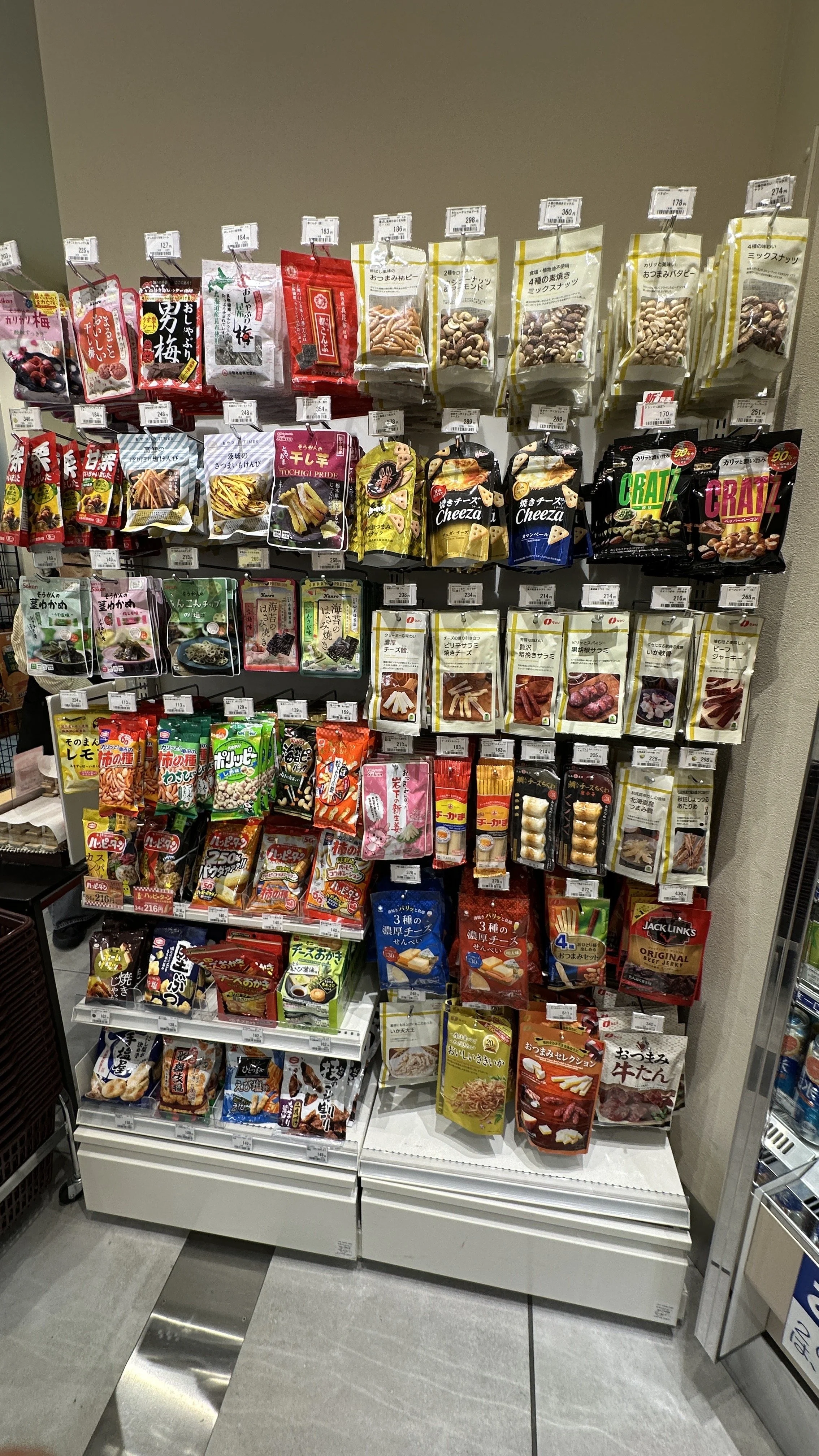
Dried snack selection showing nuts including chestnuts, dried lotus roots, rice crackers, pickled plums, seaweed and various dried meats or seafood at Pulsta at the Central entrance of Tokyo Station.
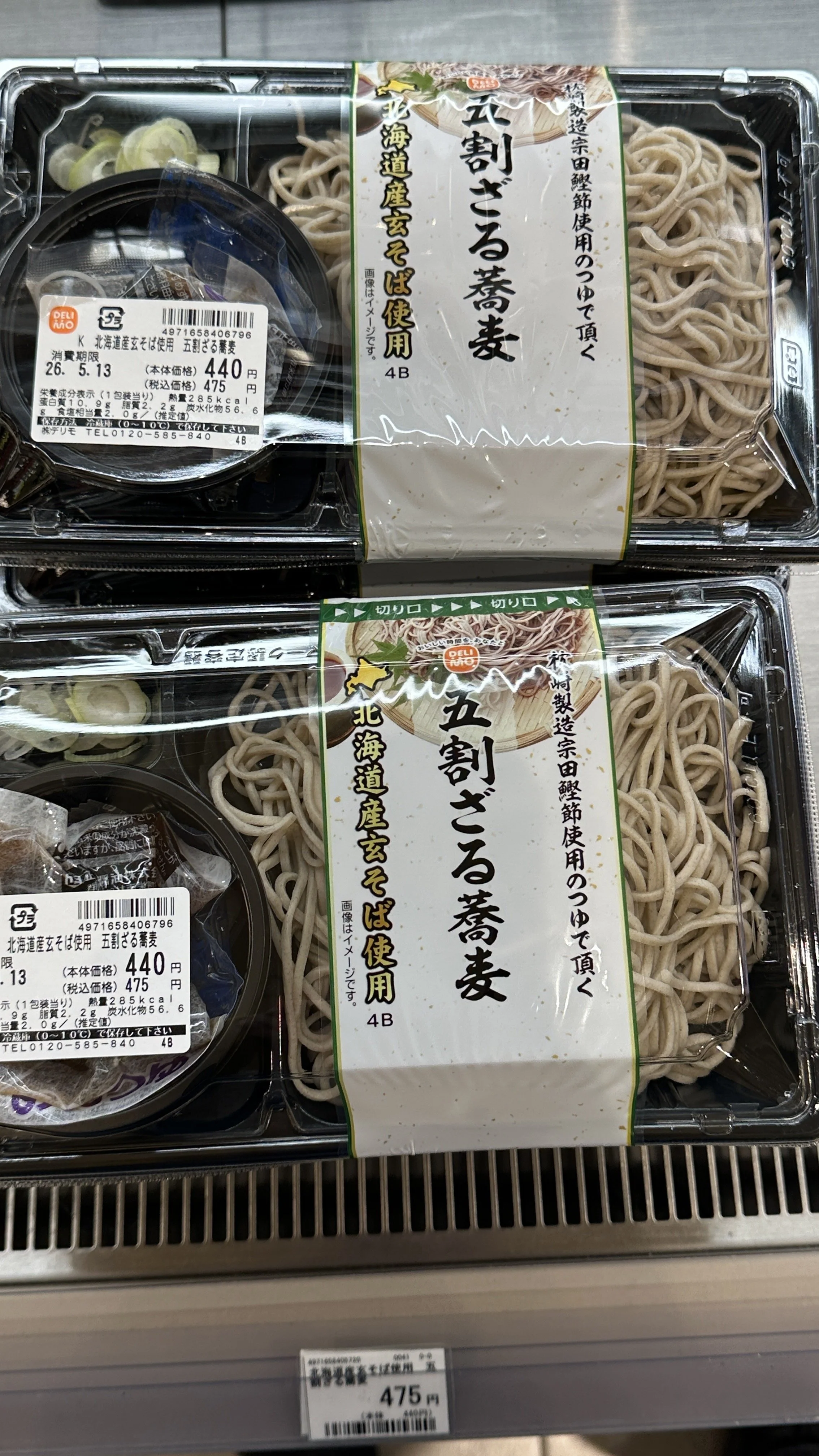
Vegan Soba noodle meal to-go.
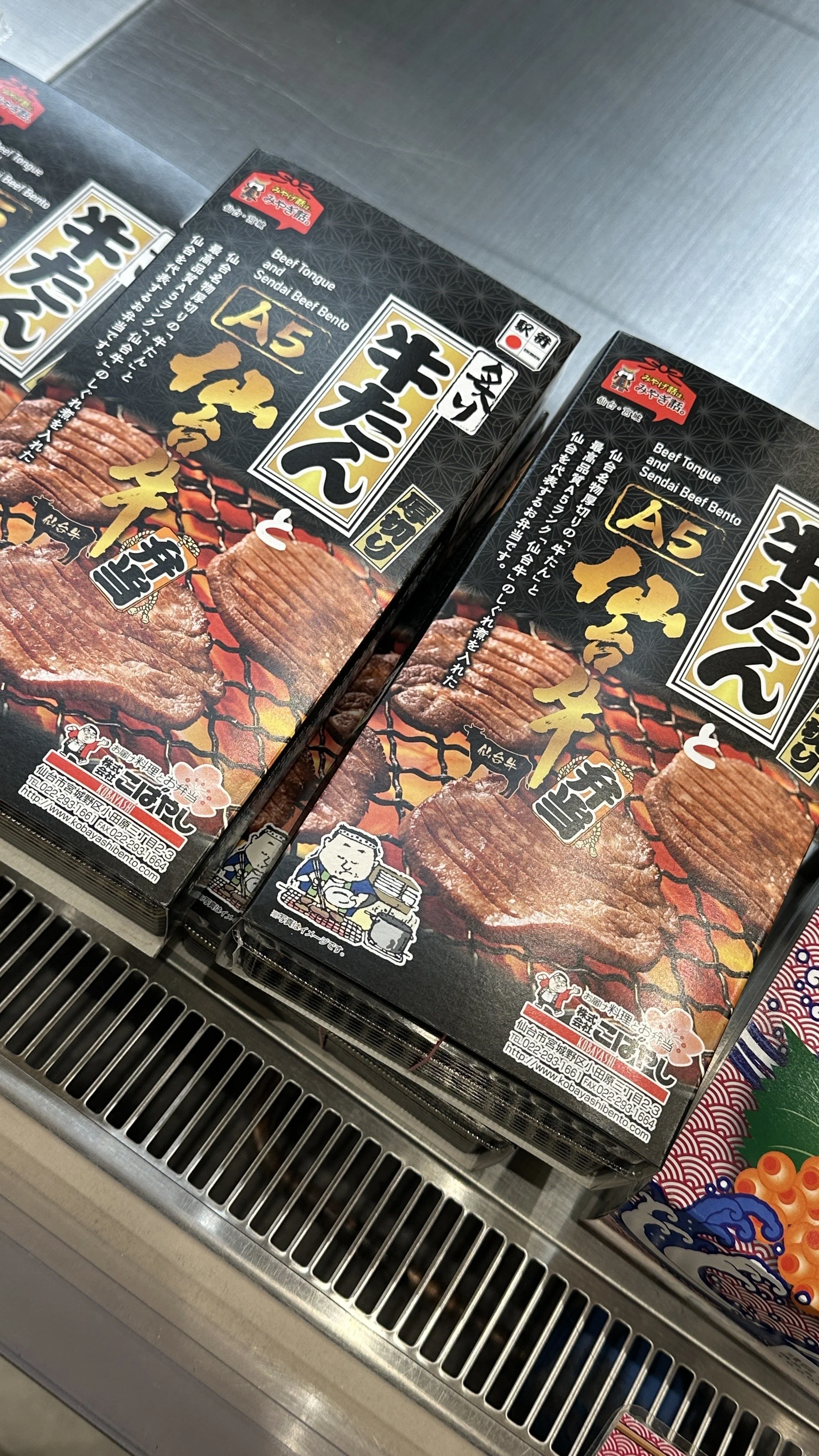
Hot bento (lunch) box that is self-heating at Pulsta at the Central entrance of Tokyo Station. Usually these are meat and rice.
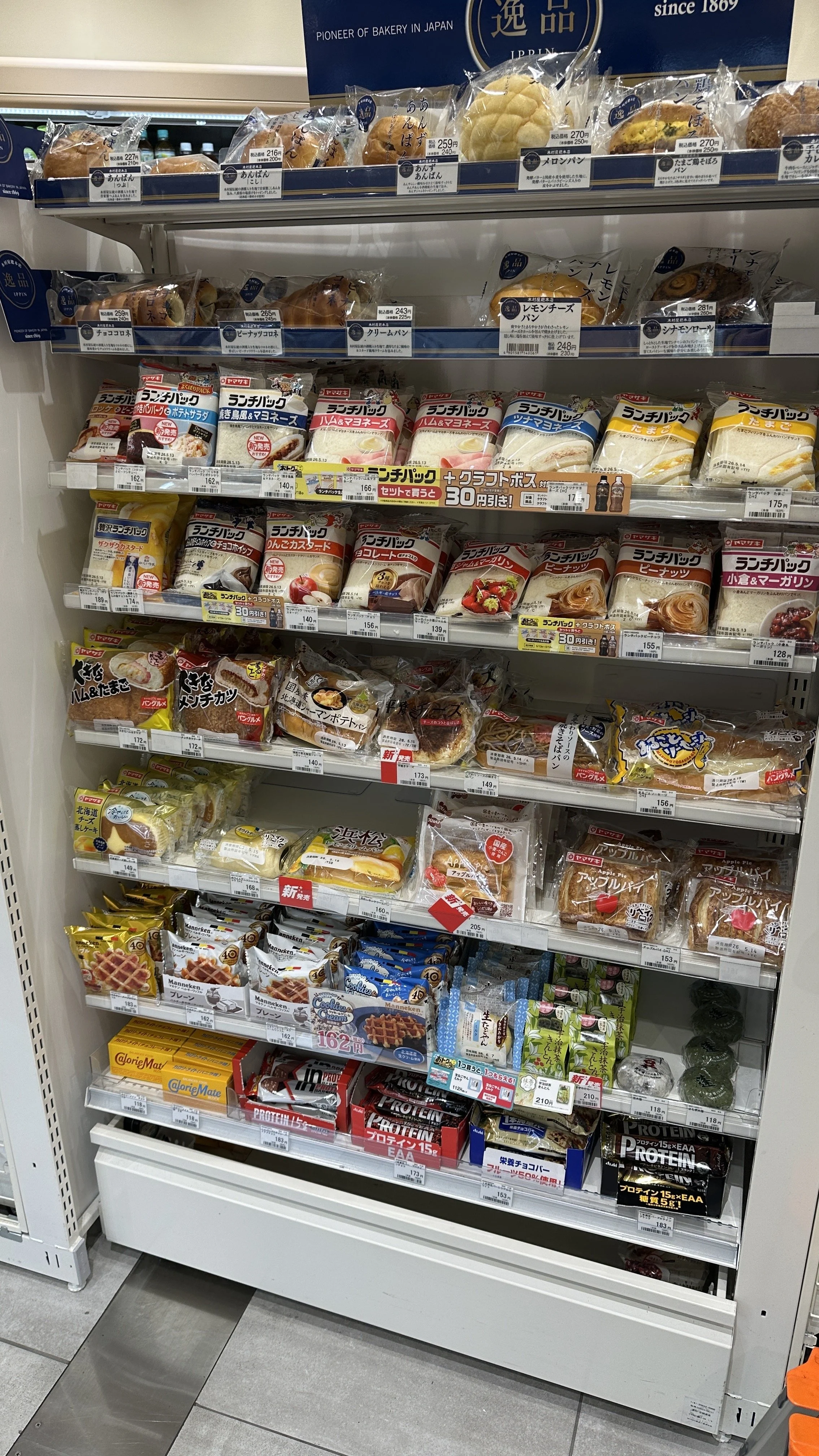
Bread selection at Pulsta showing Peanut butter or red bean sandwiches, protein bars, and other sweet breads.
3. Yaesu North: Precious Deli Tokyo
For travelers looking for the widest variety of quick food, head toward the Yaesu North area.
Near one of the Tokaido Shinkansen entrance on the North Yaesu side is Precious Deli Tokyo. Of the options discussed in this guide, this shop is particularly useful because it offers a broader selection of prepared foods and snacks.
Another advantage is that many products have English descriptions outside the turnstiles, which can make it easier for international travelers to identify what they are buying.
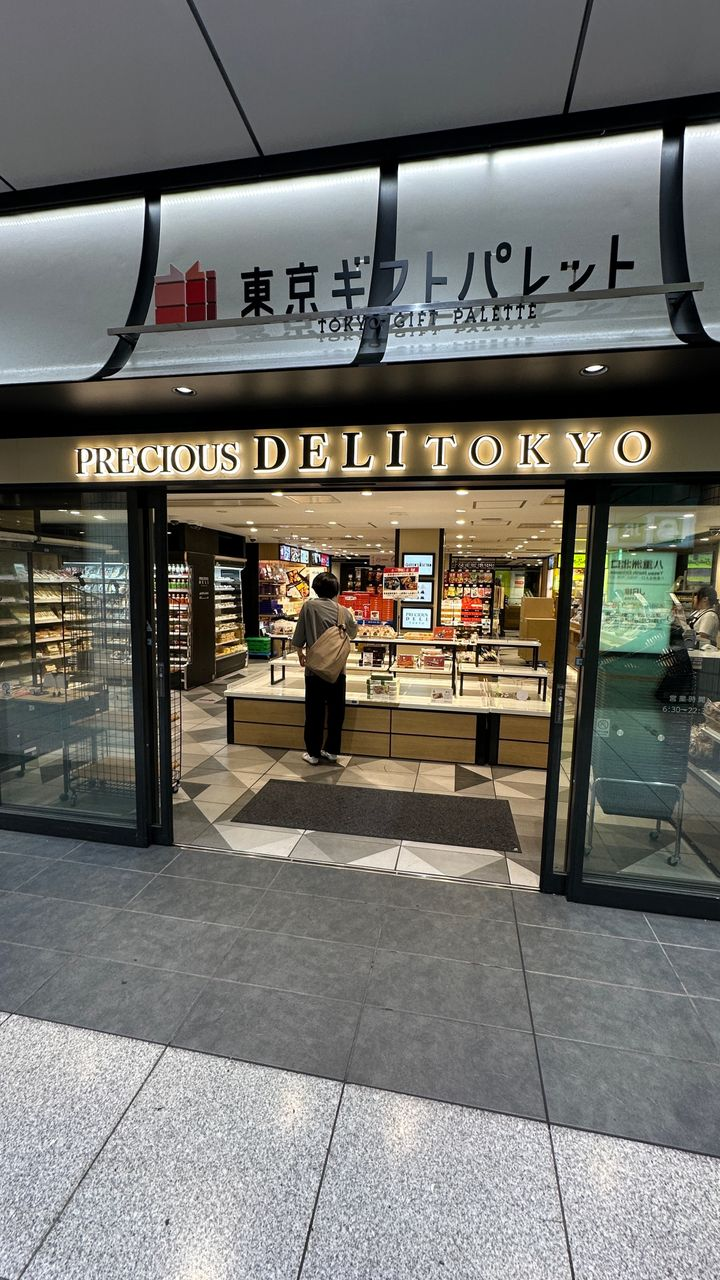
Precious Deli mini grocery store taken at the end of the day so selection on the shelves is limited.
What can you find at Precious Deli Tokyo?
The selection can include:
Vegetable onigiri
Fruit and cream sandwiches
Soba
Udon
Bread
Pineapples
Grapefruit
Apples
Bananas
Fruit purées
Yogurt
Eggs
Soy milk
Fruit juice
Vegetable soup
Vegetable salads
For travelers with dietary restrictions, the fresh fruit, fruit purées, soy milk, and some salads can be particularly convenient choices.
Vegetable onigiri can also be a good option when you need something more substantial than a snack. However, not all vegetable onigiri are gluten-free or vegan, so check the ingredients carefully.
The same applies to salads and vegetable soup. A food may look entirely vegetable-based while containing ingredients such as animal-derived broth, dressings, dairy, or other ingredients that are unsuitable for certain diets.
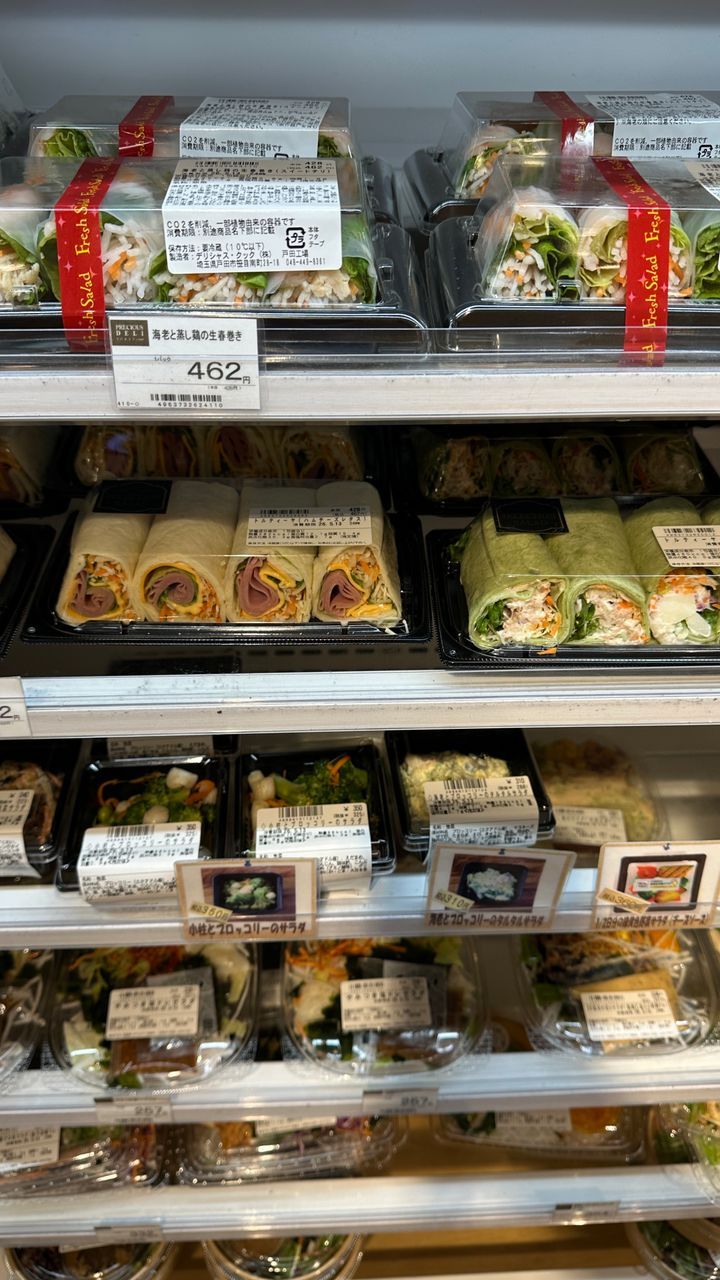
Wraps and vegetables refrigerator selection. Most wraps are not vegan or vegetarian. Salads are also available, with no meat.
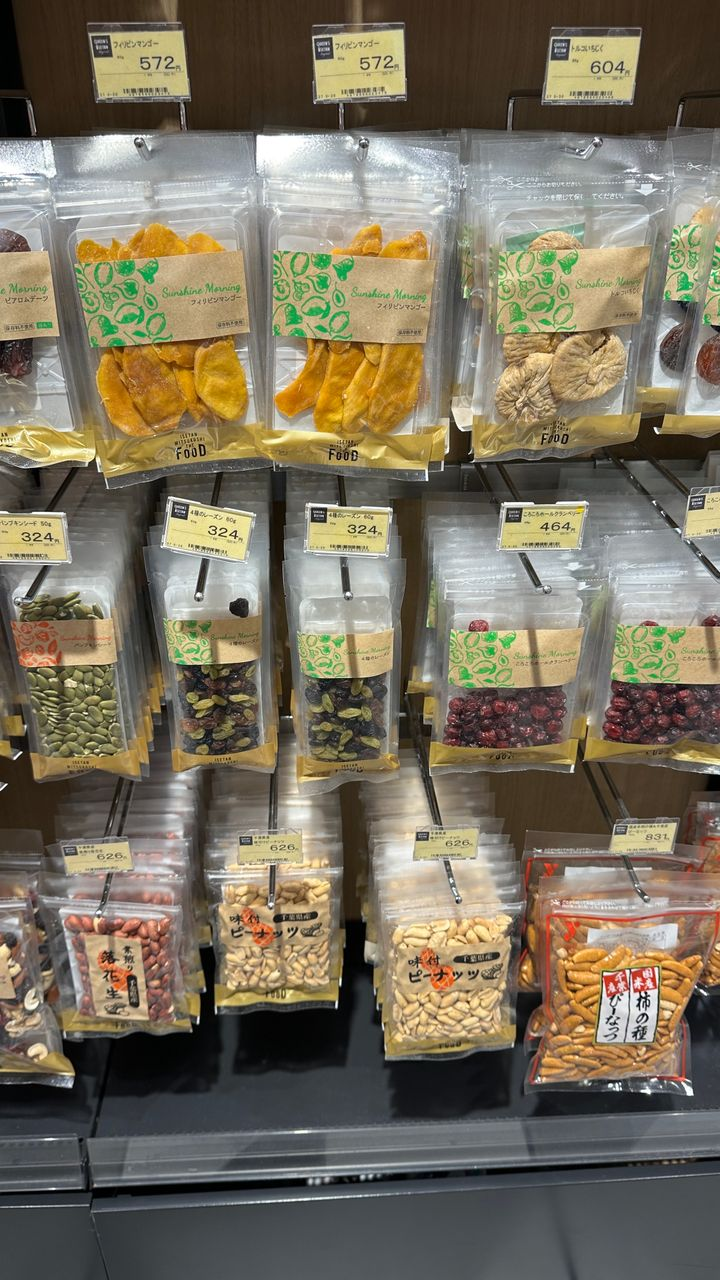
Dried fruits and nuts selection. This shop has the widest selection of nuts and dried fruits of the 3 options.
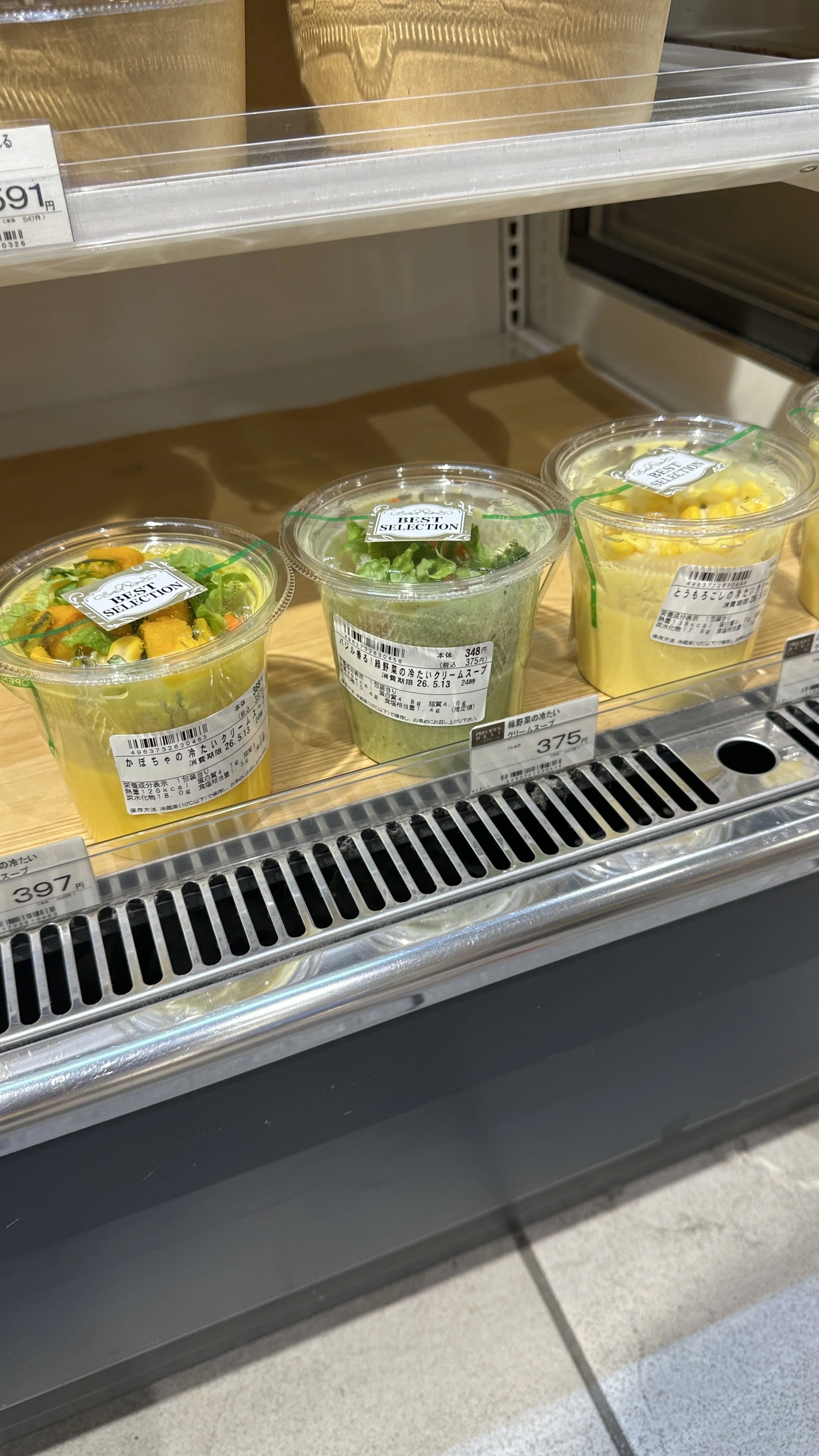
Cold vegetable soups, vegetarian, but not vegan. Similar soups can sometimes also be found at NewsDays in JR trian stations.
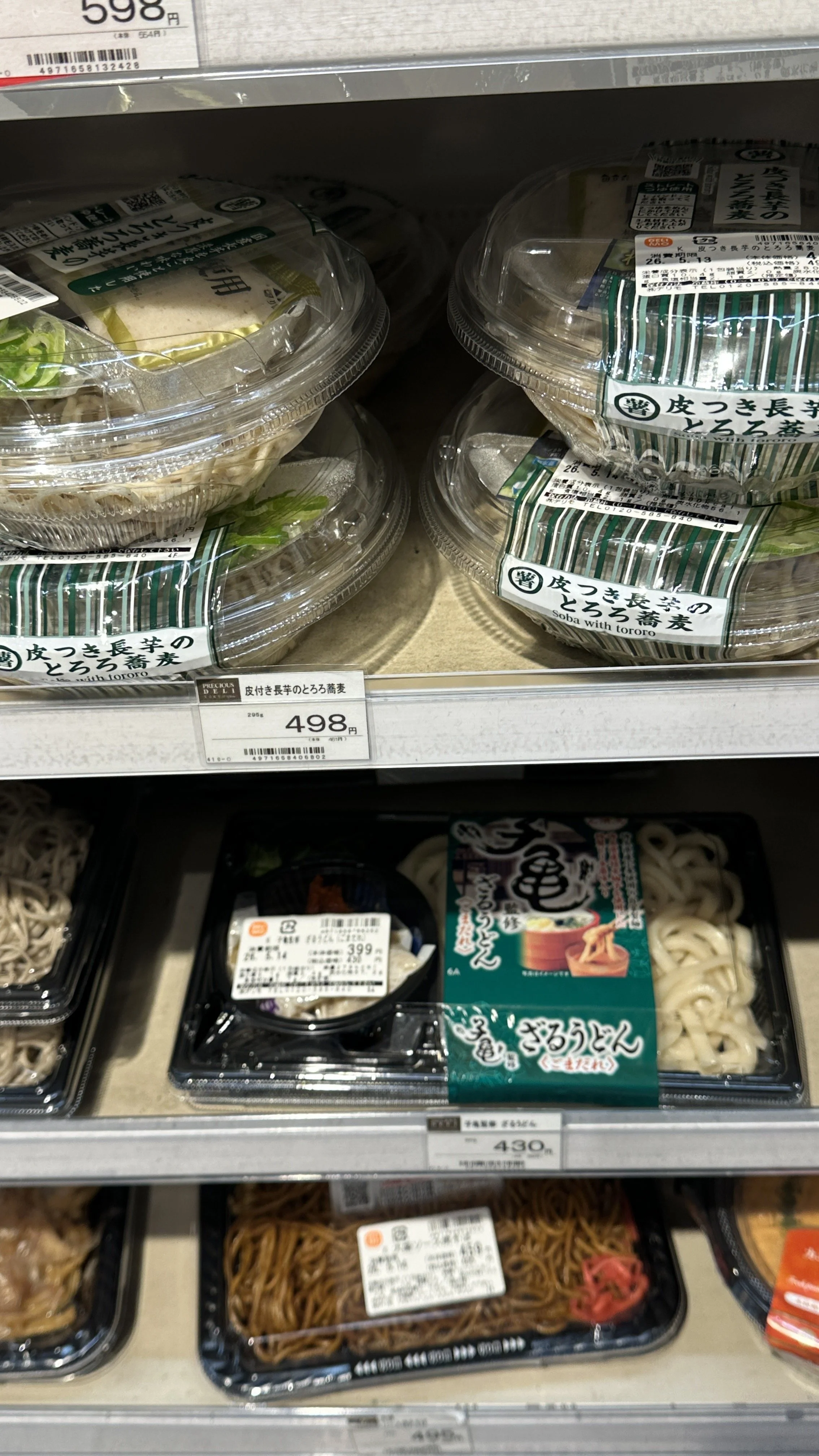
Noodle selection including udon, soba, and yakisoba (grilled with soy sauce soba).
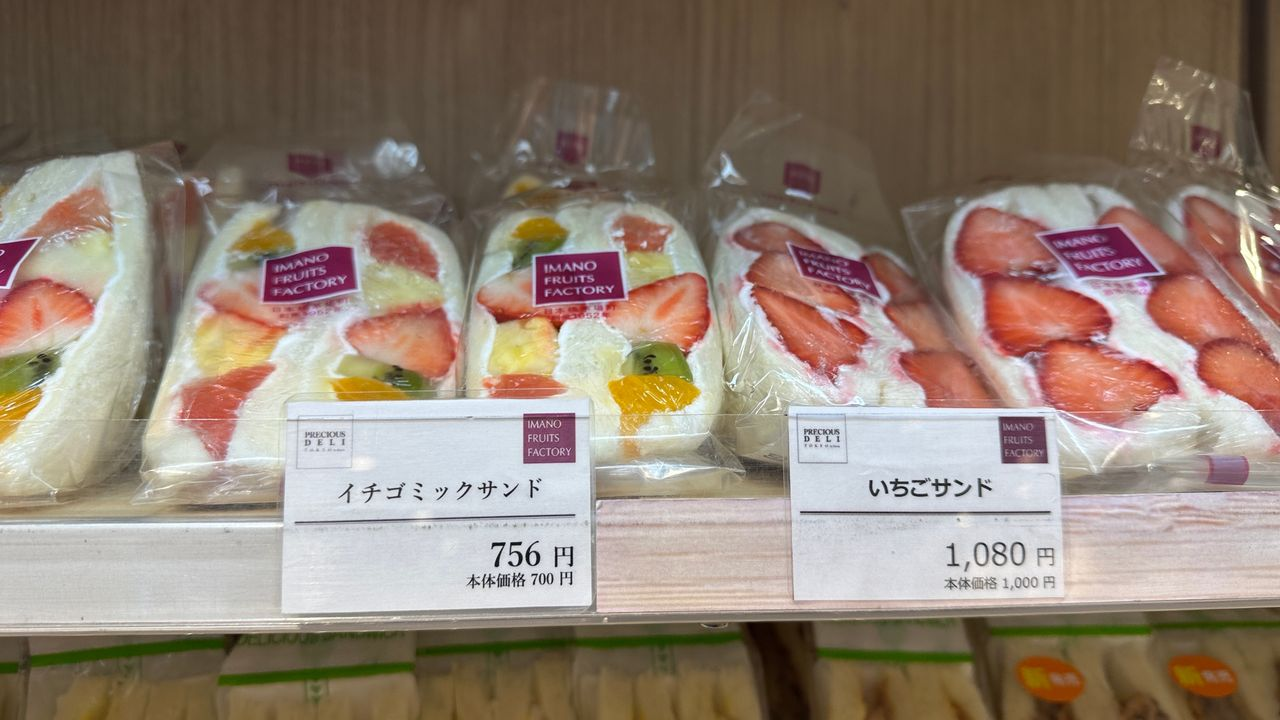
Mixed fruit and strawberries and cream sandwiches.
What About Onigiri?
Onigiri is one of the easiest foods to find at Japanese train stations, and it can be an excellent choice when you need something quick.
For travelers with dietary restrictions, however, the filling matters.
Vegetable-based varieties may appear to be suitable for vegetarians or vegans, but seasonings, sauces, stock, or other ingredients can change the dietary profile.
Some common onigiri fillings, such as salmon, tuna, or bonito, obviously contain fish. Other varieties may contain mayonnaise, egg, meat, or fish-based seasonings.
If you have a strict dietary restriction, look at the ingredient label before purchasing.
Don't Assume Soba Is Gluten-Free
One of the most important things to remember when eating quickly at Tokyo Station is that soba is not automatically gluten-free.
Soba noodles are traditionally made with buckwheat, but many noodles contain wheat flour. In addition, the broth used with soba and udon can contain ingredients derived from fish or other allergens. Ensure that the soy sauce is also packaged seperately, as most soy sauce will contain gluten.
For someone with celiac disease, a wheat allergy, or a strict gluten-free diet, packaged food with clearly listed ingredients may be easier to assess than ordering a quick bowl of noodles.
Pack Fruit for the Shinkansen
If you cannot find a complete meal that works with your dietary requirements, don't underestimate the value of simple foods. Fruit can sometimes be expensive in Japan, however many quick stores will stock apples and sometimes bananas at a reasonable price. You can also always find packaged fruit smoothies in many stores.
Fresh fruit, soy milk, nuts if you can eat them, dried sweet potatoes, chestnuts, seaweed snacks, and other packaged foods can make a practical combination for a train journey.
This is particularly useful if you are taking an early Shinkansen or traveling during a busy period when restaurants may have long lines.
Tips for Buying Food at Tokyo Station
1. Shop before entering the gates
The stores in this guide are located before the JR and Shinkansen gates, so you can purchase food before entering the paid area of the station.
If you are already inside the gates, your options will be different.
2. Check the Japanese ingredient label
Even when a product looks suitable, check the packaging for ingredients that may not be obvious from the English name or appearance.
For strict dietary restrictions, familiar-looking foods such as vegetable onigiri, rice crackers, and salads should still be checked.
3. Don't rely on the word "vegetable"
"Vegetable" does not necessarily mean vegan. Vegetable dishes may contain bonito stock, fish sauce, dairy, egg, or other animal-derived ingredients.
4. Buy earlier if you need something specific
Popular products can sell out, particularly later in the day. If you find a suitable option before your train, buying it then can save you from having to search again.
5. Consider carrying a backup snack
If your diet is particularly restrictive, bringing a packaged snack with you is a good idea. Tokyo Station has an enormous range of food, but that does not mean every shop will have something suitable for every dietary requirement at every time of day.
FAQs
Can I find vegan food at Tokyo Station?
Yes. Before the JR and Shinkansen gates, you can find potentially vegan-friendly options such as fruit, some seaweed snacks, nuts, soy milk, and some vegetable onigiri. However, ingredients should always be checked because foods that appear plant-based may contain fish stock, dairy, egg, or other animal-derived ingredients. There is a a Vegan ramen and gyoza restaurant called T’s TanTan that recently relocated to the basement of Tokyo Station, past the JR turn stiles. Although ramen is quick, this option does not offer bento boxes.
Where should I go for the most variety?
Precious Deli Tokyo in the Yaesu North area is a useful place to start if you want a wider variety of quick foods. Many products have English descriptions outside the turnstiles, which can make shopping easier for international travelers.
What is the easiest food to buy if I have multiple dietary restrictions?
Simple packaged foods and fresh fruit are often easiest to assess. Look for items such as bananas, apples, pineapple, soy milk, nuts if appropriate for you, dried sweet potatoes, or clearly labeled packaged foods. If you have a serious allergy, always verify the ingredients and allergen information.
Plan an Accommodating Trip with TokudAw LITE
At TokudAw LITE, booking your transportation is straightforward, but that doesn’t mean the service stops there. We provide direct transportation to Tokyo Station, Tokyo Disneyland or the Tokyo Airports, with vehicle options that can be selected to fit your needs.
We ask guests to book at least 3 days in advance so we can secure the right vehicle and arrange additional needs, such as car seats or accessible vehicles. We also keep an eye on unexpected changes, such as weather or train delays. When official weather forecasts or JR delay information indicate that your schedule may be affected, we can adjust your transportation timing at no additional cost.
With TokudAw LITE, you get the simplicity of a straightforward booking process with the reassurance that there is still a team looking out for the details.